·
10 min
BDD vs. TDD: Differences, Use Cases, and How They Work Together

Roman Kirchmeier - Autemos

The BDD vs. TDD comparison concerns decisions at different levels; both practices can work on the same feature. BDD clarifies observable behavior through concrete examples discussed by domain, test, and development representatives. TDD guides developers through a failing test, minimum implementation, and refactoring. A meta-analysis of 27 TDD studies found a small positive overall effect on external quality and little to no discernible overall effect on productivity (IEEE, 2013). Fixed speed promises lack evidence. The choice depends on who must read an artifact, which decision it records, and how soon feedback is needed. Our BDD guide explains the wider process.
TL;DR: BDD clarifies business behavior across roles; TDD gives developers short feedback about code behavior. A meta-analysis of 27 studies found no clear overall productivity effect for TDD (IEEE, 2013). Critical features can use BDD for acceptance and TDD for their components.
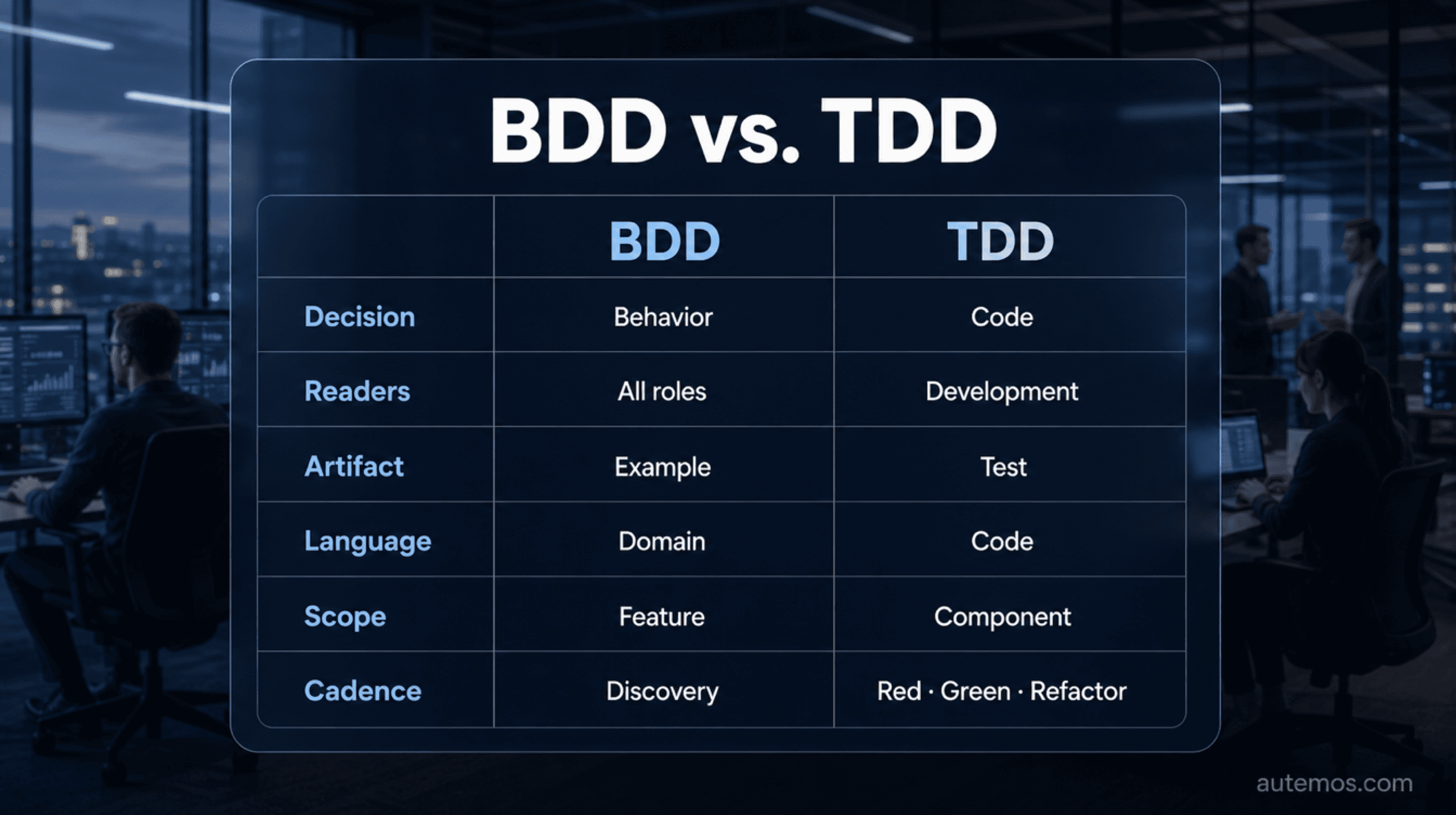
Figure 1: BDD and TDD compared across six decision criteria.
What is the difference between BDD and TDD?
BDD starts with jointly discussed behavioral examples, and TDD starts with a small failing test for the next piece of code. Cucumber describes BDD through Discovery, Formulation, and Automation (Cucumber, 2026). Agile Alliance defines TDD as tightly interwoven programming, unit testing, and design through refactoring (Agile Alliance, 2026).
Behavior Driven Development is a collaborative software development process. Participants use concrete examples to agree on behavior visible to users or connected systems. Those examples may become executable specifications. Gherkin and Cucumber are optional ways to record and run them.
Test Driven Development is a development practice. A developer writes a small test, watches it fail, adds the least production code needed to pass, and improves the structure. TDD commonly runs at unit or component level. The practice does not prescribe one fixed test level.
Dan North stated the connection between a story and behavior in 7 words: “A story’s behaviour is simply its acceptance criteria” (Dan North, 2006). BDD needs a criterion that domain readers can inspect. TDD can then check the internal code paths behind it.
BDD vs. TDD: How do the cycles differ?
BDD uses three practices, and TDD uses short Red-Green-Refactor cycles. Both start before the finished implementation with an example that fails at first. Their participants, language, and scope differ.
Phase | BDD | TDD |
|---|---|---|
Preparation | Discovery with concrete domain examples | list of small code behaviors |
Form | Formulation in readable domain language | automated test in a programming language |
Initial check | executable example fails | unit or component test is red |
Implementation | system behavior is implemented | minimum production code makes the test green |
Follow-up | example remains checked documentation | refactoring improves code and test structure |
Martin Fowler adds a test list before Red-Green-Refactor, making the next small step explicit (Martin Fowler, 2023). BDD Discovery has a separate purpose: domain, test, and development representatives examine assumptions, boundaries, and wording before automation starts.
A BDD example may run at API, service, component, or UI level. A TDD test can cross several boundaries too, though practitioners often keep it smaller and nearer the code. The BDD Testing guide separates examples, test levels, and execution.
Which practice fits which task?
BDD fits decisions that several roles must read and approve; TDD fits fast design decisions inside development. A business-critical feature with complex reusable components can benefit from both.
Criterion | BDD | TDD |
|---|---|---|
Main question | What behavior should be observable? | What small code behavior is missing? |
Main readers | domain, test, and development representatives | developer or pair |
Starting artifact | conversation plus concrete example | small automated test |
Language | domain terms, with Gherkin as an option | programming language and test framework |
Typical scope | feature, rule, service, or user outcome | unit or component |
Cadence | Discovery, Formulation, Automation | Red, Green, Refactor |
Feedback | shared interpretation and system behavior | local code behavior and refactoring safety |
Common failure | tool purchase without Discovery, stale scenarios | large steps, slow suite, trivial assertions |
Use TDD where a developer needs quick feedback on code boundaries and design. Add BDD where domain and technical participants must approve the same observable behavior before implementation. A direct acceptance test may cost less when nobody outside engineering will read or discuss an executable specification.
How can BDD and TDD work together?
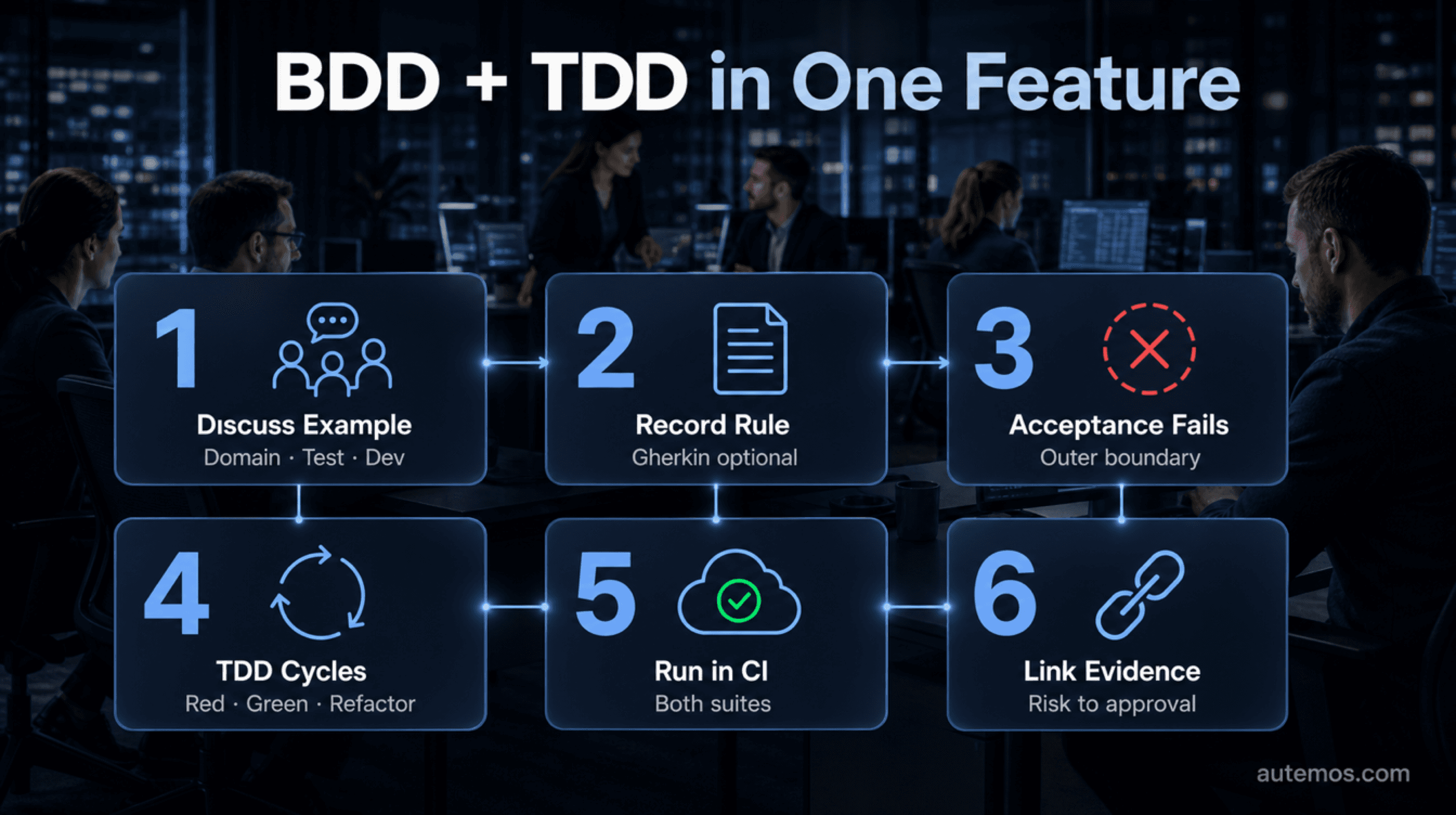
Figure 2: A BDD example sets the acceptance boundary, and TDD builds the components.
BDD and TDD work together when a domain example defines the outer acceptance boundary and small TDD cycles create the required components. Cucumber documents this layered use for application behavior and reusable units (Cucumber, 2019).
A domain representative, tester, and developer discuss one upcoming change through concrete examples.
The team records the agreed rule. Gherkin remains optional.
One example becomes an executable acceptance check and fails at first.
Developers build the required components through small TDD cycles: red test, minimum code, refactoring.
Component checks and behavioral checks run in CI/CD test automation.
The team links requirement, risk, test, result, defect, and approval in the responsible systems.
The suites answer separate questions. A unit test locates faulty code behavior. A BDD example shows whether the agreed outcome still holds at the selected system boundary. The test pyramid helps teams balance execution time and scope across these checks.
Where does ATDD sit between BDD and TDD?
ATDD names the joint definition of acceptance tests before implementation and overlaps strongly with BDD. Agile Alliance lists customer, development, and testing perspectives as participants. Its glossary says ATDD may be called Specification by Example or BDD, with terms chosen to stress nuances in approach (Agile Alliance, 2026).
A rigid taxonomy would hide differences between teams. ATDD often stresses a story's acceptance boundary. Many BDD definitions describe a wider sequence of Discovery, Formulation, and Automation. TDD focuses on short implementation cycles. The concrete artifact supplies a better decision rule: who reads it, which choice it records, and when it appears.
Gherkin is optional in BDD and ATDD. Cucumber is optional too. Seb Rose makes the tool boundary plain: “Cucumber is not part of BDD” (Cucumber, 2017).
Why do BDD and TDD adoptions fail?

Figure 3: The 166-paper BDD map identifies a gap in industry metrics (JSS, 2023).
BDD and TDD adoptions often fail through partial practice, unclear ownership, and rising maintenance cost. Research provides no fixed success rate, yet it documents recurring risks in clearly bounded samples.
A study of 50,000 popular open-source projects across 5 languages found BDD frameworks in about 27% of the sample. A smaller survey of 31 developers in the same study found that tests were often written during or after production code (Information and Software Technology, 2020). Framework use is weak evidence of a consistent BDD process.
A survey of 75 BDD practitioners in 26 countries reported maintenance problems as specifications grew (SANER, 2018). A mapping study of 166 papers published from 2006 through 2021 found scarce industry metrics for BDD processes and artifacts (Journal of Systems and Software, 2023).
BDD starts as a tooling project with no joint Discovery.
One role writes scenarios after implementation.
Feature files copy UI clicks and age after interface changes.
TDD steps become large, tests become slow, or assertions prove little.
No owner maintains examples, tests, and versions.
Management expects a guaranteed productivity gain without local measurement.
Measure clarification defects, maintenance time, escaped requirement defects, and evidence retrieval time in your own setting. Compare those values before and after a limited adoption. Local measurements carry more weight than borrowed percentage promises.
What evidence do regulated teams need beyond BDD and TDD?
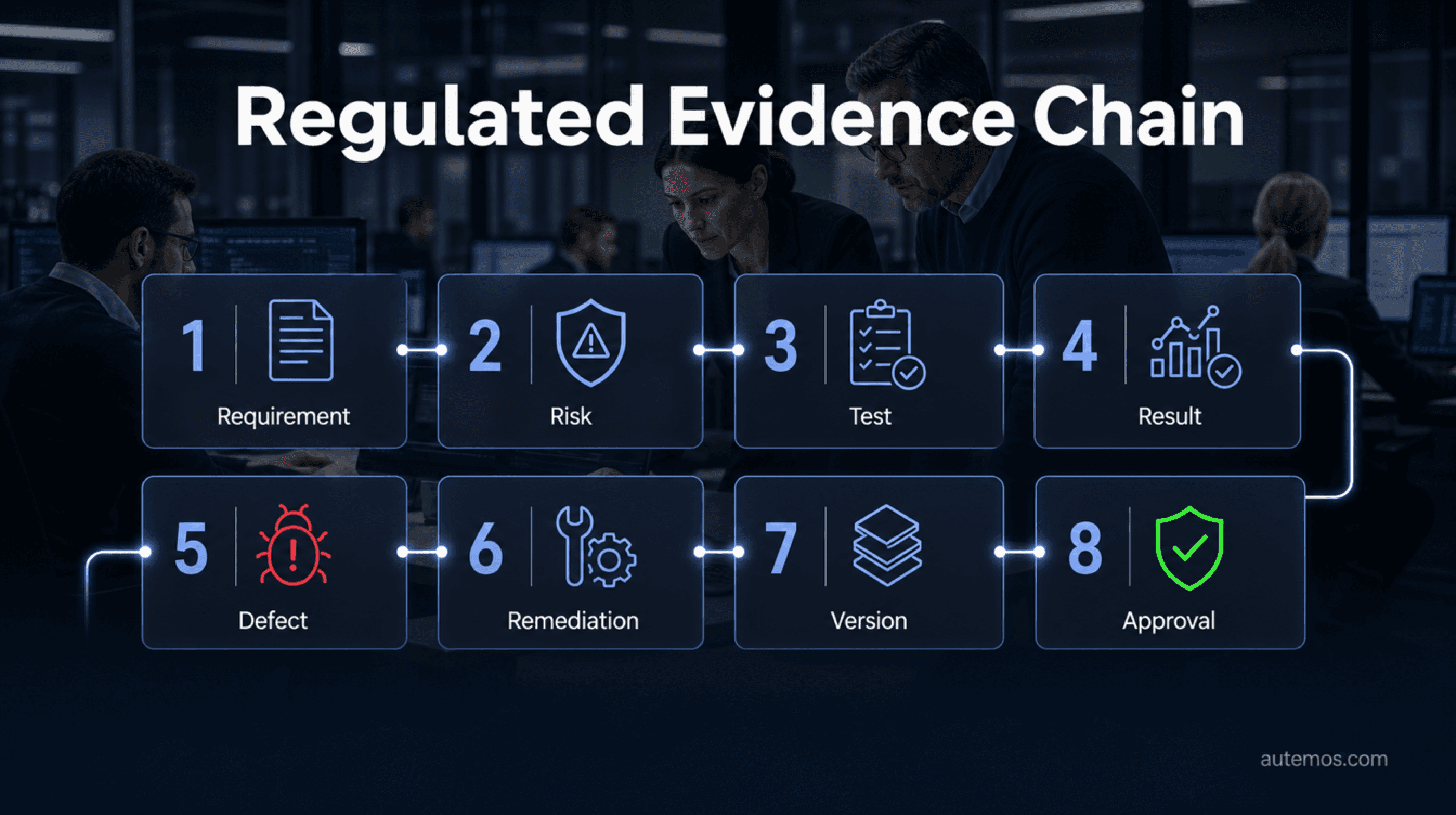
Figure 4: BDD and TDD cover only the test portion of a complete evidence chain.
Regulated teams need a linked evidence chain that covers requirement, risk, test, result, defect, remediation, version, and approval. ISTQB names traceability from test cases to requirements and from test results to risks as evidence for coverage and residual risk (ISTQB, 2024).
Cucumber's own analysis limits its coverage to part of the lifecycle. A team can connect a Feature file, software, and test report, but origin, history, and sign-off require further controls (Cucumber, 2020).
DORA has required covered financial entities to maintain a risk-based testing program, remediate findings, and test ICT systems supporting critical or important functions at least yearly since 17 January 2025 (EUR-Lex, 2022). DORA does not require BDD, TDD, Cucumber, or Gherkin. Neither practice proves compliance alone.
Frequently asked questions
These answers separate use, combination, and evidence requirements.
Is BDD better than TDD?
No practice is better for every task. BDD suits shared decisions about observable behavior. TDD gives developers short feedback on small code decisions. Business-critical features with complex components can use both.
Can a team use BDD and TDD at the same time?
Yes. A team can agree on a domain example through BDD and execute it as an acceptance check. The participating components can then be built in short TDD cycles. Both suites run in CI and answer separate failure questions.
Does BDD require Gherkin or Cucumber?
No. BDD requires collaboration and concrete examples. Gherkin can record those examples in structured text, and Cucumber can execute them. Other formats and tools remain possible.
How is ATDD different from BDD?
ATDD stresses acceptance tests agreed from customer, development, and testing perspectives before implementation. Many BDD definitions include Discovery, Formulation, and Automation. Agile Alliance recognizes substantial overlap between the terms (Agile Alliance, 2026).
Is BDD enough for audit trails in regulated teams?
No. An executable example can connect a requirement to a test result. Risk records, defects, history, remediation, and approvals need linked lifecycle controls. DORA requires testing duties and does not prescribe either development practice.
Conclusion
BDD and TDD answer different questions. BDD clarifies observable behavior with domain, test, and development representatives. TDD guides small code decisions through failing tests, minimum implementation, and refactoring. Use TDD for quick feedback inside components. Add BDD when several roles must agree on a business-relevant outcome before implementation. Regulated systems need both test types inside a larger evidence chain. Their shared reference is one observable outcome with a testable expectation. Autemos can turn supported requirement and test-case descriptions into visual workflows and executable code; public documentation makes no Cucumber or `.feature` import claim. Review the transition through Test Workflows, then discuss your requirements with us.