·
9 min
Autemos Polaris: Test Automation Built from Real-World Challenges

Roman Kirchmeier - Autemos

Autemos Polaris is the current release of Autemos, the AI-supported test automation platform for web, mobile, API and desktop applications. It connects test management with automation, validates business documents inside the automated run, and turns recurring processes into reusable building blocks.
Software testing is changing fast. Applications are becoming more distributed, business processes more complex, release cycles shorter, and AI is creating entirely new possibilities for quality engineering.
But one thing hasn't changed: test automation has to work in the real world.
At Autemos, this principle is at the heart of how we develop our platform.
Our teams work continuously with customers across Switzerland, Germany and Austria – designing test strategies, implementing test automation, coaching teams and solving the everyday challenges that arise in real software delivery projects.
This gives us an important perspective.
We don't develop Autemos based solely on what is technically possible. We develop it based on the problems we see teams facing every day.
And with Autemos Polaris, we are bringing many of those learnings back into the platform.
TL;DR: Autemos Polaris adds five capabilities to the Autemos platform: automation built directly from Jira Xray test cases, PDF Compare for document validation, API Collections as reusable API building blocks, Sub-Testworkflows for recurring processes, and wider support for local and offline AI models.
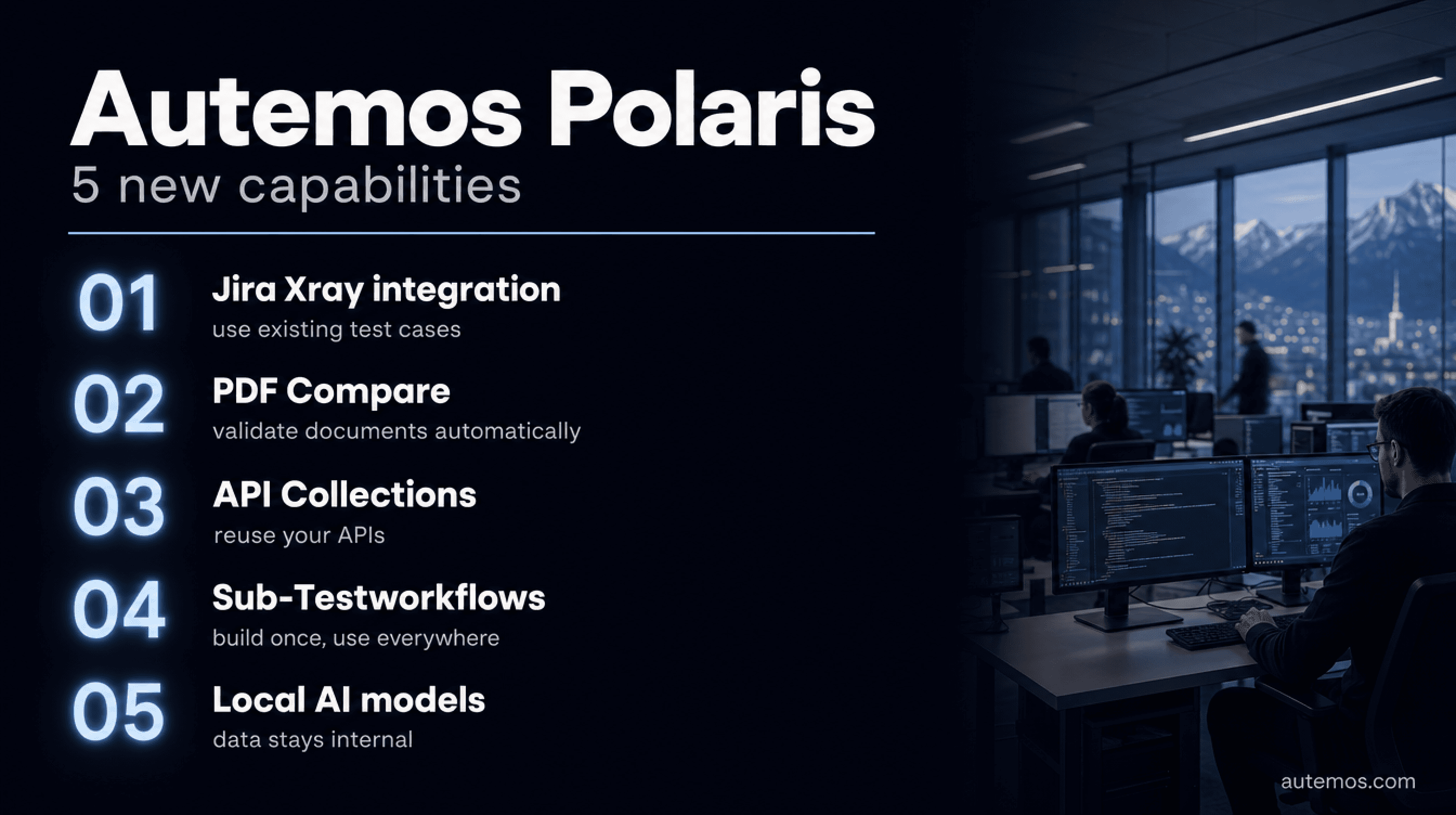
Figure 1: The five new capabilities in Autemos Polaris at a glance.
Bridging the gap between business and technology
One of the biggest challenges we see in test automation is not necessarily technical.
There are powerful automation frameworks. There are excellent test management solutions. There are APIs, CI/CD platforms, AI models and countless specialized testing tools.
The real challenge is bringing all of these worlds together.
A Test Automation Engineer may think in terms of APIs, selectors, reusable components and execution performance.
A Test Manager needs traceability, maintainability, reporting and control.
A Business Analyst or Subject Matter Expert understands the business process and knows what actually needs to be tested.
Successful test automation needs all of them.
This is exactly the gap we want Autemos to bridge.
Our goal is to provide enough abstraction that business-oriented testers can automate complex processes without becoming software developers – while still giving technical users the flexibility and capabilities they expect from a modern automation platform.
Low-code should not mean low capability.
And technical flexibility should not mean that test automation becomes inaccessible to everyone except developers.
Polaris takes another important step in this direction.
What's new in Autemos Polaris?
Polaris introduces several major capabilities, but they all follow the same principle: make test automation easier to build, easier to maintain and easier to integrate into the existing quality engineering ecosystem.
Capability | What it does | Where it helps most |
|---|---|---|
Jira Xray integration | Automates existing Xray test cases directly in Autemos | Teams that manage their tests in Jira |
PDF Compare | Compares generated PDFs against expected documents | Banking, insurance, public services |
API Collections | Organizes APIs centrally and reuses them across workflows | Scenarios that mix UI and API steps |
Sub-Testworkflows | Reuses one process in many tests, maintained centrally | Large and growing test suites |
Smarter AI | Uses algorithms where they win, AI where it adds value | Predictable runtimes, sensitive data |
From Jira Xray directly into automation
Test management and test automation are still too often treated as separate worlds.
In many of our customer projects, Jira and Xray are at the center of test management. Test cases are designed, managed and reported there – but when automation starts, the same information often has to be recreated somewhere else.
Xray is not a niche tool in that setup. The Atlassian Marketplace listing calls it "a mission-critical tool at over 10,000 companies" in 135 countries, managing more than 100 million test cases every month (Atlassian Marketplace, 2026). Every one of those test cases is a specification that already exists.
With Autemos Polaris, Xray test cases can be selected directly within Autemos and automated using the Autemos Recorder.
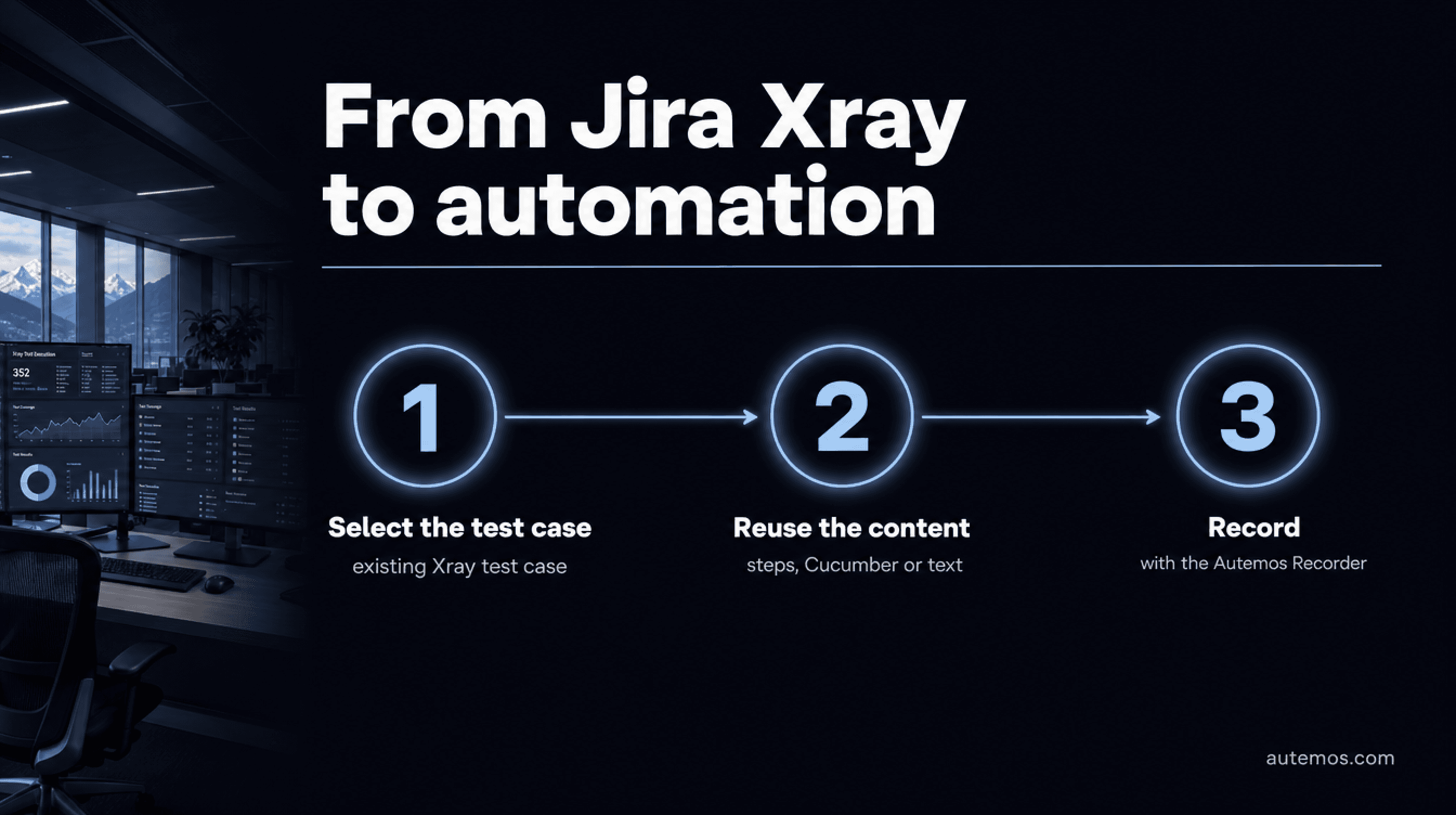
Figure 2: From an Xray test case to automation in three steps.
Select the existing Xray test case directly in Autemos.
Use its content as the basis for automation, whether that is a set of traditional test steps, a Cucumber scenario or a plain textual description.
Record the automation with the Autemos Recorder instead of rewriting the test case somewhere else.
The idea is simple: use the test cases you already have instead of recreating them for automation.
This creates a much more natural connection between test management and test automation.

Figure 3: The Recorder works through the imported test case step by step and ticks off the completed steps on the right.
PDF Compare: Documents are part of the business process
Especially in industries such as banking, insurance and public services, testing doesn't stop when a button has been clicked successfully.
Business processes generate documents. These documents often carry the actual business result that needs to be validated:
Invoices and account statements
Insurance policies and contracts
Confirmations and correspondence
Regulatory and management reports
With PDF Compare, Polaris makes document validation part of the automated business process.
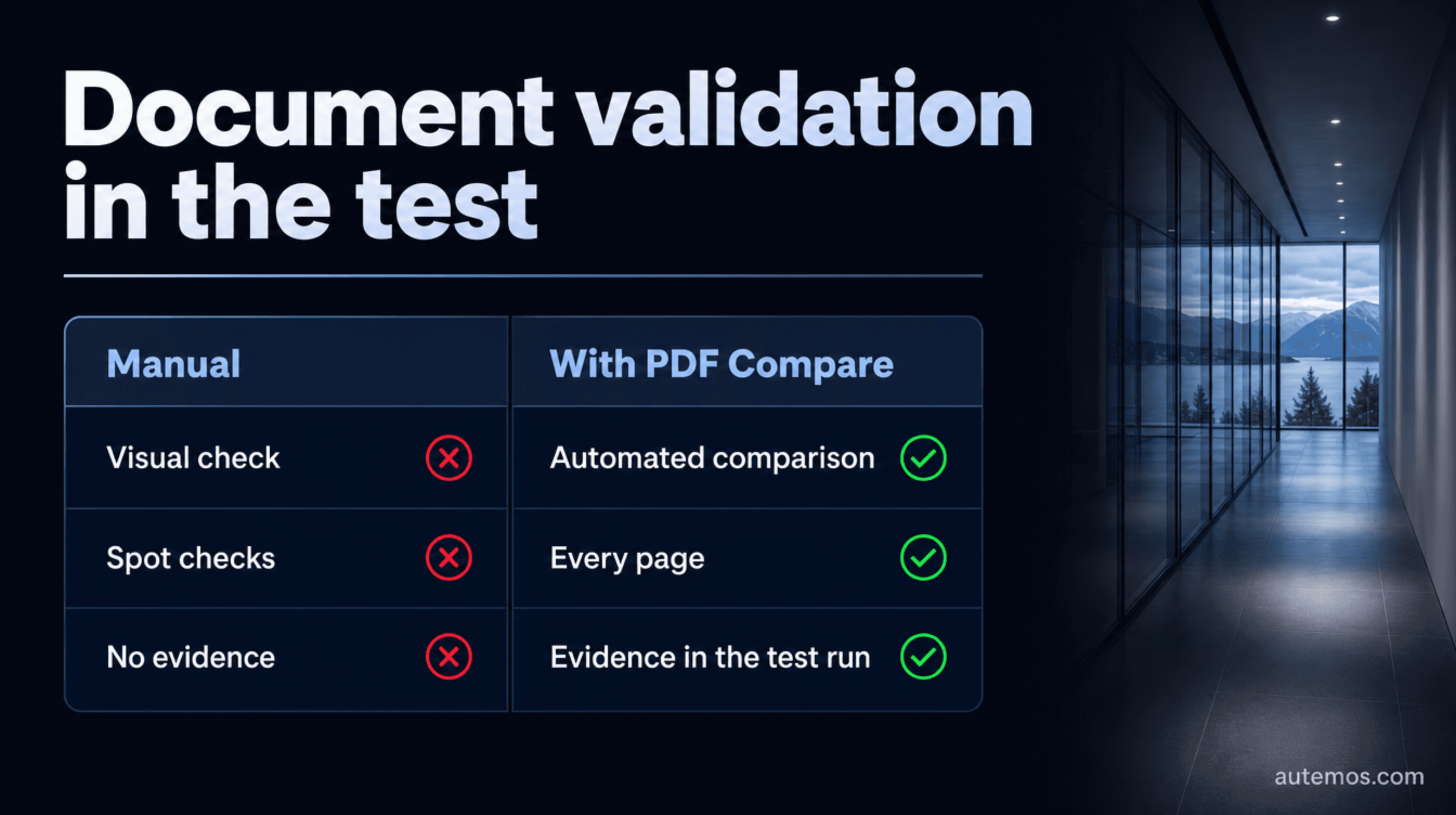
Figure 4: Document validation compared, manual versus PDF Compare.
Generated PDFs can be compared against expected documents, relevant differences can be identified and dynamic areas can be excluded where appropriate.

Figure 5: When a PDF deviates from the reference, the report lists page count, text per page and full document text separately.
Instead of treating document verification as a separate manual activity, it becomes another automated validation within the business process. For teams working under audit requirements, that also means the document check leaves the same evidence trail as every other automated step, which matters in regulated industries.
API Collections: UI and API belong together
Another pattern we see frequently is test automation that focuses almost entirely on the user interface.
But modern applications don't work that way.
Behind almost every UI interaction are APIs, services and distributed systems.
Polaris introduces API Collections, allowing APIs to be centrally organized and reused across different test workflows.
Existing OpenAPI or Swagger definitions can be imported and API interactions can become reusable building blocks within automation.
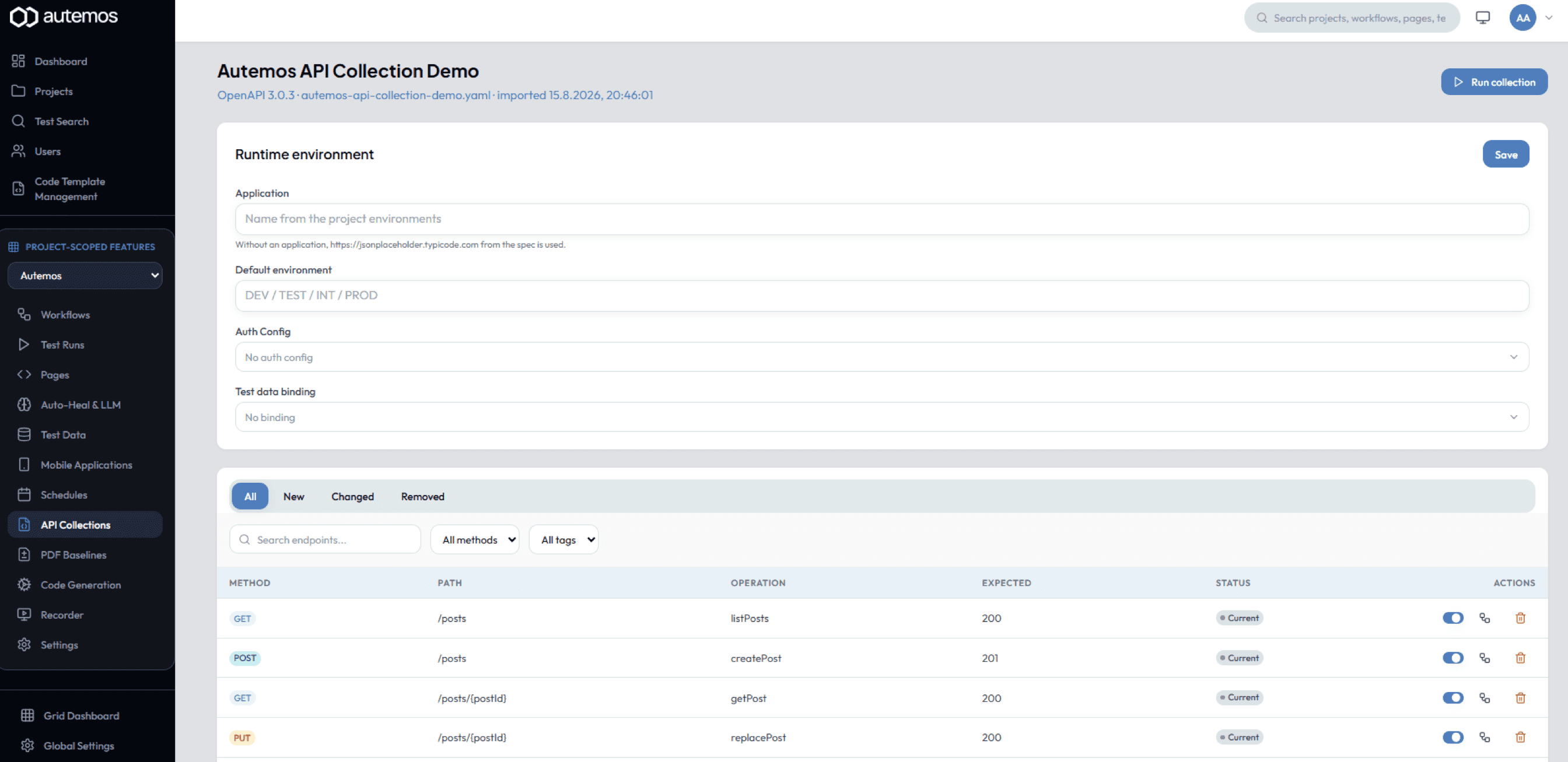
Figure 6: An imported OpenAPI definition as an API Collection, with method, path, operation and expected status code per endpoint.
This also enables much more efficient scenarios across the full process chain. Test data might be created through an API, the actual business process executed through the UI and the result verified again through another service. That mixed approach is the core idea behind API test automation that keeps pace with the application.
Our philosophy is straightforward: use the UI where you need to test the UI. Use APIs where they make automation faster and more efficient.
Sub-Testworkflows: Build once, use everywhere
As test automation grows, maintainability quickly becomes one of its biggest challenges.
A login process may be used in dozens or hundreds of tests. The same applies to customer creation, product selection, checkout processes or other recurring business activities.
Duplicating these steps makes automation expensive to maintain, which is the single largest driver behind test maintenance effort in mature suites.
With Sub-Testworkflows, Polaris introduces reusable automation building blocks.
A process can be implemented once and then embedded into multiple test workflows.
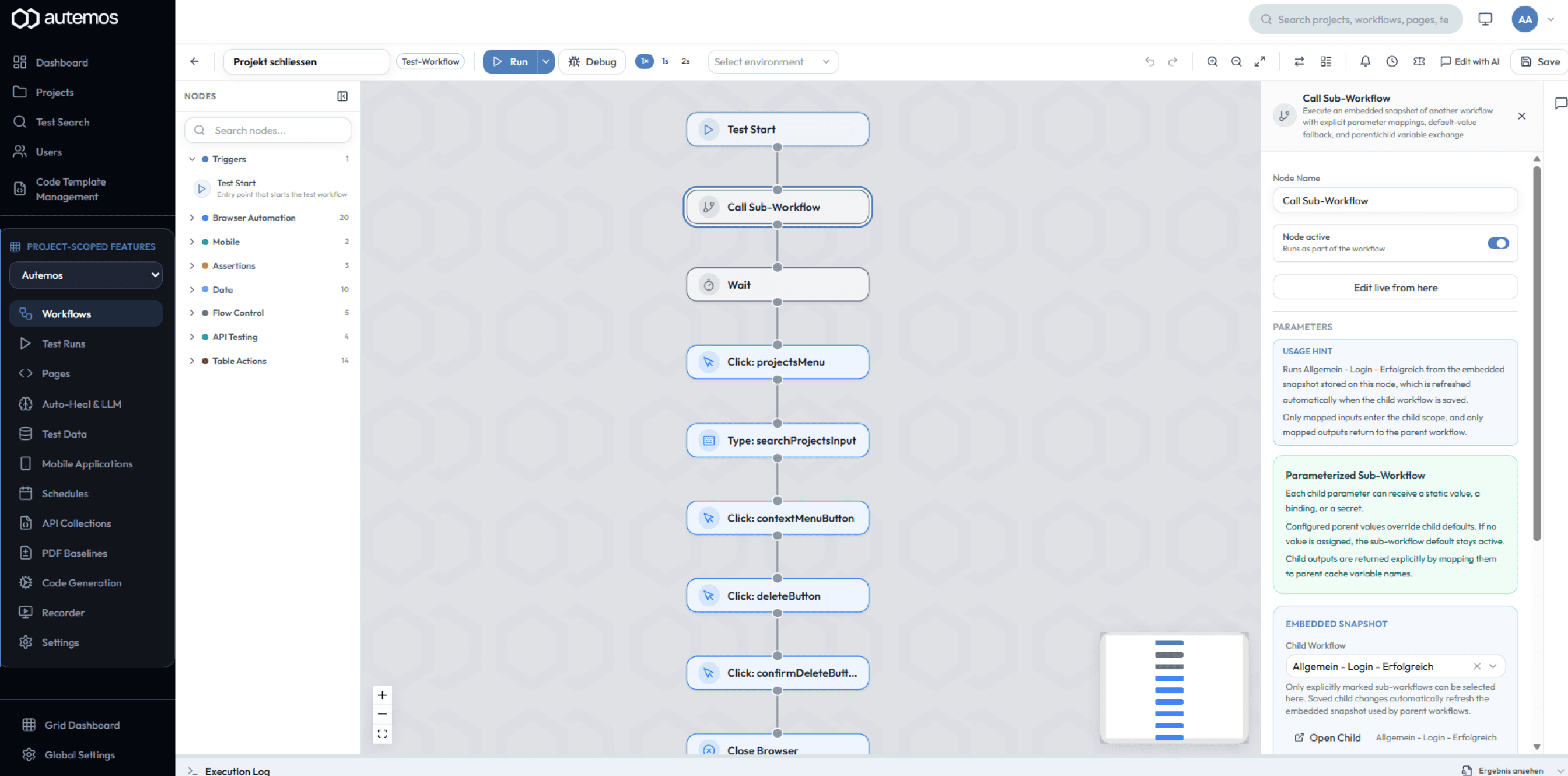
Figure 7: A sub-testworkflow is embedded as its own node; parameters and return values are mapped explicitly.
When the process changes, the reusable component can be adapted centrally instead of modifying every individual test.
This sounds simple – but at scale, it can make an enormous difference.
Build once. Use everywhere.
Smarter AI: AI where it creates value
AI has been an important part of Autemos for some time.
With Polaris, however, we have focused not only on adding more AI capabilities but also on using AI more intelligently.
Today, there is a tendency to solve almost every problem with an LLM.
We don't believe that is always the right approach.
If a deterministic algorithm can solve a problem faster, more reliably and with fewer resources, there is little reason to involve an AI model.
The industry numbers point the same way. Capgemini's World Quality Report 2025-26 found that 43% of organizations are experimenting with Gen AI in QA, while only 15% have scaled it enterprise-wide (Capgemini, 2025). The same report names test data and AI tool adoption as the two barriers teams hit first. Our reading of that gap is a practical one: AI has to earn its place in a pipeline that runs every day, which is the theme of our guide to AI-supported test automation.
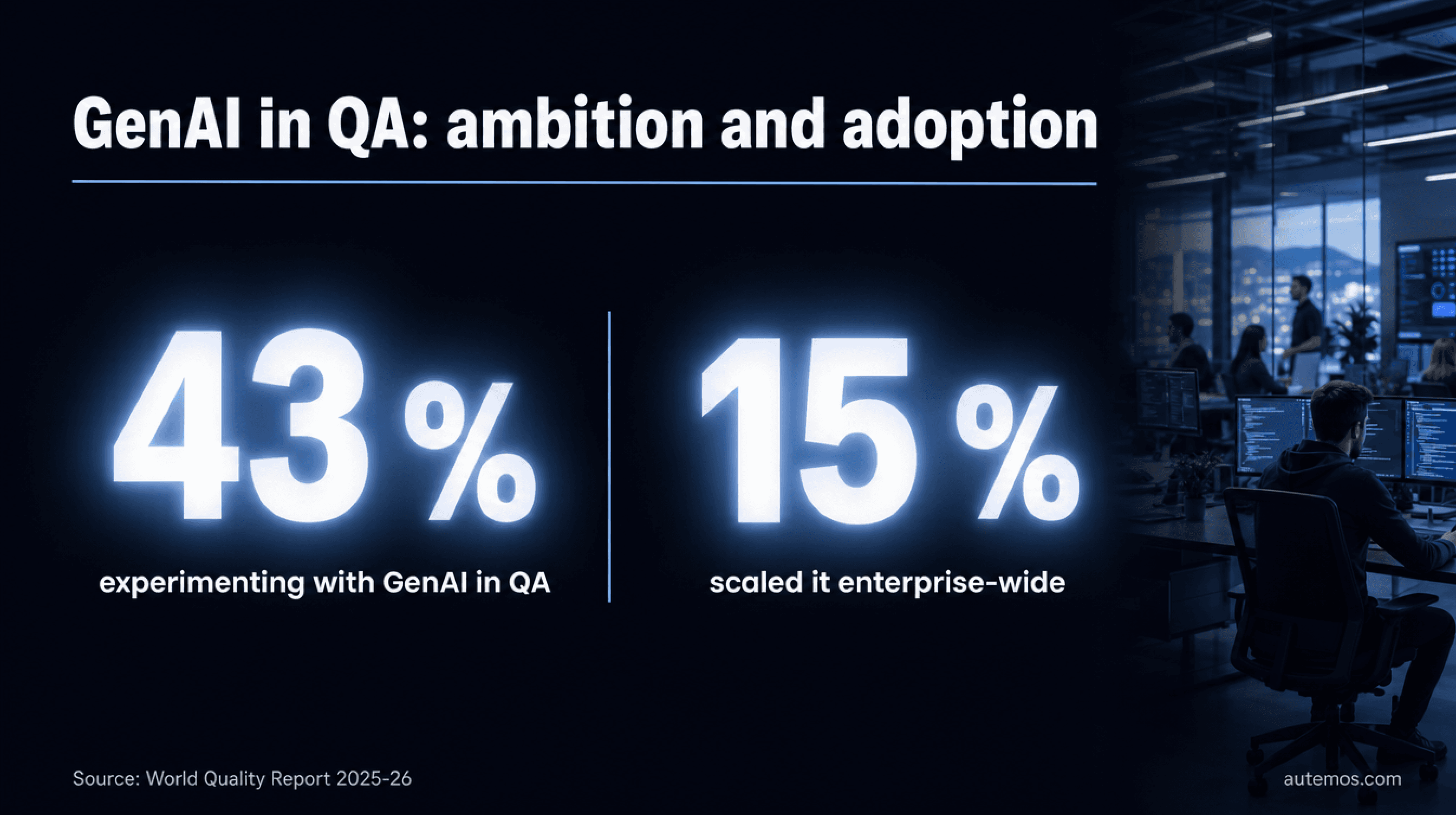
Figure 8: GenAI in QA: 43% experiment, 15% have scaled (World Quality Report 2025-26).
Polaris therefore includes numerous optimizations that reduce unnecessary AI usage and rely on algorithms where they are the better solution.
AI remains available where its ability to understand context, generate solutions or reason about complex situations creates real value.
The result is faster execution, reduced AI consumption and a more predictable automation experience.
In addition, Polaris expands support for local and offline AI models, giving organizations greater flexibility over where and how AI is executed.
This is particularly important for organizations operating in environments where sensitive information cannot simply be sent to external AI services.
For us, smarter AI doesn't mean using more AI. It means using the right technology for the right problem.
Polaris is more than a collection of features
Jira Xray integration. PDF comparison. API Collections. Reusable Sub-Testworkflows. Local AI models.
At first glance, these might look like five independent capabilities.
But there is a common idea behind all of them.
We want test automation to become more closely connected to the way organizations actually develop and test software.
That means connecting test management with automation.
It means testing complete business processes rather than isolated UI interactions.
It means making automation reusable instead of creating hundreds of independent scripts.
And it means using AI pragmatically rather than simply adding AI everywhere.
Our goal with Autemos remains the same: enable technical and business-oriented people to collaborate on test automation – without forcing either side to work in a world that doesn't fit them.
Built with our customers, not just for them
Polaris is another step on that journey.
And many of the ideas behind it originate from challenges we've encountered together with customers in real projects across Switzerland, Germany and Austria.
That feedback loop is something we want to continue.
We learn from our projects.
We identify recurring challenges.
And where we believe Autemos can provide a better solution, we bring those learnings back into the platform.
Frequently asked questions
What is Autemos Polaris?
Autemos Polaris is the current release of the Autemos test automation platform. It adds Jira Xray integration, PDF Compare, API Collections, reusable Sub-Testworkflows and wider support for local and offline AI models.
Can Autemos automate existing Jira Xray test cases?
Yes. Xray test cases can be selected directly within Autemos and automated with the Autemos Recorder. Traditional test steps, Cucumber scenarios and plain textual descriptions can all serve as the basis for automation, so test cases do not have to be recreated.
What does PDF Compare do?
PDF Compare validates generated PDF documents against expected documents inside an automated test run. Relevant differences are identified and dynamic areas such as timestamps or reference numbers can be excluded, which makes invoices, policies and statements testable.
Can Autemos run AI models locally?
Yes. Polaris expands support for local and offline AI models, so organizations can decide where AI is executed. That matters wherever sensitive information cannot be sent to external AI services, for example in banking, insurance and the public sector.
What are Sub-Testworkflows?
Sub-Testworkflows are reusable automation building blocks. A recurring process such as login, customer creation or checkout is implemented once and embedded into multiple test workflows, so a change is made centrally instead of in every individual test.
What comes next
Over the coming weeks, we'll take a closer look at the individual capabilities introduced with Autemos Polaris and show how they can be used in real-world test automation scenarios.
Because ultimately, test automation isn't about automating as many test cases as possible.
It's about creating sustainable, maintainable and efficient quality engineering that helps teams deliver better software faster.
Welcome to Autemos Polaris. ⭐
If you want to see Polaris on your own application, book a demo with our team and we'll walk through your scenarios together.