·
13 min
AI Test Automation: The Complete Guide for 2026

Roman Kirchmeier - Autemos

89% of organizations already pilot or run generative AI in quality engineering, yet only 15% scale it enterprise-wide (Capgemini World Quality Report 2025-26, 2025). That gap between enthusiasm and production use defines the topic. AI test automation promises less maintenance, more robust tests, and faster releases. Some of it holds up. Some is marketing. This guide separates the two and shows what actually matters when you choose a tool.
TL;DR: AI test automation uses machine learning for test creation, self-healing locators, and visual checks. It cuts maintenance noticeably but does not replace a test strategy. Adopters report just 19% average productivity gains (Capgemini WQR 2025-26, 2025) — success rides on structure and governance, not on the technology itself.
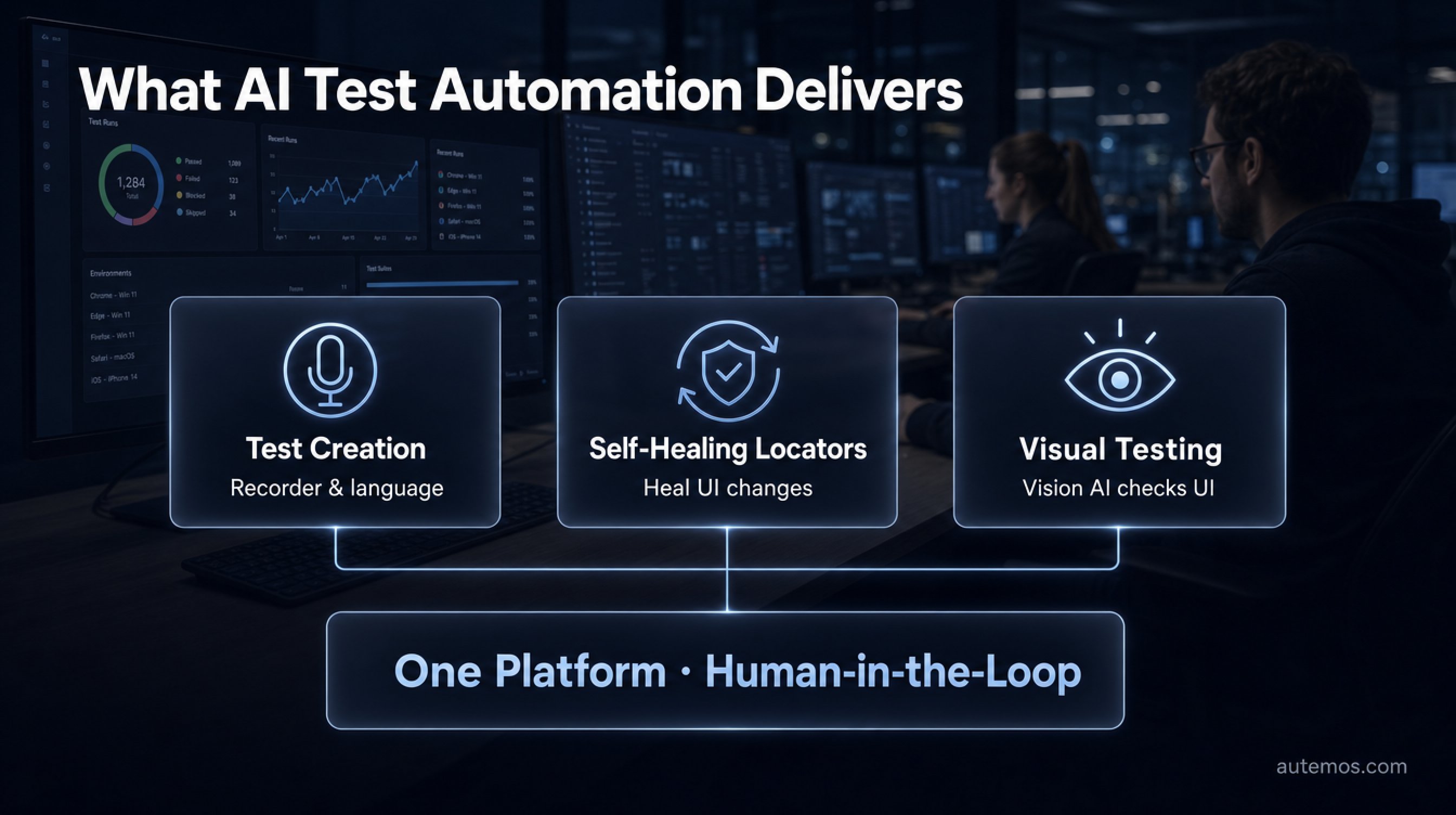
Figure 1: What AI test automation delivers — three building blocks, one platform.
What is AI test automation?
AI test automation is a testing approach where tools apply machine learning to create, run, and maintain tests. Instead of scripting every step by hand, the AI generates or repairs test cases, detects UI changes, and compares interfaces semantically. According to the Capgemini WQR 2024-25 (2024), 68% of organizations use or plan to use GenAI in quality engineering.
The difference from classic automation shows up when things change. A traditional script breaks the moment an element shifts. An AI-driven test tries to recognize intent and adapts.
What each building block means in detail, and how AI testing differs from rule-based automation, we cover in What is AI testing? Definition and types. Here we focus on the full picture and on selection.
Why now? The pressure on QA teams
The timing comes from two opposing forces: more code, fewer testers. 90% of developers now use AI daily and ship more code in less time (Google DORA Report 2025, 2025). Test capacity has not kept pace. More output against flat QA headcount inevitably pushes the load toward automation.
One detail from that same DORA report stands out. Over 80% of developers report higher productivity, yet some of the saved time goes straight back into auditing the AI's output. AI adoption even correlates negatively with delivery stability.
This "verification paradox" is the strongest case for trustworthy, traceable AI in testing. The more AI-generated code you produce, the more you need checks that are themselves auditable — otherwise you just move the problem up one level.
How does AI actually help in testing?
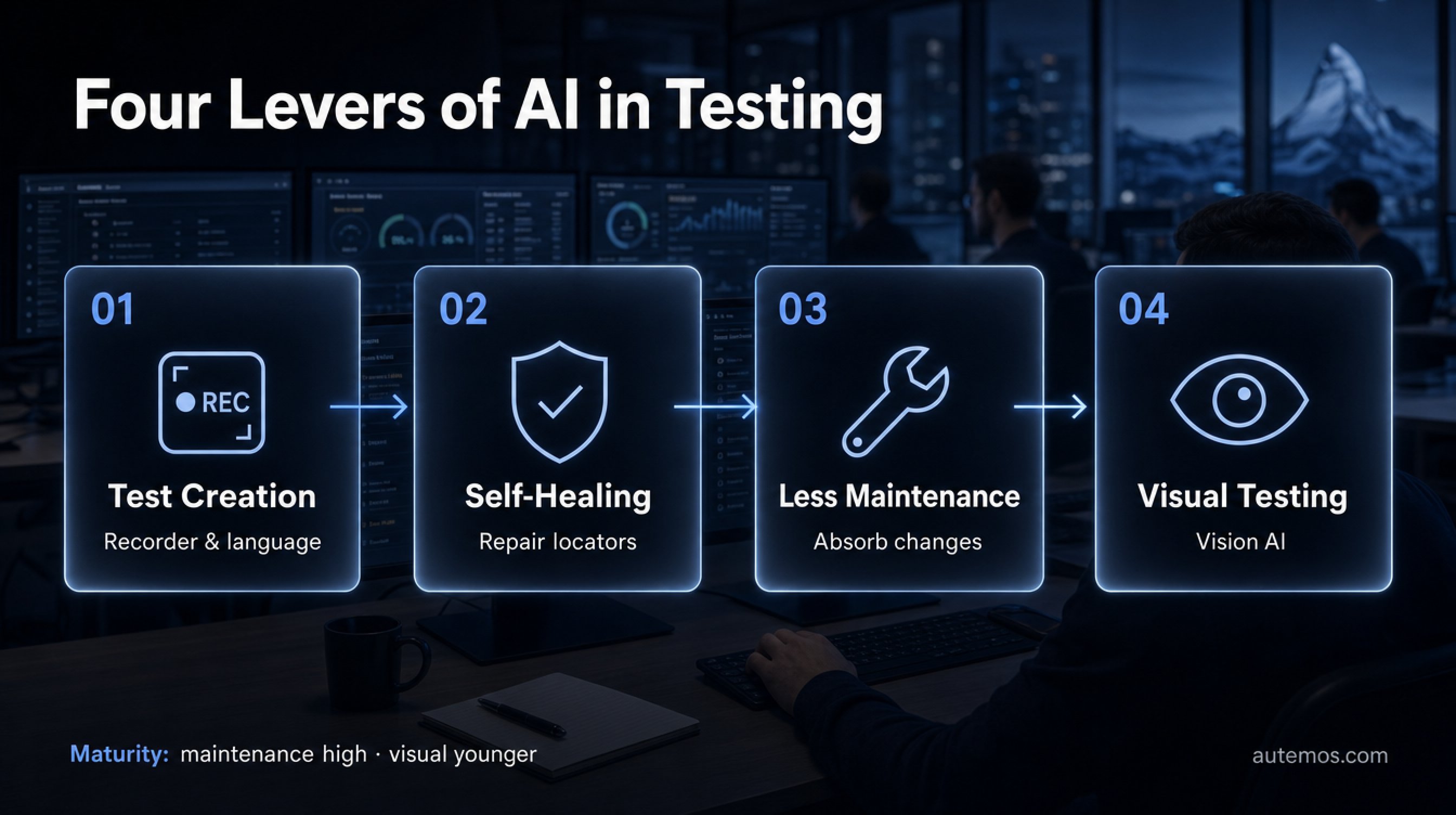
Figure 2: The four levers of AI across the test lifecycle.
AI intervenes at four points in the test lifecycle, with very uneven maturity. The biggest practical gains show up in maintenance and test creation; visual checking is promising but younger. 72% of organizations report accelerated automation from AI (Capgemini WQR 2024-25, 2024). Here are the four levers in detail.
Test creation via AI Recorder and natural language
AI lowers the barrier to entry by recording click paths or generating tests from natural language. A tester describes a flow, and the tool produces the executable test. That speeds up coverage of new features but never replaces a thought-out test strategy. How the AI Recorder turns recordings into stable, exportable tests is shown on the feature page.
Self-healing locators against brittle tests
Self-healing locators detect changed UI elements and update the reference automatically instead of letting the test fail. This tackles one of QA's most expensive problems. At Google, roughly 16% of around 4.2 million tests show some flakiness (Micco/Google, ICST, 2017). How self-healing works and where its honest limits sit, we cover in detail in self-healing locators and flaky tests.
Less maintenance across the test suite
AI reduces recurring upkeep by absorbing smaller changes automatically. That matters, because average test automation coverage sits at just 33%, and only 8% of organizations have a fully established automation strategy (Capgemini WQR 2025-26, 2025). How to cut maintenance systematically, read in reduce test maintenance with AI.
Visual testing with Vision AI
AI-based visual testing compares interfaces through deep-learning image analysis rather than raw pixel diffing, which reduces false positives. The underlying mechanism is well supported; specific savings numbers are often illustrative (BrowserStack, 2025). Where the approach pays off and where it does not, we explain in visual testing with Vision AI.
How reliable are the self-healing numbers really?
Vendor self-healing figures usually land between 80% and 95% less maintenance, but they are not comparable. mabl cites "up to 95%", Functionize "85% less maintenance", and Virtuoso/DXC "83%" (Functionize; Virtuoso QA). Each number rests on different applications and measurement methods.
A single comparable benchmark across tools simply does not exist. Anyone selling those percentages as a fixed expectation is ignoring the context.
A more honest view is differentiated. Locator self-healing typically addresses 70 to 85% of UI-change failures; the rest comes from data, timing, or architecture (Virtuoso QA). That is still a substantial gain — just not a cure-all. Would you trust a number no vendor reproduces under the same conditions?
Why does AI testing need a human in the loop?
AI testing needs a human in the loop because AI without control creates new risks. The biggest GenAI hurdles in QE are data privacy (67%), integration complexity (64%), and hallucination or reliability (60%) (Capgemini WQR 2025-26, 2025). An AI that silently repairs tests can mask real defects.
Human-in-the-loop is a control model with a fixed sequence:
The AI detects a change and proposes a repair.
A person reviews the proposal and approves it.
The self-healing action is logged, not executed in the dark.
That keeps it traceable why a test runs differently today than it did yesterday.
In conversations with QA leads from regulated industries, we hear the same objection: a black box that changes tests on its own will not survive an audit. That is exactly why a complete audit trail is not a comfort feature but a prerequisite. For heavily regulated environments like banks, we cover the requirements separately in test automation in regulated banking.
What does the honest adoption reality say?
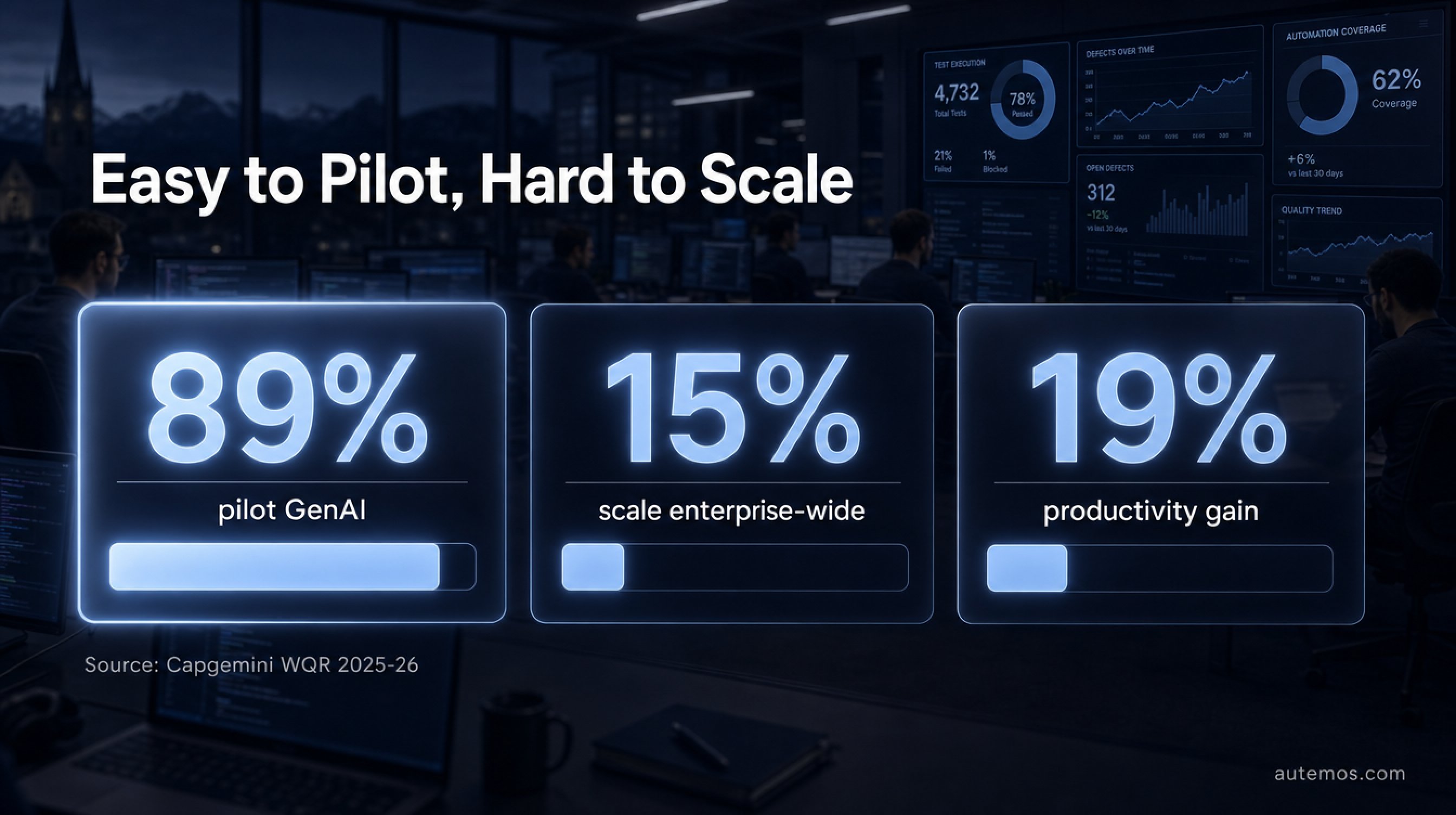
Figure 3: Easy to pilot, hard to scale — the gap in numbers.
Piloting is easy, scaling is hard. In 2025, 89% of organizations deploy or trial GenAI in QE (37% in production, 52% in pilot), but only 15% at enterprise scale (Capgemini WQR 2025-26, 2025). The average productivity gain sits at 19%.
Notably, a third of adopters see only very limited effects. According to the Capgemini WQR 2025-26 (2025), organizations report "an average productivity boost of 19%, but one third have seen minimal gains, highlighting the need for smarter integration strategies." The causes are not technical: missing skills, unclear ownership, and weak structure. Half of all organizations simply lack AI/ML expertise.
That flips the usual story. The bottleneck is not the model, it is the organization. A platform that is easy to adopt, preserves existing code, and fits cleanly into your current process often beats the technically flashier option. Treating 19% as a realistic starting point makes for more honest planning than expecting 90%.
Does AI testing pay off financially?
The market is clearly growing, but the ROI rationale needs a correction. Analysts size the AI-enabled testing market at roughly $1.4 to $2.0 billion by 2030, growing around 18.4% annually (Grand View Research, 2024). Growth alone, however, proves nothing about ROI in any single case.
ROI is often justified with the line that a bug costs 100 times more in production than in design. That "100x" figure traces back to internal IBM training material from 1981, not a study. As The Register (2021) puts it bluntly: "There's one tiny problem with the IBM Systems Sciences Institute study: it doesn't exist." Treat the figure as a widely cited but unverified illustration.
The direction still holds: finding defects early is cheaper. The case becomes solid through concrete maintenance costs. Atlassian, for instance, attributes over 150,000 wasted developer hours per year to reruns in the Jira backend alone (Atlassian Engineering, 2025).
How do you choose the right platform?
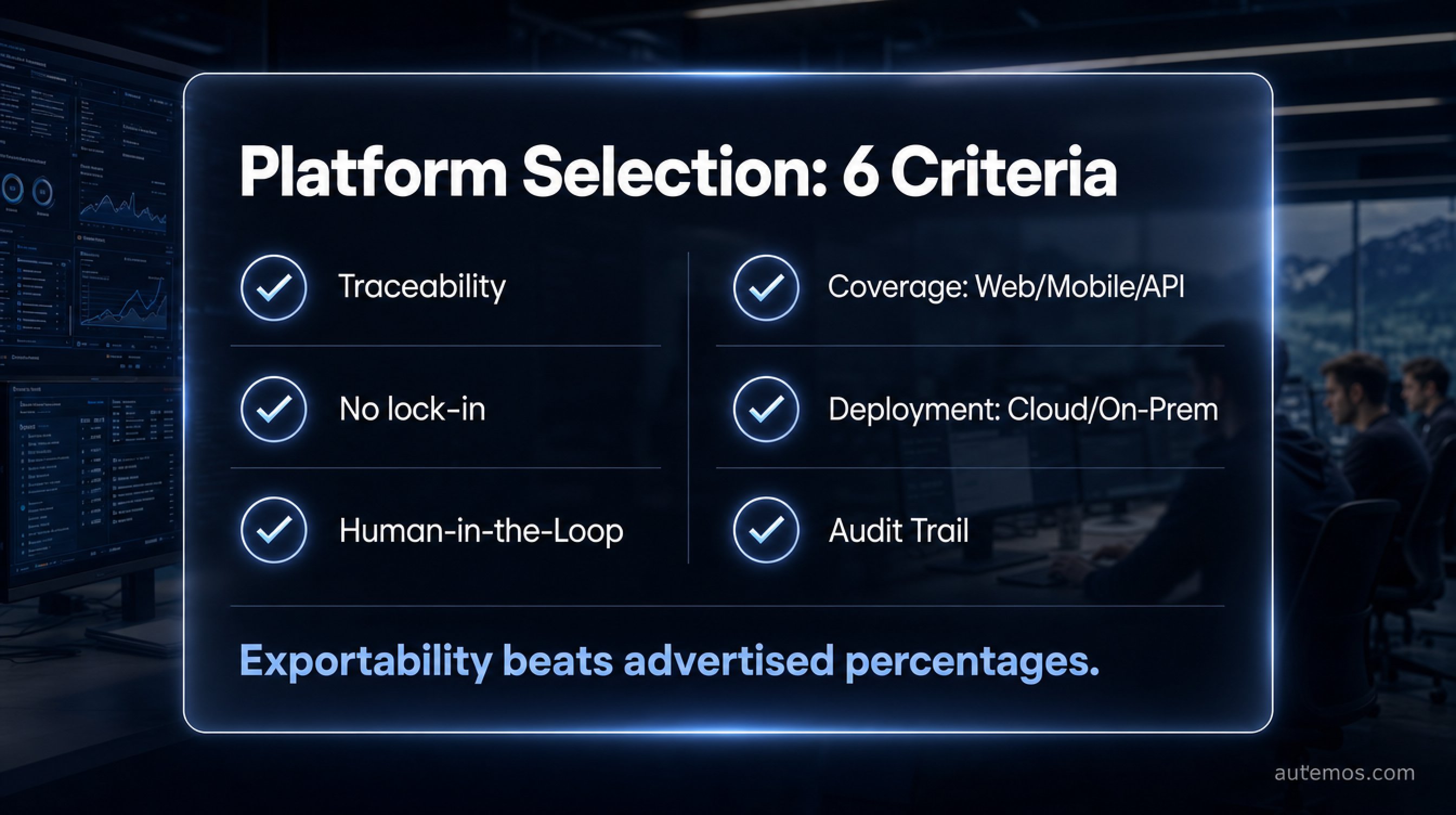
Figure 4: Six criteria for selecting a platform.
What matters is less the advertised percentages and more whether the platform fits your organization. Since the main bottleneck per the Capgemini WQR 2025-26 (2025) is skills and structure, adoptability and traceability should outrank a raw feature list. The criteria below help you evaluate.
Traceability: Are self-healing actions logged, or do they happen in the dark?
No lock-in: Does existing Playwright, Selenium, or Appium code stay intact and exportable?
Human-in-the-loop: Is there an approval step before automatic changes?
Coverage: Web, mobile, API, and desktop on one platform instead of four tools?
Deployment: Cloud or on-premise, depending on your data-privacy needs?
Audit trail: Can every change be evidenced for compliance?
Pay special attention to exportability. A platform that hands your code back in a standard format slashes the risk of a wrong decision — you can switch any time. Lock-in is the real cost risk, not the license.
What does this mean for the DACH region?
In the DACH region, AI testing is less a luxury than an answer to a structural staffing gap. Germany is short roughly 109,000 IT specialists, with over 137,000 open IT roles in 2025; developers and automation experts top the demand (Bitkom 2025, via Jobbatical, 2025). If you cannot hire testers, you have to automate the testing.
Meanwhile, the test organization itself is changing. Across DACH, classic test-management tools are used in only about half of projects, and the share of dedicated test managers has fallen to 10.8% — down from around 28% a decade ago (Software Testing Survey 2024, via mgm-tp, 2025).
Put those two figures together and the picture is clear. Test responsibility is spreading across teams that are already stretched. AI test automation here is not hype but a pragmatic necessity to hold quality with fewer specialized heads.
AI vs. rule-based test automation at a glance
The table shows where AI makes the biggest difference.
Dimension | Rule-based | AI-assisted |
|---|---|---|
Test creation | Manual scripting | Recorder or natural language |
UI changes | Test breaks (flaky) | Self-healing updates the locator |
Maintenance effort | High | Significantly lower |
Skills required | Programming | Business and engineering |
Control | Full but slow | Human-in-the-loop approval |
Frequently asked questions
Does AI test automation replace testers?
No. AI takes over repetitive work like maintenance and creation, but strategy, risk assessment, and approval stay human. A third of adopters see only limited effects because skills and structure are missing, not the technology (Capgemini WQR 2025-26, 2025). People remain central.
How much maintenance does self-healing really save?
Realistically, locator self-healing addresses 70 to 85% of UI-related test failures; the rest involves data, timing, and architecture (Virtuoso QA). Vendor figures of 83 to 95% rest on different applications and are not comparable. Treat them as orientation, not a guarantee.
Is AI testing suitable for regulated industries?
Yes, provided traceability is in place. Data privacy is named the top GenAI hurdle in QE by 67% of organizations (Capgemini WQR 2025-26, 2025). Logged self-healing, an audit trail, and on-premise deployment make use viable even in banking.
What is the most common adoption mistake?
Setting expectations too high on technology while investing too little in structure. Adopters average just 19% productivity gain, and the causes of failure are organizational (Capgemini WQR 2025-26, 2025). Clear ownership and training beat any extra feature.
Conclusion
AI test automation has matured, but it is not magic. It cuts maintenance, speeds up creation, and makes tests more robust — provided you plan with realistic numbers. 89% pilot, only 15% scale, and the bottleneck is the organization, not the model (Capgemini WQR 2025-26, 2025).
In the DACH region, with over 109,000 missing IT specialists and shrinking ranks of test managers, the move is overdue. Bet on traceability, human-in-the-loop, and exportable code rather than advertised percentages. Plan honestly, and you get from pilot to scale.
Want to see what logged self-healing and human-in-the-loop look like in practice? Book a demo and check it against your own tests.