·
8 min
API Test Automation: Tests That Grow With You

Roman Kirchmeier - Autemos

API test automation is a practice that checks interfaces through scripts rather than through the UI, running faster and more reliably. Yet many initiatives fail not on the technology but on maintenance. Every schema change, every new environment, every renamed parameter can break a suite. That is where automation either saves money or burns it. According to Postman, 62 percent of respondents work on revenue-generating APIs (Postman, 2024) — mistakes here are expensive. This article shows how it works, what AI and self-healing realistically deliver, and which metrics prove the ROI.
TL;DR: API test automation speeds up regression and produces auditable, reproducible evidence — ideal for regulated environments. Maintenance remains the biggest cost driver. AI and self-healing reduce that effort but do not eliminate it: only 15 percent of organizations run GenAI in quality engineering at enterprise scale (World Quality Report, 2025–26).

Figure 1: The API test cycle — the same loop on every commit.
Why Does the ROI of API Test Automation Erode?
Maintenance is the most common reason test automation fails to pay off. Tests break not because the application is broken, but because something incidental changed: a field name, a status code, an environment. This weighs heavily — in the World Quality Report, 64 percent of respondents name integration as a central barrier to QE automation (World Quality Report, 2025–26).
Three patterns show up in almost every project:
Schema drift — an API contract changes, the assertions keep running, but they verify the wrong thing.
Environment flakiness — tests react to latency, test data, or secrets instead of real defects.
Brittle assertions — checks so strict they raise alarms on every cosmetic change.
The tricky part: the larger the suite, the faster maintenance grows. What starts as an efficiency gain tips into a permanent chore. In client projects we see that the first 200 tests are rarely the problem — the pain threshold sits where nobody can tell anymore which failed test is a genuine finding and which is pure maintenance.
API tests are more stable than UI tests, but not immune. Ignoring that leads to over-optimistic planning and erodes trust in your own safety net.
Why Automate API Tests Instead of Testing Manually?

Figure 2: Why ROI erodes — the three most common maintenance patterns.
Automated API tests deliver feedback in seconds rather than hours and run identically on every commit. That is the decisive lever: 74 percent of organizations follow an API-first approach, and 63 percent build a new API in a week or less (Postman, 2024). At that cadence, manual regression simply is not feasible.
The advantage over UI tests is structural. API tests call the endpoint directly, without browser, rendering, or wait times. That makes them faster, more deterministic, and easier to parallelize. Each run also produces reproducible evidence — in banks and regulated environments, not a convenience but a requirement.
Dimension | Manual | Automated |
|---|---|---|
Speed per run | slow, human-paced | seconds to minutes, parallel |
Repeatability | varies | identical every run |
Regression at scale | impractical | every commit (CI/CD) |
Edge-case coverage | time-limited | high (data-driven) |
Feedback latency | hours to days | immediate in the pipeline |
Maintenance | low setup, high repeat | setup plus ongoing (AI/self-healing reduces) |
Audit trail (banking) | manual, error-prone | automated, reproducible |
Best for | exploratory testing, judgment | regression, contracts, CI gates |
An honest caveat belongs here: automation augments manual and exploratory testing, it does not replace it. Human judgment stays essential for new features, unusual failure modes, and risk trade-offs.
How Does API Test Automation Work in Practice?
Every API test follows the same loop, no matter which framework runs it:
Send the request to the endpoint.
Check the status code.
Validate the schema against the contract.
Check the payload contents.
Measure latency.
Every framework builds on this. Market relevance is significant — estimates put API testing market growth at roughly 12 to 22 percent per year (World Quality Report, 2025–26), though the range varies considerably by source.
Which Frameworks Fit?
The choice depends on the team and the protocol:
Postman/Newman — low barrier to entry, good for quick suites, weaker for database access and encryption.
REST Assured — Java, code-first, strong in existing JVM stacks.
Karate — BDD DSL, readable scenarios without deep coding skills.
Pact — contract testing, secures the agreements between services.
Playwright/Cypress — primarily UI, but offer usable API features.
These cover REST, GraphQL, and gRPC. Which tool fits which use case we explore in our overview of the best API testing tools for 2026.
What Makes a Suite Production-Ready?
Four building blocks decide robustness. Data-driven testing parameterizes scenarios instead of duplicating them. Environment and configuration management cleanly separates base URLs, secrets, and environments — critical in banking. CI integration triggers tests on every commit or pull request (Jenkins, GitHub Actions, GitLab); failing tests block the build. Reporting delivers per-run reports, trends, and audit trails. We cover the methodical foundations in detail in how to test REST APIs properly.
AI and Self-Healing: What It Delivers — and Where the Limits Are
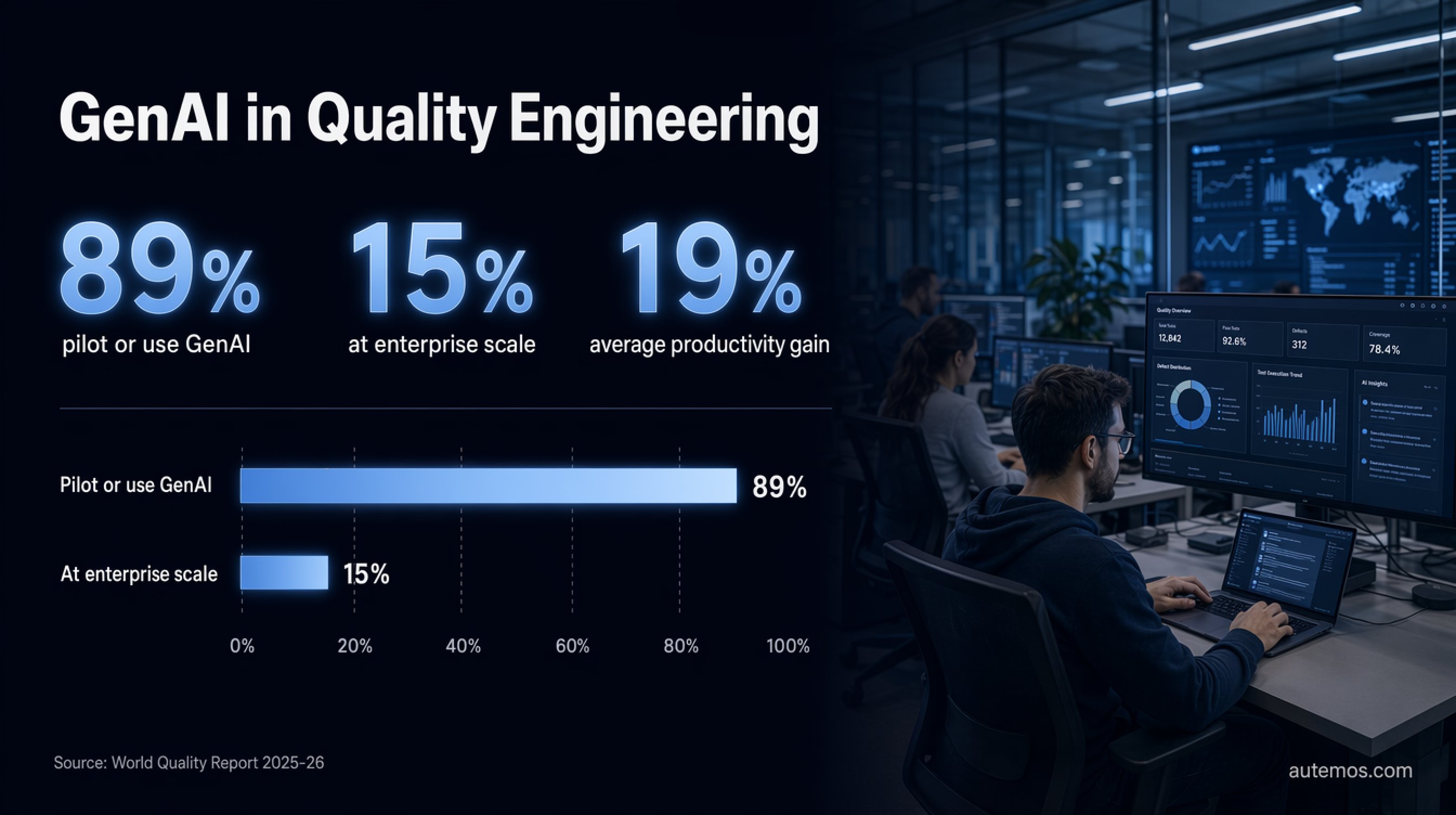
Figure 3: GenAI in QE — wide adoption, limited scaling. Source: World Quality Report 2025-26.
AI in test automation is widespread but rarely mature. According to the World Quality Report, 89 percent of organizations pilot or deploy GenAI in quality engineering, yet scaling stalls: "Only 15% of respondents have achieved enterprise-wide implementation, while 43% remain in the experimental phase." (World Quality Report, 2025–26). The average productivity gain is 19 percent, and one-third report only minimal effects.
What does self-healing actually do? The concept originated in the UI world: when a locator fails, the system automatically finds an alternative (self-healing locators explained). At the API layer, AI assists with test generation from specifications, adaptation to schema changes, anomaly detection, and triaging flaky failures. That noticeably reduces maintenance — exactly how, we show in reducing test maintenance with AI.
Now the honest part. Self-healing reduces maintenance, it does not eliminate it. And it carries a risk of its own:
An automatically "healed" test can mask a real defect. If a test silently adapts to a changed response, it may no longer check the very fault it was meant to catch. Self-healing without a human control loop shifts the problem rather than solving it.
That is exactly why we treat AI as an assistant with a human control loop. Tal Levi-Joseph, Senior Vice President at OpenText, puts it plainly in the World Quality Report: "AI amplifies capability, but it cannot substitute for it." (World Quality Report, 2025–26). The biggest barriers respondents cite confirm that caution: data privacy at 67 percent, integration at 64 percent, hallucination and reliability at 60 percent. In regulated environments these are not footnotes but acceptance criteria.
In client projects our experience is clear: self-healing delivers value when every heal is logged and reviewed transparently — not when it happens invisibly in the background. We describe the methodical framework in our guide to AI-driven test automation.
How Do You Measure the ROI of API Test Automation?
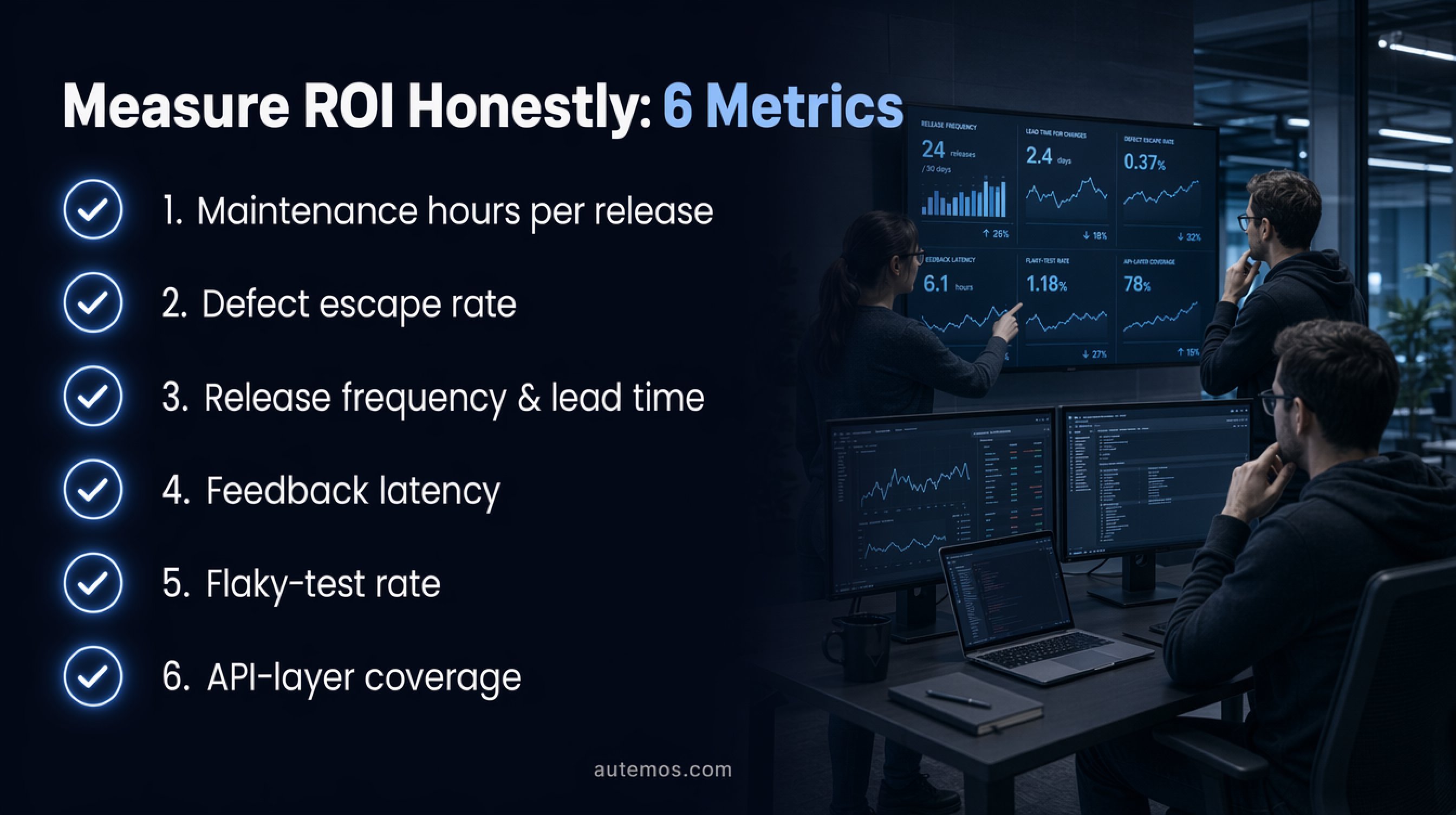
Figure 4: Six metrics that prove the ROI of API test automation.
You prove ROI through a few hard metrics rather than gut feeling. The one reliable benchmark from current data: an average productivity gain of 19 percent from GenAI in QE (World Quality Report, 2025–26). Anything beyond that you must measure in your own environment.
These figures are worth tracking:
Maintenance hours per release — the most direct indicator of brittle tests.
Defect escape rate — how many defects reach production despite tests.
Release frequency and lead time (DORA metrics) — delivery pace.
Test execution time and feedback latency — how fast the pipeline responds.
Flaky-test rate — share of unstable tests across all runs.
API-layer coverage — coverage at the contract and endpoint level.
One data point shows where the discipline is heading: synthetic test data adoption rose from 14 percent (2024) to 25 percent (2025) (World Quality Report, 2025–26).
In client projects we measure the success of Autemos mainly through saved maintenance hours and a declining defect escape rate — we quote concrete numbers only once they come from your environment and are methodically sound. We deliberately reject flashy promises like blanket maintenance cuts, because they rarely hold up in practice.
Frequently Asked Questions
What is API test automation?
API test automation checks interfaces automatically: a tool sends requests and validates status, schema, payload, and latency — identically on every commit. It replaces repetitive manual checks and produces auditable evidence. With 74 percent of organizations being API-first (Postman, 2024), it is effectively standard for regulated teams.
Why are API tests more stable than UI tests?
API tests call endpoints directly — without the browser, rendering, or wait times that make UI tests flaky. That makes them faster and more deterministic. They are not immune to instability, though: schema drift, test data, and environment latency create their own failure sources. Stability is relative, not absolute.
Which frameworks suit API testing?
It depends on the stack. Postman/Newman offers the fastest start, REST Assured suits Java teams, Karate enables readable BDD scenarios, and Pact secures contracts between services. You will find a detailed comparison, including Postman alternatives, in our tool comparison.
Can AI really cut maintenance effort?
Yes, but it does not eliminate it. AI helps with test generation, schema adaptation, and failure triage. Yet only 15 percent of organizations run GenAI in QE at enterprise scale (World Quality Report, 2025–26). A "healed" test can also mask a real defect — control remains necessary.
Which metrics measure the ROI?
The decisive ones are maintenance hours per release, defect escape rate, release frequency and lead time (DORA), feedback latency, flaky-test rate, and API coverage. As a reference point, GenAI in QE delivers an average productivity gain of 19 percent (World Quality Report, 2025–26).
Conclusion
API test automation pays off when you take the maintenance problem seriously. Fast, reproducible tests do not run themselves — brittle assertions, schema drift, and environment flakiness eat the gains when nobody steers against them. AI and self-healing help measurably, but they are no autopilot: a healed test that nobody reviews can hide defects rather than find them. For the full picture, see our guide to API testing.
This honest balance is exactly what Autemos is built for — automate tests, heal them with AI, and make every heal traceable. If you want to see how that looks in your environment, book a demo.