·
8 min
What Is AI Testing? Definition, Types, and Honest Limits

Roman Kirchmeier - Autemos

AI testing is the use of artificial intelligence to create, run, maintain, and evaluate software tests. The term is everywhere right now: in 2025, 89% of organizations are piloting or deploying GenAI in quality engineering, yet only 15% run it at enterprise-wide scale (Capgemini World Quality Report 2025-26, 2025). This article explains what AI testing actually is, which types exist, and where the technology helps – and where it doesn't.
TL;DR: AI testing uses machine learning and generative AI to generate tests, self-heal them, check them visually, and prioritize them. The real average productivity gain is 19% (Capgemini WQR 2025-26, 2025) – meaningful, but not a silver bullet.
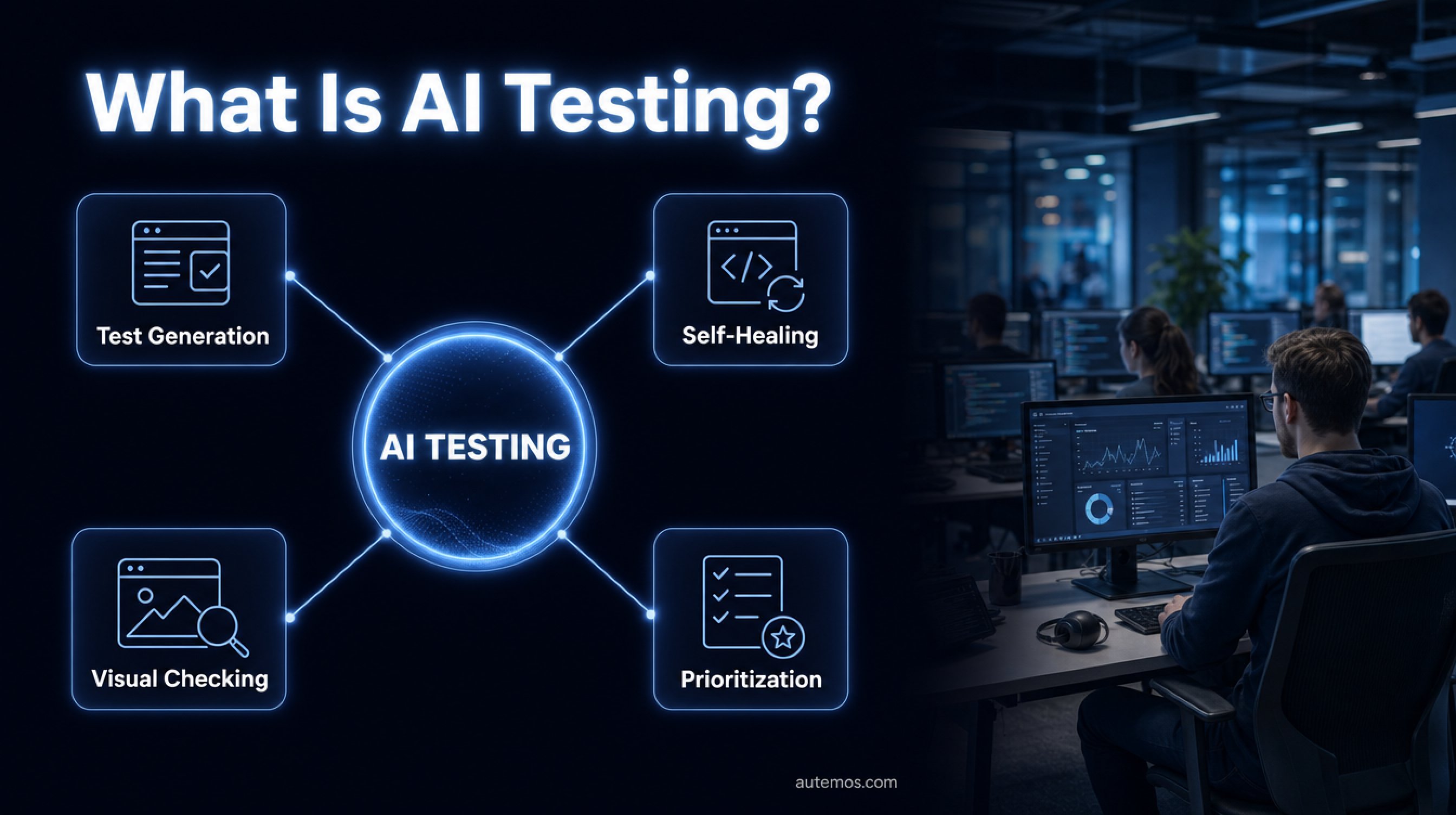
Figure 1: AI testing as an umbrella term with its four main application types.
What does AI testing actually mean?
AI testing is an umbrella term for testing methods where AI models take on work that once required manual scripting. Adoption is broad: 72% of organizations report accelerated automation from AI (Capgemini World Quality Report 2024-25, 2024). Instead of hand-coding every click and check, the AI interprets requirements, interfaces, or code and derives tests from them.
The distinction matters. AI testing is not a single product but a collection of techniques. Some run during test creation, others at runtime, others during evaluation. They share one goal: less manual work, faster feedback, more stable suites.
Maturity also varies widely. Some methods have been in production for years, such as rule-based test prioritization. Others, especially generative approaches, are young and evolving fast. When you assess AI testing, always ask which specific technique someone means – not "AI" as a catch-all. This vagueness is exactly what fuels inflated expectations in many discussions.
What types of AI testing exist?
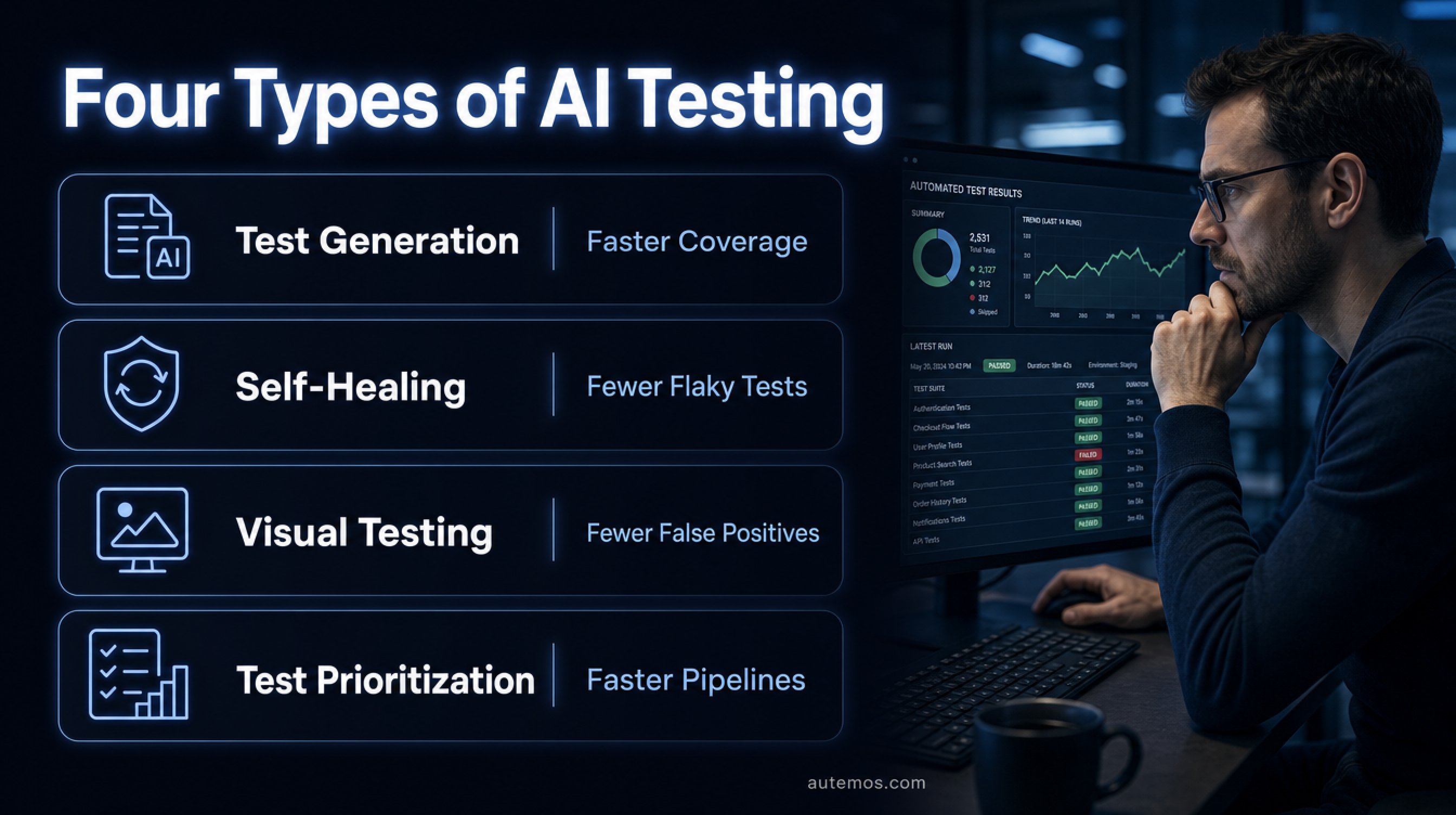
Figure 2: The four main types of AI testing and the benefit each delivers.
The four main application types are test generation, self-healing tests, visual checking, and test prioritization. They cover different phases of the lifecycle. According to Capgemini, average test coverage sits at just 33% (Capgemini WQR 2025-26, 2025) – exactly the gap these techniques address. Here are the individual types.
Test generation
Generative AI produces test cases from natural language, requirements, or existing code. A QA engineer describes a scenario in plain text, and the model suggests steps and assertions. That lowers the barrier to entry significantly. The AI Recorder from Autemos shows this in practice by translating recorded actions into maintainable tests.
Self-healing tests
Self-healing tests automatically repair broken locators when the interface changes. Flaky tests are a major problem: at Google, around 16% of roughly 4.2M tests show signs of flakiness (Micco/Google, ICST, 2017). How the mechanism works, and where its realistic limits lie, is covered in our piece on self-healing locators and flaky tests.
Visual checking with computer vision
AI-powered visual tests compare interfaces using deep-learning image analysis instead of plain pixel-diff. That reduces false alarms because the model understands semantically what counts as a relevant difference. For more on how it works and where it fits, read our article on visual testing with Vision AI.
Test prioritization
AI prioritizes which tests to run first after a change. This saves time in CI/CD pipelines by checking risky areas first. Models learn from history, code changes, and past failures to predict which tests are most likely to break.
Beyond these four, other variants exist. They include AI-assisted defect analysis, automatic classification of failures, and detection of flaky tests themselves. Which one pays off depends on the team's bottleneck. A team with stable tests but thin coverage benefits from generation. A team with fragile suites benefits from self-healing.
How does AI testing differ from traditional automation?

Figure 3: Traditional automation versus AI-powered testing, side by side.
AI testing differs from traditional automation by adapting tests rather than just replaying them. Traditional scripts are rigid: change one element and they break. That drives maintenance costs. According to Atlassian Engineering, flaky tests are "the bane of any software development team": at Atlassian they cause around 21% of frontend master build failures, and reruns waste over 150,000 developer hours per year in the Jira backend alone (2025).
The core difference is adaptability. Traditional automation follows hard-coded instructions. AI testing interprets context, recognizes patterns, and responds to change.
Traditional: fixed locators, manual upkeep, breaks on UI changes.
AI-powered: adaptive locators, generated test cases, semantic checking.
Shared: both need human oversight and good test data.
A common misconception holds that AI replaces automation. In reality, it complements it. Existing Playwright or Selenium code stays valuable; AI removes its brittleness.
A concrete example helps. A traditional test locates a login field through a fixed CSS selector. If that selector is renamed in the next release, the test fails – even though the feature works. An AI-powered approach identifies the field by several attributes and finds it despite the change. The test goal is identical, but maintenance effort drops sharply. In large suites, this exact difference decides operating costs.
What does AI testing deliver – and what doesn't it?

Figure 4: The gap between pilot and scale.
The honest benefit is real but bounded: adopters report a 19% average productivity gain, and a third see only very limited effects (Capgemini WQR 2025-26, 2025). The brake is rarely the technology. It's missing skills, unclear ownership, and structure. Mark Buenen, Global Leader Quality Engineering & Testing at Capgemini, notes that "many organizations still struggle to align Gen AI enabled quality engineering with business goals" (Capgemini WQR 2025-26, 2025).
This is the key insight: adoption is not the same as scaling. 89% pilot GenAI in quality engineering, but only 15% run it enterprise-wide (Capgemini WQR 2025-26, 2025). Anyone planning AI testing realistically should budget for this gap.
The honest limits
Hallucination and reliability are genuine concerns. 60% of organizations name hallucination and reliability as a top GenAI challenge, 67% cite data privacy, and 64% cite integration complexity (Capgemini WQR 2025-26, 2025). AI-generated tests must be reviewed.
There's also a paradox. In 2025, 90% of developers use AI daily and mostly report higher productivity – yet the saved time is re-spent auditing and verifying AI output, and AI adoption correlates negatively with delivery stability (Google DORA Report, 2025). Trustworthy, auditable AI testing with human approval is therefore not a luxury but a prerequisite.
Who is AI testing relevant for?
AI testing is especially relevant where teams face staffing shortages and maintenance load. Germany is short around 109,000 IT specialists, with over 137,000 open IT roles in 2025 (Bitkom via Jobbatical, 2025). AI can create capacity here by taking on repetitive testing work.
Across the DACH region, a structural shift adds to this. Dedicated test managers have fallen to 10.8%, down from around 28% a decade ago (Software Testing Survey 2024 via mgm-tp, 2025). Fewer specialists, same quality demands – that makes AI testing a necessity for many teams, not hype. For the full picture, see our guide to AI test automation.
The main types of AI testing
Type | What it does | Benefit |
|---|---|---|
Test generation | Creates tests from language or clicks | Faster coverage |
Self-healing | Repairs locators on UI changes | Fewer flaky tests |
Visual testing | Compares UIs semantically | Fewer false positives |
Test prioritization | Picks the most relevant tests | Faster pipelines |
Frequently asked questions
What is AI testing in one sentence?
AI testing is the use of artificial intelligence to generate, maintain, visually check, and prioritize software tests. In 2025, 89% of organizations are piloting or deploying GenAI in quality engineering (Capgemini WQR 2025-26, 2025), though only 15% scale it enterprise-wide.
Does AI testing replace traditional test automation?
No, AI testing complements traditional automation rather than replacing it. Existing Playwright or Selenium code stays usable; AI removes its brittleness through adaptive locators and generated test cases. Flaky tests waste over 150,000 developer hours per year at Atlassian (Atlassian Engineering, 2025).
How reliable is AI-generated test code?
AI-generated code is helpful but requires review. 60% of organizations name hallucination and reliability as a top challenge (Capgemini WQR 2025-26, 2025). Human approval and an auditable trail are therefore essential for productive use.
What productivity gain does AI testing realistically deliver?
Adopters report a 19% average productivity gain, though a third see only very limited effects (Capgemini WQR 2025-26, 2025). The barriers are usually organizational – skills, ownership, structure – not technical.
Conclusion
AI testing is not a buzzword but a collection of practical techniques: test generation, self-healing tests, visual checking, and prioritization. The benefit is documented but honestly bounded – 19% on average, with wide variance. What matters most is the gap between pilot and scale: 89% test it, only 15% scale enterprise-wide (Capgemini WQR 2025-26, 2025).
Teams that adopt AI testing successfully plan for reliability and traceability from the start. Human approval, an audit trail, and preserving existing tests separate productive solutions from hype. Want to see what auditable AI testing looks like in your environment? Book a demo and experience it on your own tests.