·
9 min
Shift-Left Testing: Catch Defects Early, Cut Costs

Roman Kirchmeier - Autemos

Shift-left testing means moving quality checks earlier in the development process instead of testing software only at the end. Teams test as they write code: unit tests, static analysis, and automated checks run from the first commit. Larry Smith coined the term in a 2001 article in Dr. Dobb's Journal (Smith, 2001). The idea is simple. A defect that enters the code on Monday and surfaces on Tuesday costs less to fix than one that hits production three months later. This guide explains what shift-left testing is, why early testing pays off, and how teams put it into practice step by step.
In short: Shift-left testing moves quality checks to the start of the CI/CD pipeline. Early, automated tests shorten the time from commit to release and lower the production error rate (DORA, 2024). A blanket "100x costlier" multiplier is folklore with no source. What is documented: poor software cost 2.41 trillion USD in 2022 (CISQ, 2022).
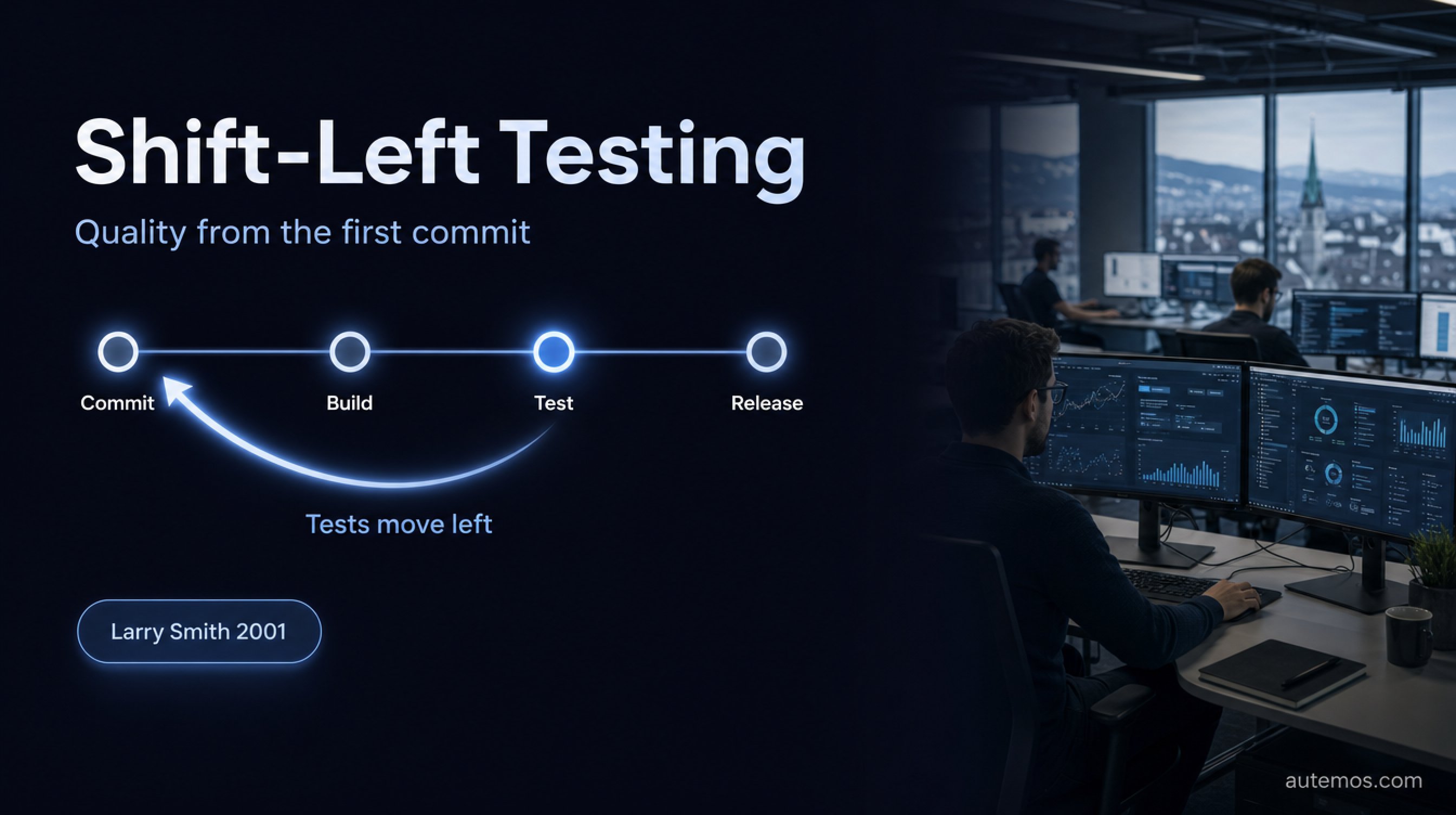
Figure 1: Shift-left testing moves checks from release toward the commit.
What is shift-left testing?
Shift-left testing is a testing practice where quality checks run as early as possible in the development cycle instead of after a feature is finished. The name comes from a project timeline: the tests move to the left, closer to the moment code gets written.
Larry Smith coined the term in a 2001 article in Dr. Dobb's Journal (Smith, 2001). He described shift-left as tighter integration of QA and development. Testers take part from the start rather than picking up a finished application at the end of a long chain.
In practice this means developers write unit tests next to the feature code, static analysis checks every commit, and integration tests run automatically in the pipeline. The old split, where a separate test phase begins only shortly before release, disappears.
Shift-left is a shift in the flow, not a single tool. It ranges from unit tests and code reviews through static analysis to automated integration and contract tests. Continuous testing builds on this: it brings these early checks together on every pipeline run, so each change runs against the existing test base right away.
Why does early testing pay off?

Figure 2: Documented cost of poor software and the debunked 100x myth.
Early testing pays off since a defect grows more expensive the longer it stays hidden and the closer it gets to production. How much more expensive, though, is where a false number spreads.
One widely cited figure claims a production bug costs 100 times a defect from the design phase, attributed to the "IBM Systems Sciences Institute". No verifiable primary study backs that number. Researchers such as Laurent Bossavit have labelled the multiplier folklore (The Register, 2021). A single universal factor does not hold up.
What is documented is the scale of the problem. Poor software quality cost the U.S. economy an estimated 2.41 trillion USD in 2022, including roughly 1.52 trillion USD in accumulated technical debt (CISQ, 2022). Back in 2002, NIST put the cost of inadequate testing infrastructure at 59.5 billion USD per year (NIST, 2002). The figure is old, yet it shows how persistent the pattern is.
The timing effect itself is well documented. Continuous, automated testing in the pipeline gives, per DORA:
"quick feedback for developers, a short lead time from check-in to release, and a low error rate in production." (DORA, Capabilities: Test automation, 2024)
Early, automated tests shorten the feedback loop and lower the production error rate. That holds for AI-assisted development too. DORA reports that a 25% rise in AI adoption came with roughly 1.5% lower throughput and 7.2% lower stability as long as basics like reliable testing are missing (DORA, 2024).
In client projects the effect shows most in feedback time. A developer who finds a defect minutes after a commit still has the context in mind. If the same defect lands in a test report weeks later, the hunt for cause and ownership starts from scratch.
How do teams put shift-left testing into practice?
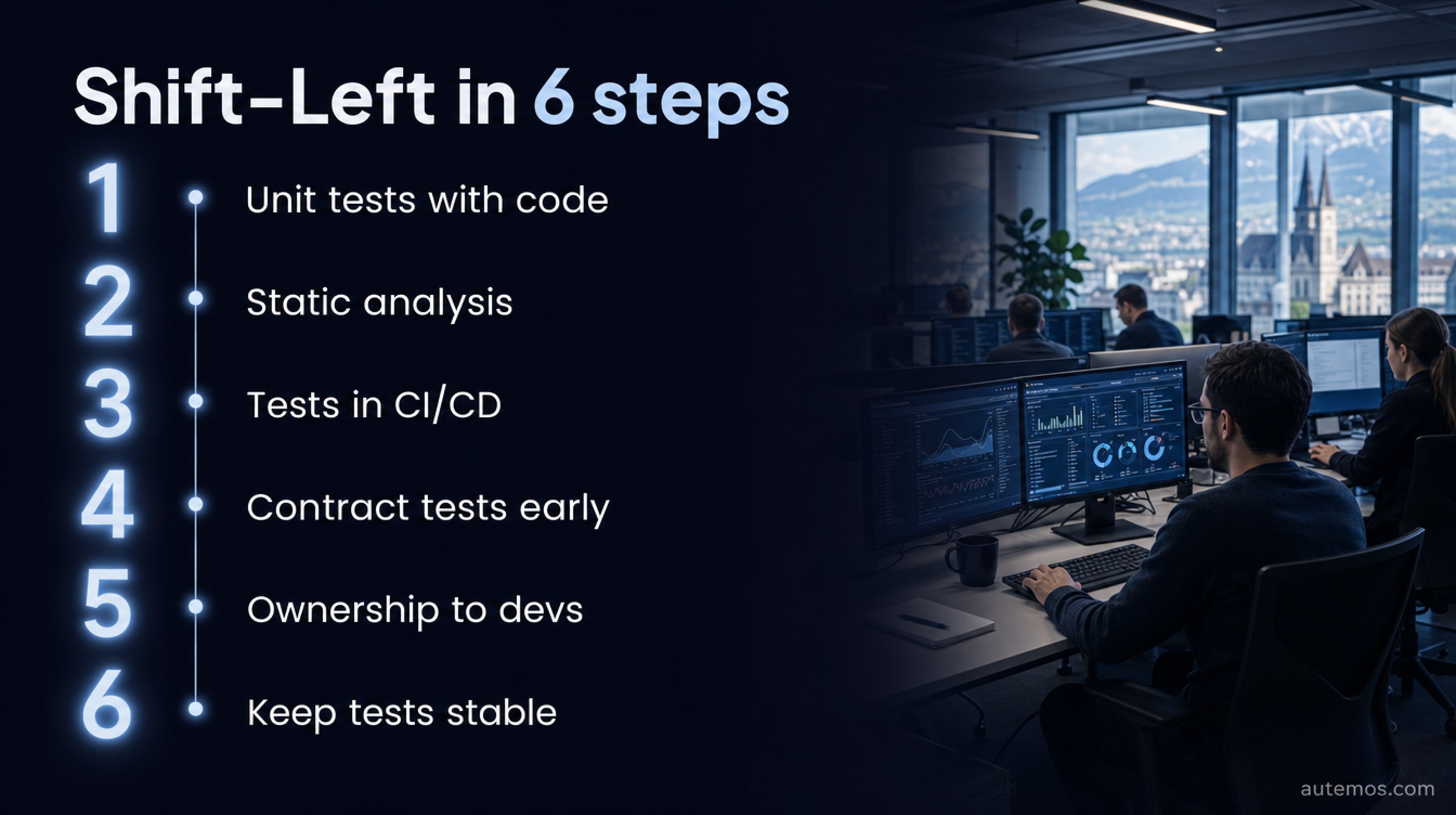
Figure 3: Shift-left in six steps, from unit tests to stable pipelines.
Teams put shift-left testing into practice by building checks into every stage before release: from the first commit through the pipeline to sign-off. The following steps have proven themselves in real projects.
Write unit tests next to the code. Developers cover logic as they write it, not after the feature is done. The test pyramid shows why many fast unit tests form the load-bearing base.
Automate static analysis. Linters and security scanners check every commit for defects, vulnerabilities, and coding-rule violations before the code reaches the main branch.
Build tests into the CI/CD pipeline. Every push triggers automated checks. That creates the continuous feedback at the core of continuous testing.
Introduce contract tests early. Teams check interfaces between services early against an agreed contract instead of finding integration defects only in E2E runs.
Move ownership to developers. Whoever writes the code writes the first tests. QA becomes an advisory and architecture role, not a downstream inspection stage.
Keep tests stable. Flaky tests block pipelines and erode trust. In client projects we see that unstable tests are the most common reason teams pull checks back out of the pipeline. Self-healing locators cut false alarms after UI changes, which Autemos uses for stable CI runs.
No team adds all six steps in a day. A sensible order helps: fast unit tests and static analysis first, then the pipeline hook-up, then contract tests and stabilisation. Each step shortens the time to the first reliable feedback.
Shift-left vs. shift-right: the difference

Figure 4: Shift-left and shift-right compared side by side.
Shift-left checks software before release, shift-right checks it in operation with real user traffic. The two approaches complement each other and cover different risks.
Aspect | Shift-left | Shift-right |
|---|---|---|
Timing | before release, from the commit | after deploy, in production |
Goal | find and prevent defects early | observe behaviour under real load |
Methods | unit tests, static analysis, integration tests | monitoring, canary releases, A/B tests, observability |
Feedback | fast, inside the development cycle | real, under production load |
The choice is not either-or. Shift-left cuts the number of defects that reach operation at all. Shift-right catches what only shows under real conditions: load spikes, rare data combinations, and interaction with third-party systems.
Between the two sit quality gates that decide automatically whether a build may proceed (quality gates). In the full picture of continuous testing, shift-left, gates, and shift-right work together: check early, decide at defined thresholds, measure again in production.
What mistakes do teams avoid with shift-left?
The most common mistake is treating shift-left as simply more tests without keeping those tests fast, stable, and meaningful. Early testing helps only when the feedback is reliable.
Too many slow E2E tests early. Inverting the pyramid slows every pipeline. The fast base belongs to unit tests.
Ignoring flaky tests. A test that flips between green and red costs more trust than it gives confidence. Unstable tests belong in quarantine and repair.
100% coverage as an end in itself. High coverage without meaningful assertions creates effort without insight.
Leaving ownership with one QA team. Shift-left works when developers own tests too. An isolated QA silo just moves the bottleneck forward.
Forgetting shift-right. Not every defect shows up before release. Production monitoring stays part of the picture.
Frequently asked questions
What is shift-left testing in simple terms?
Shift-left testing moves testing to the start of development. Instead of checking a finished application at the end, teams test from the first commit with unit tests, static analysis, and automated checks in the pipeline. That finds defects before they get expensive.
Who invented shift-left testing?
Larry Smith coined the term in a 2001 article in Dr. Dobb's Journal (Smith, 2001). He described shift-left as closer collaboration between QA and development, with testers involved from the start of a project.
Is it true that production defects cost 100 times more?
No, the blanket "100x" multiplier is not supported. The number is often attributed to the "IBM Systems Sciences Institute" but has no verifiable primary study (The Register, 2021). Only the direction holds: late defects are costlier.
Is shift-left the same as test automation?
No. Test automation is a tool, shift-left is the timing. Shift-left relies heavily on automation to run tests early and often, and it covers static analysis, contract tests, and moving ownership to developers.
Does shift-left need special tools?
Shift-left mainly needs a CI/CD pipeline that triggers tests on every commit, plus stable test execution. Self-healing locators and native pipeline integration cut maintenance so early tests do not turn into permanent repair work.
Conclusion
Shift-left testing moves quality to the front: unit tests, static analysis, and automated checks from the first commit. The payoff is well documented. Early, continuous tests shorten the time from commit to release and lower the production error rate (DORA, 2024). The often-cited "100x" multiplier, by contrast, is folklore. What counts is the combination of early checks, stable tests, and clear quality gates. Teams that take shift-left seriously keep their tests fast, their pipelines green, and ownership where the code gets written. If you want to bring early testing into your CI/CD pipeline without unstable tests slowing you down, talk to us.