·
12 min
Software Testing: Fundamentals, Process and Methods

Roman Kirchmeier - Autemos

Poor software quality costs the US economy at least $2.41 trillion per year (CISQ, 2022). That figure makes one thing clear: testing is not a technical formality, it is a business discipline.
What exactly does software testing mean, and what does a robust test process look like? This guide frames the fundamentals for QA leaders, CTOs and test architects. We clarify definitions per the ISTQB standard, explain test levels and test types, separate verification from validation, and take an honest look at the role of AI. Anyone setting up testing strategically needs a shared vocabulary first.
In short: Software testing is the process that uses static and dynamic activities to determine whether software is fit for purpose and to detect defects. Poor software quality costs the US $2.41 trillion annually (CISQ, 2022). Early, systematic testing across the four test levels measurably reduces this risk.

Figure 1: Software testing combines static and dynamic checks.
What is software testing?
Software testing, per ISTQB, is the process of all static and dynamic lifecycle activities that, from planning through evaluation, determine whether software meets requirements, is fit for purpose, and to detect defects (ISTQB). Testing is therefore far more than running programs. It also includes reviews and analyses.
The distinction between static and dynamic testing matters. Static testing examines artefacts without executing code, for example through requirements reviews or static code analysis. Dynamic testing runs the software and observes its behaviour. The two approaches complement each other. Reviews often catch defects earlier and more cheaply than test runs do.
A common misconception holds that testing proves software is defect-free. That is wrong. Testing can show the presence of defects, but never prove their absence (ASTQB). The first of the seven ISTQB principles states it in exact terms: "Testing can show that defects are present, but cannot prove that there are no defects." Testing reduces risk; it does not eliminate it.
In client projects we regularly see teams define "testing" too narrowly. Anyone thinking only of click-tests at the end of development leaves value on the table. A shared, standards-based understanding brings clarity here. For more on the individual disciplines, see our overview of the different types of software testing.
What are the seven principles of testing?
The seven principles of testing form the conceptual foundation of any test strategy and are anchored in the ISTQB Certified Tester Foundation Level (ASTQB). They explain why testing is never "done" and how teams should direct their effort.
Testing shows the presence of defects — never their absence.
Exhaustive testing is impossible — except in trivial cases.
Early testing saves time and money — defects caught near their origin are cheaper.
Defects cluster together — a few modules hold most of the faults (defect clustering).
Beware the pesticide paradox — the same tests eventually stop finding new defects.
Testing is context-dependent — a banking app is tested differently from a web shop.
Absence-of-errors fallacy — defect-free software that misses the need is still useless.
These principles are not theoretical garnish. The fourth justifies risk-based testing; the fifth explains why test suites must be maintained. Ignore them and you optimize the wrong lever.
Why is software testing critical?
Software testing is critical because poor quality carries enormous cost: in the US alone, at least $2.41 trillion per year, of which roughly $1.52 trillion stems from technical debt (CISQ, 2022). The CISQ report states it directly: "the cost of poor software quality in the US has grown to at least $2.41 trillion". These figures come from the most recent available CISQ report and illustrate the economic leverage behind clean testing.
A clarification is worth making here, one the industry often skips. The famous rule of thumb that a defect costs 100 times more in production than in the requirements phase is usually attributed to the "IBM Systems Sciences Institute". No verifiable primary source exists for this 1x-to-100x figure (Black Duck). It is repeated industry folklore, not established evidence.
The robust core behind it, however, still holds. Early testing saves time and money because defects are cheaper to fix closer to where they originate (ASTQB). That is the third ISTQB principle. Instead of an invented number, credible arguments rest on this principle and on the documented CISQ total cost.
We advise clients never to cite fabricated multipliers internally. Such numbers look unserious in an audit and undermine QA credibility. The honest message is stronger: early testing reduces rework, and the macroeconomic damage from poor software is vast and well documented.
Verification vs. validation: where is the difference?
Verification and validation answer two different questions, and every serious quality model separates them cleanly, as the international testing standard documents (ISO/IEC/IEEE 29119-1, 2022). Verification asks: "Are we building the product right?" Validation asks: "Are we building the right product?"
Verification checks whether a work product meets its specification. Examples include code reviews, static analysis, or comparisons against a design document. Validation checks whether the product meets the actual needs of users and stakeholders. This is where acceptance tests and user feedback come in.
The table below summarises the difference in practical terms.
Aspect | Verification | Validation |
|---|---|---|
Guiding question | Are we building it right? | Are we building the right thing? |
Reference point | Specification | User need |
Typical activity | Review, static analysis | Acceptance test, user test |
Timing | Often early and static | Often late and dynamic |
Both pillars are necessary. Software can flawlessly meet its specification and still miss the real need. In that case verification succeeded, but validation did not.
What does the ISTQB test process look like?
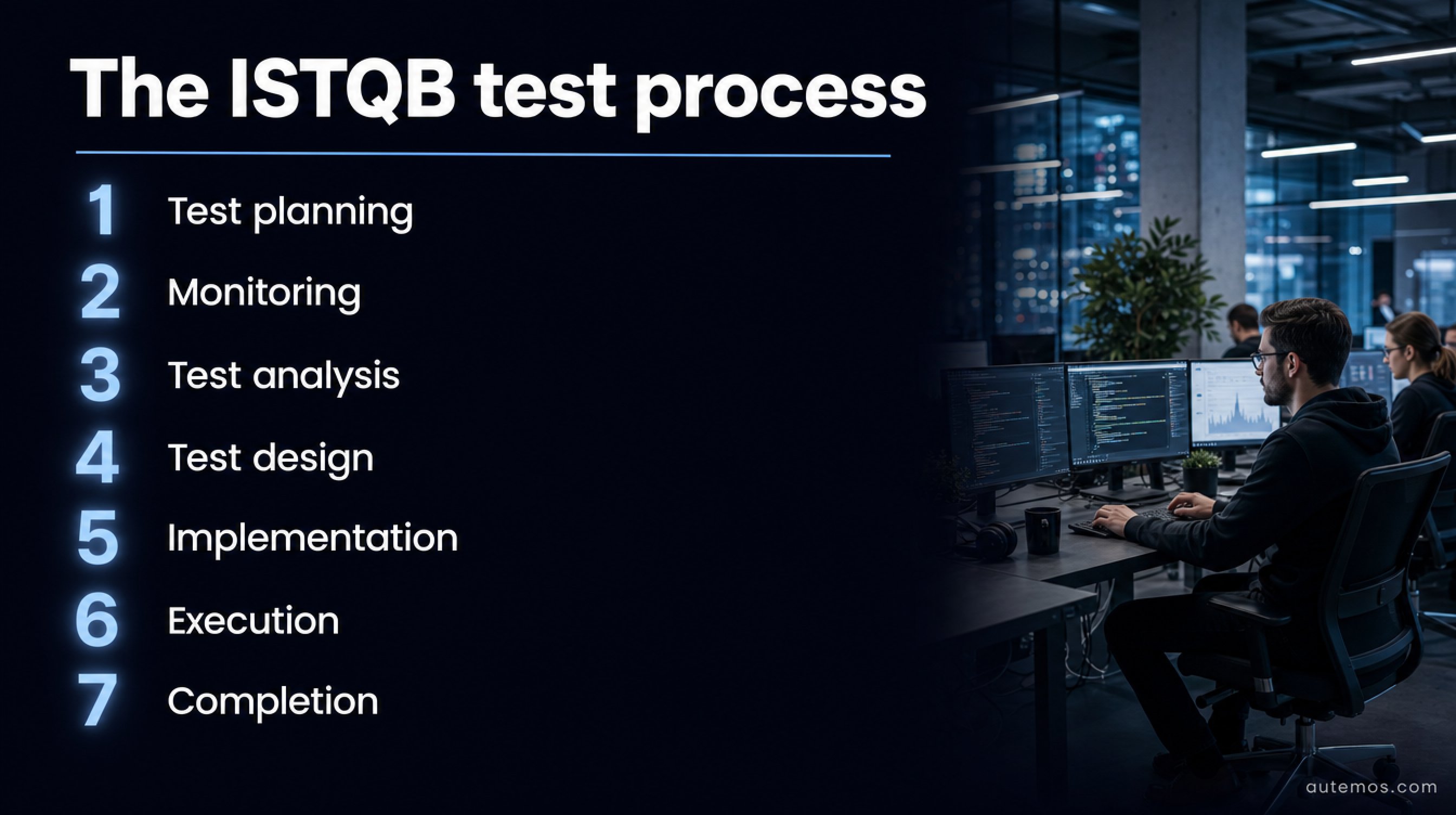
Figure 2: The seven activities of the ISTQB test process 4.0.
The ISTQB test process comprises exactly seven activities in version 4.0 from 2023, replacing the older five-step model (ISTQB). Many sources and training materials still cite the outdated model today. Anyone wanting to stay current should know the seven activities.
The seven activities of the test process are:
Test planning – define objectives, scope and approach.
Test monitoring and control – measure progress, take corrective action.
Test analysis – what is tested? Derive test conditions.
Test design – how is it tested? Design test cases.
Test implementation – provide test cases and test data.
Test execution – run tests, log deviations.
Test completion – capture lessons learned, archive artefacts.
These activities do not run strictly in sequence. In agile contexts they overlap and repeat per iteration. The order remains useful as a logical framework. We describe how to set up planning concretely in our guide to the structured test plan.
A note from practice: test completion is often skipped. Yet that is exactly where learning happens. Without clean completion, teams repeat the same mistakes in the next release.
What are the four test levels?
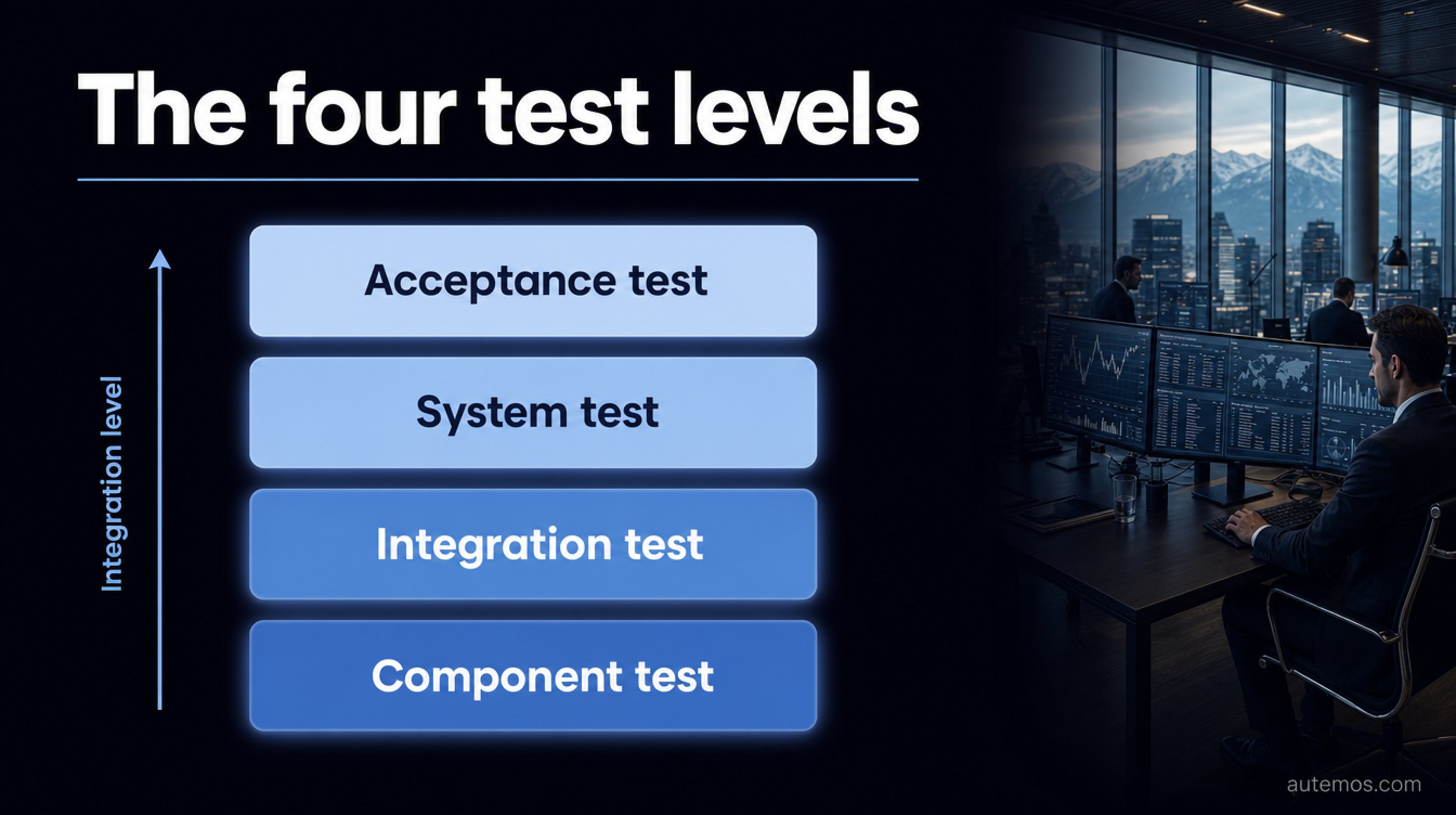
Figure 3: The four test levels, ordered by integration level.
The four classic test levels structure testing along the integration dimension and are described as an established model in the international testing standard (ISO/IEC/IEEE 29119-1, 2022). They range from the smallest code unit to customer acceptance. Each level has its own goals, owners and tools.
Component test (unit test)
The unit test checks the smallest testable unit in isolation, usually a function or class. Developers typically write these tests themselves. They run fast and automatically. A solid base of unit tests carries every higher test level. For details, see our article on the unit test as a foundation.
Integration test
The integration test checks the interaction of multiple components or systems. This is where defects in interfaces, data formats and protocols surface. Such defects stay invisible in the unit test, because each unit runs in isolation there.
System test
The system test examines the fully integrated system against requirements. It checks functional flows as well as non-functional aspects like load and security. A dedicated test team usually owns this level.
Acceptance test
The acceptance test validates whether the system is fit for production use. Users or clients often run it themselves. It answers the validation question: are we building the right product? How these levels interlock is framed by the model of the test pyramid.
The table below positions the four levels by test object, ownership and degree of automation.
Test level | Test object | Typical ownership | Degree of automation |
|---|---|---|---|
Component test | Single function or class | Developers | Very high |
Integration test | Interfaces between components | Developers / Test | High |
System test | Fully integrated system | Test team | Medium to high |
Acceptance test | System against user need | Users / clients | Low to medium |
What types of testing exist?
Test types divide broadly into functional and non-functional tests, and both dimensions are anchored in the established testing standard (ISO/IEC/IEEE 29119-1, 2022). Functional tests check what the software does. Non-functional tests check how well it does it.
Functional tests include smoke tests, regression tests and error-handling tests. Non-functional tests cover performance, security, usability, reliability and portability. Both categories are indispensable. A fast but unusable application passes the functional test and still fails.
A second axis separates manual and automated testing. Manual testing suits exploratory checks and usability. Automated testing excels at repeatable, stable flows like regression tests. Here the fourth ISTQB principle applies: defects cluster, and the fifth warns of the pesticide paradox (ASTQB). Repeat the same tests endlessly and you eventually find no new defects.
A practical consequence follows. Test cases must be reviewed and extended regularly. Static test suites lose effectiveness over time. How to measure the right balance is covered in our article on test coverage.
What role does AI play in modern testing?
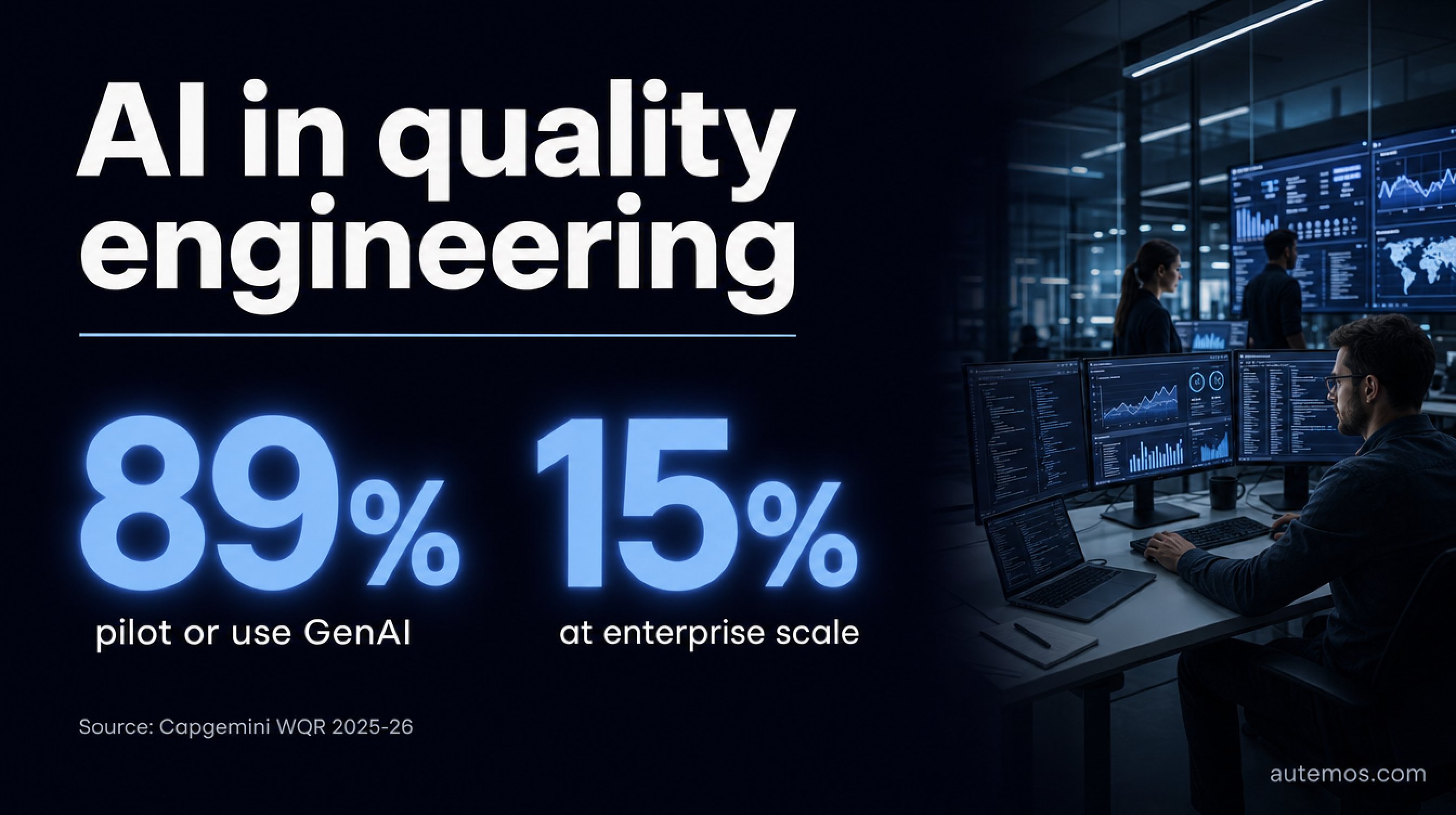
Figure 4: AI in QE is widespread, but rarely at enterprise scale.
AI has arrived in quality engineering but is not yet broadly productive: 89 percent of organisations are piloting or using generative AI in QE, yet only 15 percent run it at enterprise scale (Capgemini World Quality Report, 2025-26). These figures are self-reported in an industry survey and should be read accordingly.
The detailed numbers paint a realistic picture. 37 percent of respondents use GenAI in production, 52 percent in pilots. The reported average productivity gain sits at around 19 percent (self-reported). At the same time, the share of non-adopters has risen from 4 percent (2024) to 11 percent (Capgemini, 2025-26). The euphoria is giving way to a more sober assessment.
The biggest barriers are named clearly in the same report:
Data privacy: 67 percent
Integration with existing tools: 64 percent
Hallucination and reliability: 60 percent
Skills gap: 50 percent
Client projects confirm this pattern. AI markedly speeds up test design and test-data generation, but it does not replace engineering judgement. Generated test cases need review, otherwise they cement assumptions instead of covering risks. Anyone wanting to introduce AI seriously will find concrete steps in our guide to AI test automation. Our automated test workflows feature supports this in practice.
What applies to testing in regulated industries?
In regulated industries such as banking, pharma or medical technology, testing is not only quality assurance but a duty of evidence, documented through standards like the international testing standard for vocabulary, processes and documentation (ISO/IEC/IEEE 29119-1, 2022). Here it counts not only that testing happened, but that it is verifiably documented.
Three requirements shape testing in regulated environments. First, end-to-end traceability from requirement through test case to result. Second, reproducible, versioned test environments. Third, audit-proof documentation that an auditor can follow years later.
This is exactly why fabricated statistics are doubly risky here. In the DACH region and in regulated sectors, auditors scrutinise sources critically. Robust evidence beats catchy rules of thumb. Anyone setting up software testing in such contexts should build standards compliance in from the start.
Frequently asked questions
What is the difference between testing and debugging?
Testing finds defects; debugging fixes them. Per ISTQB, testing is a systematic process of static and dynamic activities to detect defects (ISTQB). Debugging, by contrast, is the developer activity of locating and correcting a found defect's root cause. The two activities are separate but complement each other in the development flow.
Can software be tested completely?
No, complete testing is impossible except in trivial cases, because the number of possible inputs and paths is practically infinite. This is the second of the seven ISTQB principles (ASTQB). Instead of aiming for completeness, teams prioritise by risk. Important and defect-prone areas are tested more intensively than non-critical ones.
Is the rule that production defects cost 100 times more true?
No, this 1x-to-100x rule has no verifiable primary source and is regarded as industry folklore (Black Duck). What is established is that early testing saves time and money (ISTQB principle three) and that poor software quality costs the US $2.41 trillion annually (CISQ, 2022).
How big is the software testing market?
One estimate puts the global software testing market at around $55.8 billion in 2024 (Global Market Insights). This figure is a single estimate, and values from different analyst firms diverge considerably. Still, it shows the economic scale of the discipline.
Will AI replace human testers?
No, AI complements testers but does not replace them. Only 15 percent of organisations run generative AI in QE at enterprise scale, and 60 percent cite reliability as a central barrier (Capgemini, 2025-26). AI speeds up routine work, but risk assessment and judgement remain human tasks.
Conclusion
Software testing is a structured discipline with clear terms, processes and levels, not an afterthought click-test. Anyone who knows the ISTQB definition, the seven principles, the four test levels and the updated seven-activity process builds testing on a robust foundation. The numbers underline the leverage: poor software quality costs the US alone $2.41 trillion per year (CISQ, 2022). AI accelerates much, but replaces no engineering judgement. In regulated industries especially, verifiable quality counts for more than catchy rules of thumb. Start with a shared vocabulary, then with a clean test plan. If you want to sharpen your test strategy or scale test automation, talk to our team.