·
7 min
Visual Testing With AI: How Vision AI Replaces Pixel Diffs

Roman Kirchmeier - Autemos

Visual testing with vision AI compares user interfaces semantically instead of pixel by pixel, cutting the false positives that plague classic pixel comparison (SSRN, 2024). Functional tests only confirm a button clicks. They say nothing about whether it appears in the right place, the right color, and without overlapping text. That is exactly what visual testing checks, and exactly where classic pixel comparison drowns in false alarms. This article explains what visual testing does, why pixel diffs go flaky, how vision AI compares semantically, and where the technique hits real limits.
TL;DR: Visual testing checks how an interface looks, not just how it works. Pixel-perfect comparison produces many false alarms. AI image comparison with semantic understanding reduces false positives versus pixel diff (SSRN, 2024). Specific single-case numbers stay illustrative, not industry averages.
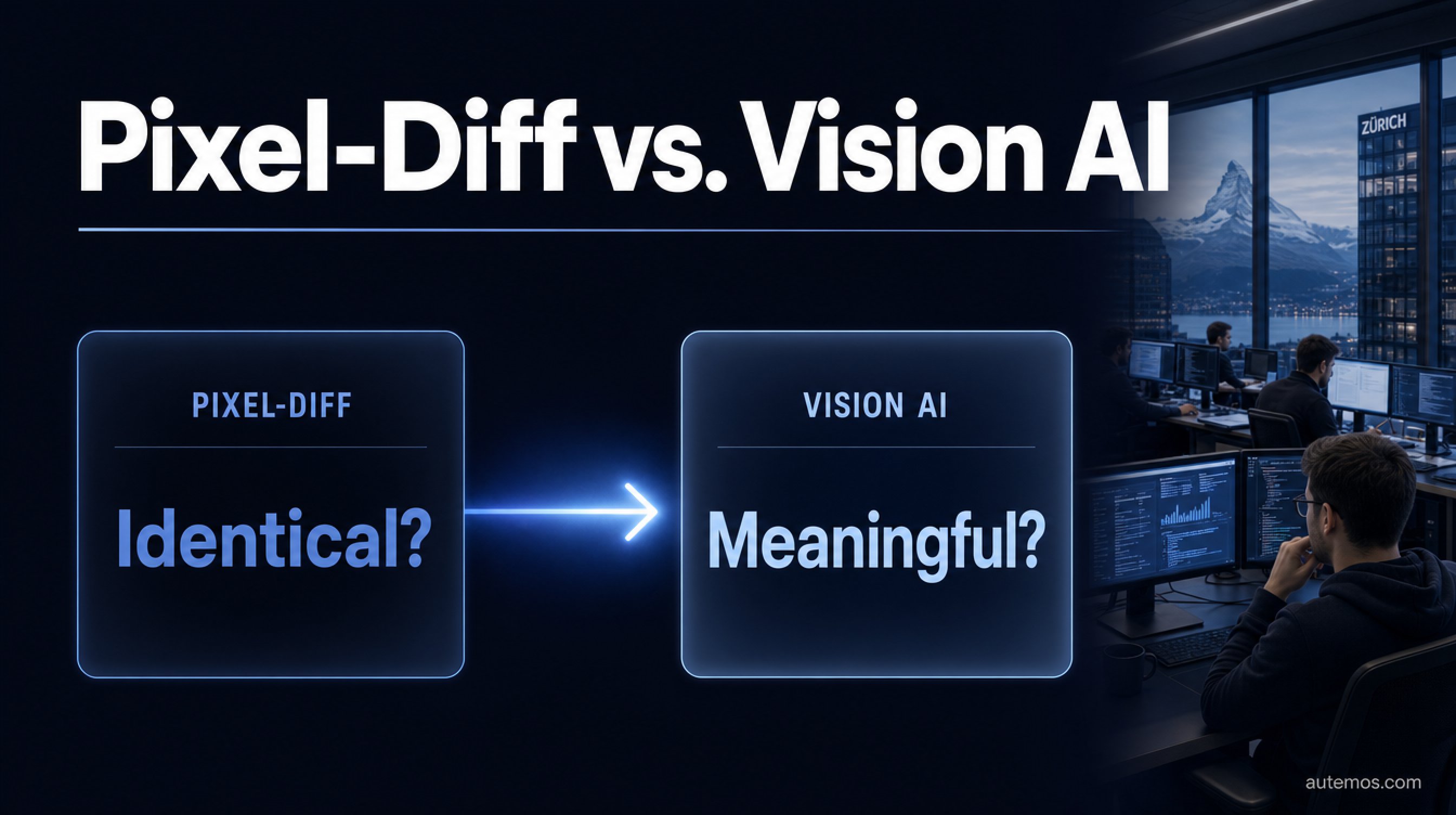
Figure 1: From pixel comparison to semantic judgment – the core idea of vision AI.
What is visual testing and visual regression testing?
Visual testing is a verification method that confirms a user interface renders correctly: layout, colors, fonts, spacing, and components. Visual regression testing compares a new build against an approved reference, the baseline, and flags any deviation. Where functional tests check logic, visual testing checks what users actually see on screen.
The distinction matters in practice. A functional test confirms the form submits. It does not catch that the submit button vanished behind a banner. Defects like that slip through automated suites because nothing inspects the rendering itself.
AI adoption in quality engineering is climbing fast. Some 89% of organizations are piloting or deploying GenAI in quality engineering, yet only 15% scale it enterprise-wide (Capgemini WQR 2025-26, 2025). According to the Capgemini WQR 2025-26 (2025), "89% of responding organizations are piloting or deploying Gen AI–augmented workflows, with 37% in production and 52% in pilot phases". Visual testing is one piece of that shift, not a replacement for the other test types.
Want the fundamentals first? We cover the core concepts in What is AI testing? and place every building block in context in our guide to AI test automation.
Why do pixel diffs produce so many false positives?

Figure 2: Flakiness is no edge case – figures from Google's test infrastructure.
Pixel-diff methods compare two images pixel by pixel and report every difference, even ones users never notice. That systematically generates false positives. Those false alarms are precisely what turns visual tests into a classic source of flakiness, costing teams time and trust.
The causes are technical:
Anti-aliasing and font rendering differ across browsers, operating systems, and graphics drivers.
Dynamic content like dates, ads, or personalized elements changes the image on every run.
Sub-pixel shifts from scaling or layout trigger diffs even when nothing looks wrong.
Animations and lazy loading create timing windows where screenshots differ.
Flaky tests are no edge case. At Google, roughly 1.5% of all test runs are flaky, and about 16% of some 4.2 million tests show flakiness at some point (Micco/Google, 2017). Every false positive in a pixel diff forces someone to manually check whether the deviation is real.
That burden has a price. The average productivity gain from GenAI among adopters is only 19%, and a third see very limited gains (Capgemini WQR 2025-26, 2025), often because saved time is re-spent on verification.
How does vision AI tell intentional changes from real regressions?
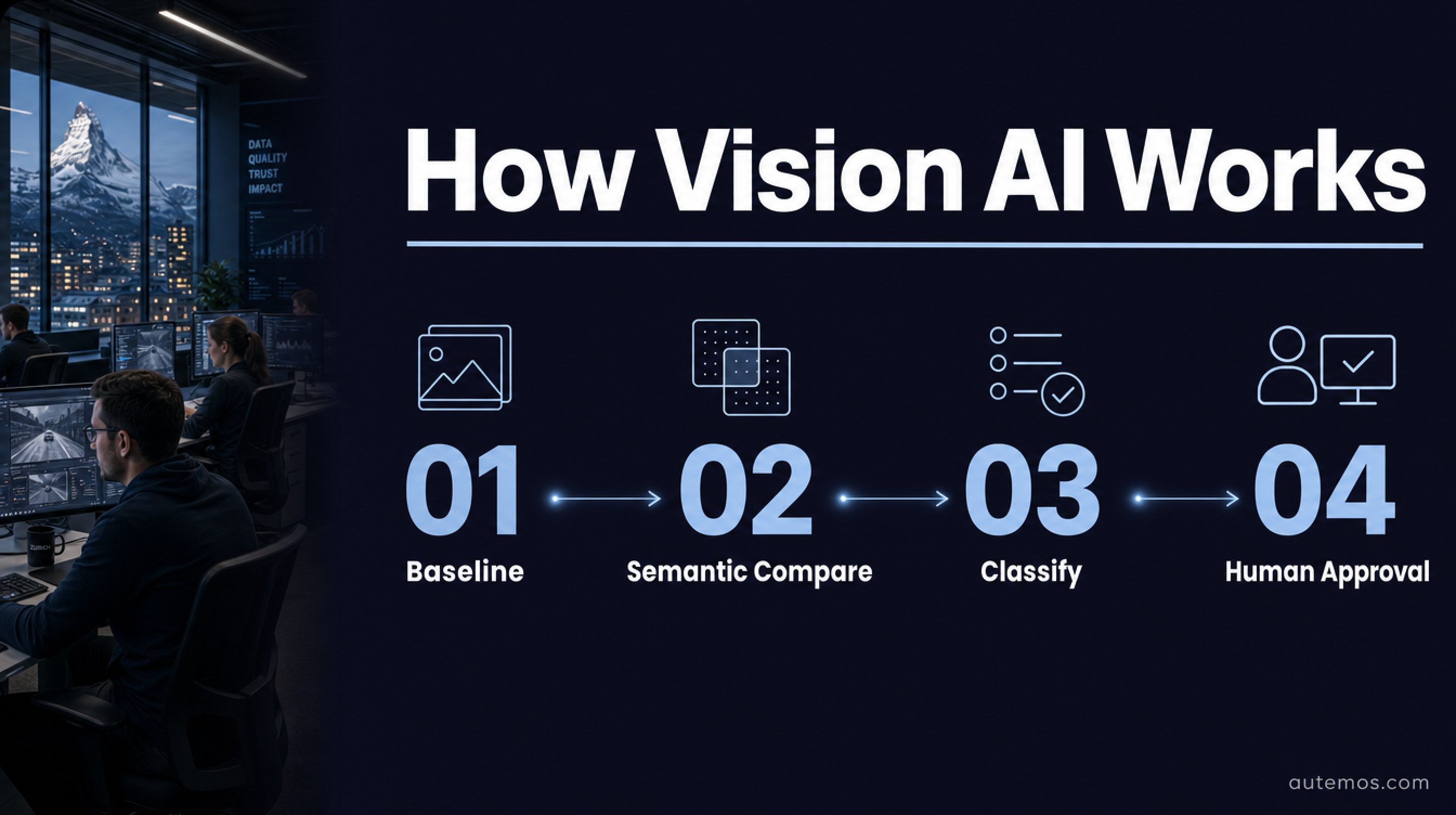
Figure 3: How Vision AI works – from baseline check to human approval.
Vision AI is an image-analysis method that combines deep neural networks with semantic understanding of the interface. Instead of weighting every pixel equally, the model recognizes structures, such as buttons, input fields, and layout regions, and judges whether a change is meaningful. That lets it separate intended redesigns from genuine defects.
The workflow in practice:
Baseline comparison: the model compares the new view against the approved reference.
Semantic evaluation: it recognizes structures and decides whether a deviation means a bug.
Human approval: testers confirm or reject the proposal and update the baseline traceably.
Semantic comparison instead of pixel equality
The core shift is from "are the images identical?" to "does this deviation mean a bug?". A model that understands an input field as an input field ignores a harmless anti-aliasing difference but flags the field moving or disappearing.
AI-driven visual testing combines deep-learning image comparison with semantic understanding to reduce false positives versus pixel diff; one reported case cites around 50% less execution time and near-zero flakiness (SSRN, 2024; BrowserStack, 2024). According to BrowserStack (2024), "context-aware analysis reduces false positives compared to pixel-based methods". The mechanism is well supported, but that specific number stays an illustrative single case, not an industry-wide average.
What the model should tolerate, and what it should not
In practice, a simple rule of thumb holds up: tolerance for rendering noise, strictness on structure. The model usually ignores:
sub-pixel and anti-aliasing differences across environments
known dynamic regions that are explicitly masked out
minor color shifts within defined thresholds
It strictly checks element position, visibility, overlaps, and missing components, exactly what users perceive as "broken."
Human approval as the anchor
No model should decide the baseline alone. What matters is who approves a new reference and whether that decision is documented. A reported pattern from practice: only when testers confirm or reject the AI's proposals does a reliable, traceable history emerge. Otherwise you simply move the flakiness problem from pixels to model judgments.
That step is also why "diffing faster" does not automatically mean "testing better." Speed without traceability just creates a new trust problem.
Where does visual testing fit in a test strategy?
Visual testing complements functional, API, and unit tests; it does not replace them. Its place is wherever appearance is business-critical: checkout flows, dashboards, marketing pages, and anything that must look consistent across browsers and resolutions. It closes the gap between "works" and "looks right."
A pragmatic split:
Functional tests verify logic and data flows.
Visual tests verify layout, components, and cross-browser consistency.
API tests verify contracts and interfaces beneath the surface.
The need is real, because coverage stays low. On average, only 33% of test automation is covered, and just 8% of organizations have a fully established automation strategy (Capgemini WQR 2025-26, 2025). Visual gaps are among the most commonly overlooked.
A pragmatic two-step rollout:
Start with a few business-critical views: the home page, login, checkout, and one core dashboard. These have high visibility, clean baselines, and measurable damage when they break visually.
Expand to broader component libraries or responsive breakpoints only afterward, where upkeep grows faster.
Practically, visual checks slot straight into existing pipelines. Teams orchestrating test runs across web, mobile, and API integrate visual checks as a dedicated step; see test workflows for how that fits together.
What are the limits of AI-driven visual testing?
AI-driven visual testing has three central limits: baselines that need upkeep, black-box judgments that are hard to trace, and the risk of hallucination. Models can misclassify a subtle, intentional design change as a regression, or let a real defect through when it looks semantically unremarkable. Without human approval of the baseline, every result is only as good as the underlying judgment.
Three honest limits:
Baselines need upkeep. Every legitimate redesign demands a deliberate reference update. Automation alone creates blind spots.
Black-box decisions are a risk. If it stays unclear why the model accepts or rejects something, that is hard to defend in regulated industries.
Hallucination and reliability rank among the top hurdles: 60% of organizations name hallucination and reliability as a central GenAI challenge in QE (Capgemini WQR 2025-26, 2025).
There is also a familiar pattern from development: 90% of developers use AI daily, yet saved time often flows back into auditing and verifying the AI output (Google DORA, 2025). Using vision AI only to generate diffs faster just shifts the work. The real payoff comes from a transparent, auditable approval step.
For a neutral, vendor-independent view of the tooling, see an independent academic review of AI testing tools (arXiv, 2024).
Pixel-diff vs. AI-based visual testing
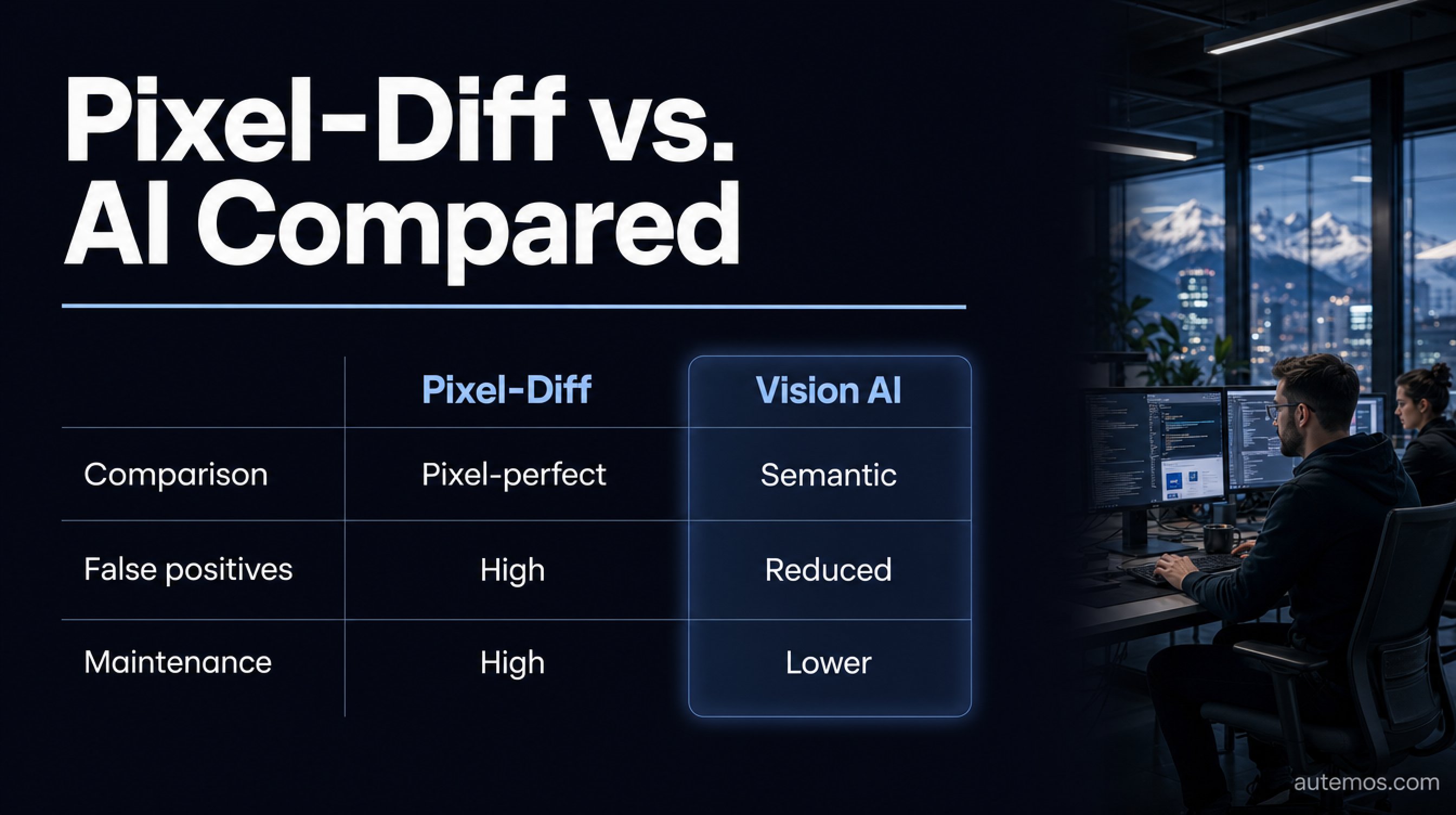
Figure 4: Pixel-diff and AI-based visual testing side by side.
Pixel-diff and AI-based visual testing differ on one point above all: pixel diff checks equality, vision AI checks meaning. The table below sets both methods side by side.
Aspect | Pixel-diff | AI-based (vision) |
|---|---|---|
Comparison | Pixel-perfect | Semantic |
False positives | High | Reduced |
Dynamic content | Hard to handle | Handled well |
Maintenance | High | Lower |
Frequently asked questions
What is the difference between visual testing and functional testing?
Functional testing checks whether an application works correctly; visual testing checks whether it looks correct. A functional test confirms a button clicks, while a visual test catches that it vanished behind a banner. The two complement each other, because neither covers the other's gaps.
Why are pixel-diff tests so prone to false positives?
Pixel diffs report every difference, including visually meaningless ones. Anti-aliasing, font rendering, dynamic content, and sub-pixel shifts all trigger diffs without anything being broken. That makes visual tests a classic flakiness source; at Google, about 1.5% of all runs are flaky (Micco/Google, 2017).
Is "vision AI" the same as AI-driven visual testing?
In a testing context, vision AI means using image recognition and neural networks to compare interfaces semantically. Instead of demanding pixel equality, the model judges whether a deviation is meaningful. That reduces false positives versus pixel diff (SSRN, 2024).
Can AI distinguish intentional UI changes from bugs?
Yes, with caveats. Vision AI recognizes structures and evaluates deviations semantically rather than weighting every pixel equally. It can still misclassify subtle, intended redesigns. That is why human approval of the baseline stays decisive; it anchors the judgment in a traceable way.
Does visual testing replace other test types?
No. Visual testing complements functional, API, and unit tests but does not replace them. Average test coverage sits at only 33% (Capgemini WQR 2025-26, 2025). Visual checks close one of the most commonly overlooked gaps in that coverage.
Conclusion
Visual testing checks what users really see, closing a gap functional tests leave open. Classic pixel diffs fail on false alarms because they treat every difference as equal. Vision AI shifts the question from "identical?" to "meaningful?" and so reduces false positives versus pixel diff (SSRN, 2024). Specific single-case figures stay illustrative; the mechanism is well supported.
The honest framing is what counts: AI relocates effort rather than magically dissolving it. Baselines need upkeep, decisions must be traceable, and human approval remains the anchor. That is the difference between speed and trust.
Want to see how auditable, AI-driven testing fits your pipeline? Book a demo and walk through your specific use case.