·
9 min
Audit Trails in Software Testing: Tamper-Evident Documentation

Roman Kirchmeier - Autemos

An audit trail in software testing is a secure, time-stamped record that unalterably captures who ran which test case, when, and what result they obtained. In regulated industries, this record decides whether your quality assurance withstands scrutiny. This article shows what tamper-evident test evidence must contain and how to produce it without burying your team in paperwork.
In brief: An audit trail in testing is a secure, time-stamped record of who ran which test case, when, and what result they obtained — unalterable and reproducible. The benchmark is the data-integrity principle ALCOA+. Automated pipelines produce such evidence more reliably than manually collected screenshots.
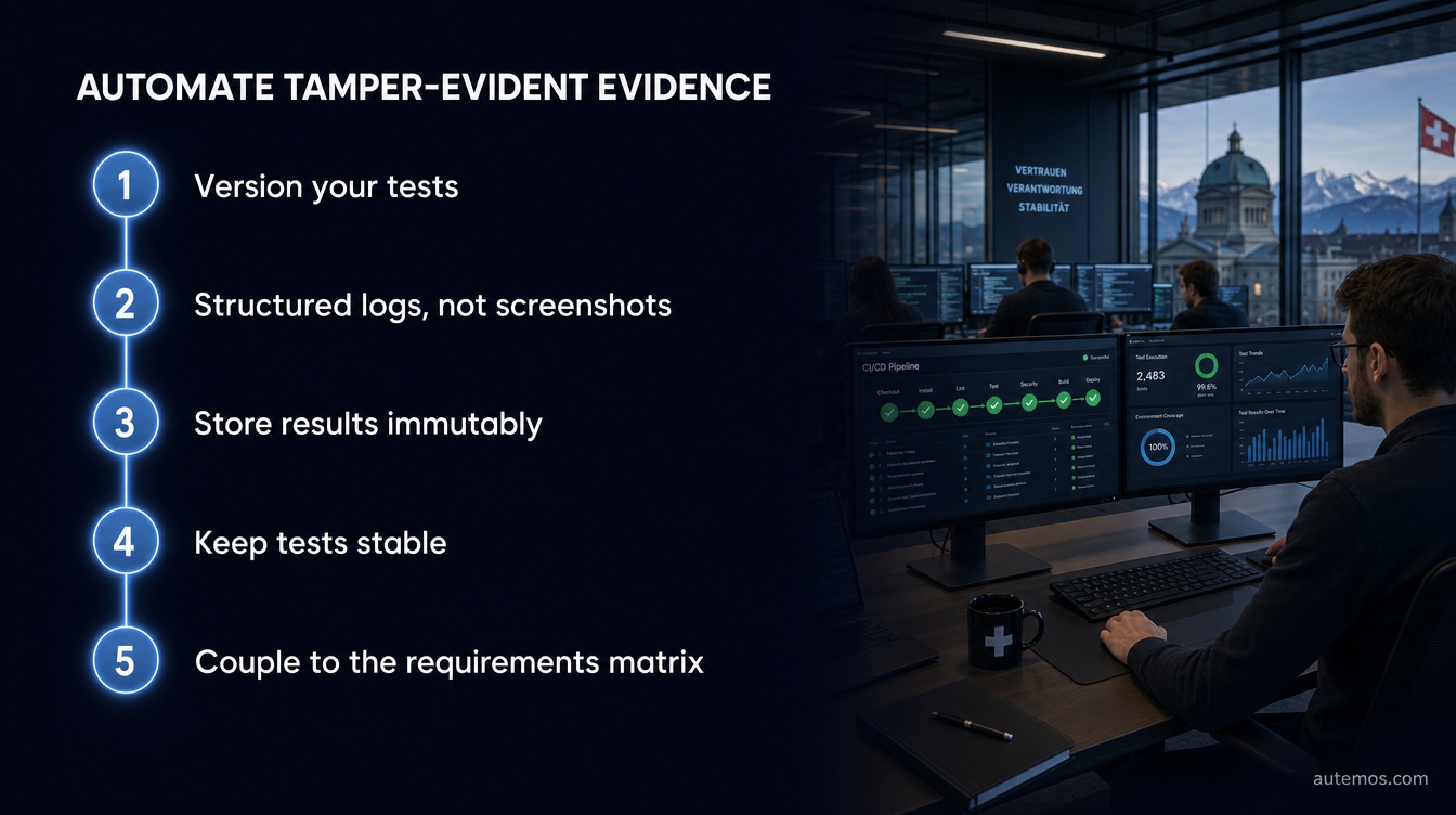
Figure 1: The four mandatory elements of a tamper-evident audit trail in testing.
The problem: tests pass, audits fail

Figure 2: Data-integrity violations in FDA warning letters rose after 2020 (Source: PubMed, 2026).
Many teams test thoroughly and still fail the audit, because they cannot prove what they did. Auditors accept no assertions; they demand evidence: who ran the test? When? Against which requirement? Was the result altered afterwards?
How real this risk is shows in an analysis of 1,766 FDA warning letters from 2016 to 2023: data-integrity violations, especially around the endurance, availability and completeness of records, increased after 2020 (PubMed, 2026). It is not the missing test that costs success here, but the missing evidence.
Why classic test documentation fails
Classic test documentation built on screenshots, Excel lists and Word protocols fails in an audit because it is manual, error-prone and easy to alter. A screenshot without a timestamp, without a link to the person who ran it and without a connection to the tested requirement provides no solid proof.
Add to this an underestimated enemy of evidential value: unstable tests. Flaky tests that sometimes pass and sometimes fail tempt teams simply to re-run them or wave failures through, undermining the very reliability an audit trail is meant to prove.
What a tamper-evident audit trail must contain

Figure 3: ALCOA+ – the data-integrity benchmark for tamper-evident test evidence.
A tamper-evident audit trail must independently record who created, modified or deleted a record and when, without overwriting the original information. The FDA sets this minimum standard in 21 CFR Part 11: secure, computer-generated, time-stamped audit trails whose later changes do not obscure the original information (eCFR). EU GMP Annex 11 likewise requires a system-generated, regularly reviewed audit trail for computerised systems (EudraLex, 2011).
The shared benchmark across all regulated industries is ALCOA+. ALCOA+ is a set of data-integrity principles against which tamper-evident test evidence is measured:
Principle | Meaning for test evidence |
|---|---|
Attributable | Every action maps to a unique person/identity |
Legible | The record is permanently readable and intelligible |
Contemporaneous | Recording happens at the same time as the action |
Original | Original data is preserved, not overwritten |
Accurate | The result is logged correctly and without error |
Complete, Consistent, Enduring, Available | Complete, consistent, durable, retrievable at any time |
(Source: MHRA GxP Data Integrity Guidance, 2018)
The solution: traceability as the backbone
The requirements traceability matrix is the tool that links each test to a requirement and so proves the right thing was tested. An audit trail proves *that* testing happened; traceability proves *that the right thing* was tested. ISTQB defines the matrix as "a two-dimensional table, which correlates two entities (e.g., requirements and test cases)," adding that it enables "the determination of coverage achieved and the assessment of impact of proposed changes" (ISTQB).
A complete matrix answers the two questions every auditor asks: was every requirement tested, and can every test be traced back to a requirement? How to measure the meaningfulness of your coverage is covered in Measuring Test Coverage and Code Coverage Meaningfully.
How to automate tamper-evident evidence
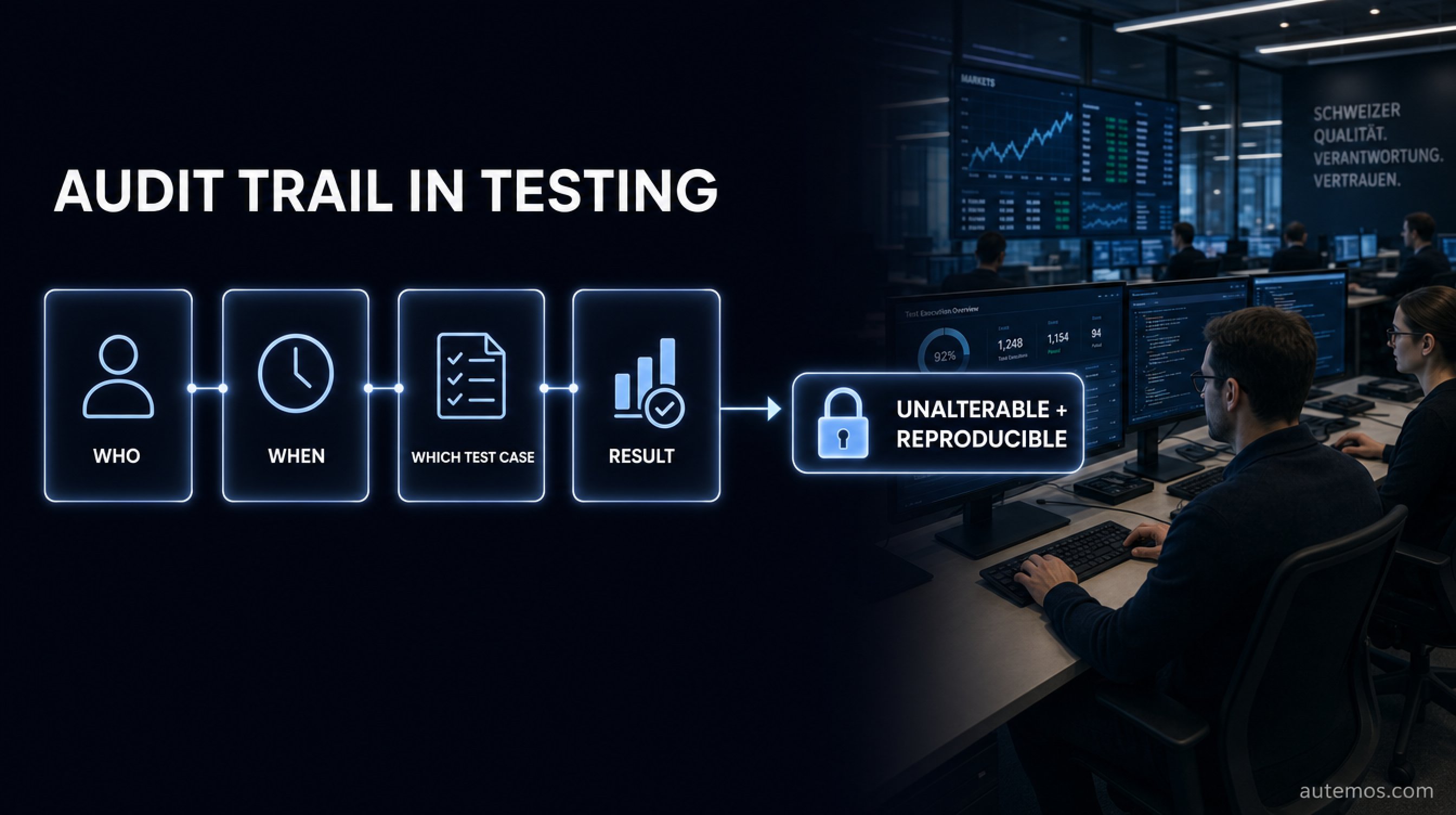
Figure 4: Five steps to tamper-evident test evidence from the CI/CD pipeline.
Modern CI/CD pipelines produce tamper-evident audit trails as a by-product when every commit, every test run and every result is logged automatically, time-stamped and unalterably. In five steps you couple automation to auditable evidence:
Version your tests: Keep test cases in the same version control system as the code, so every change is historised.
Structured logs instead of screenshots: Produce machine-readable result logs with timestamp, identity and requirement reference.
Store results immutably: Save test artefacts tamper-evidently, so later changes are impossible or visible.
Keep tests stable: Eliminate flaky tests, for example with self-healing locators, so every record stays meaningful.
Couple to the requirements matrix: Link each automated run to the requirement it covers.
In client projects in regulated environments, we see that this approach noticeably eases audit preparation, because the evidence emerges as a by-product of automation rather than being gathered just before the audit. How this fits into an end-to-end flow is shown in our overview of test workflows. The full regulatory context is provided by the guide Testing in Regulated Industries; the validation view for pharma is covered in GxP Testing and Computer System Validation.
Frequently asked questions
What is an audit trail in software testing?
An audit trail is a secure, time-stamped record that independently captures who ran, modified or deleted which test case, when, and what result was obtained. It must be unalterable and preserve the original data.
What does tamper-evident mean in a testing context?
Tamper-evident means test evidence cannot be changed afterwards without being noticed, stays permanently available, and is retrievable for inspection at any time — in line with the ALCOA+ principles of data integrity.
Are screenshots enough as test evidence for an audit?
Usually not. Screenshots without a timestamp, identity reference and link to the tested requirement count as weak evidence. Structured, automatically generated logs are more reliable and better match regulatory requirements.
What is a requirements traceability matrix?
A requirements traceability matrix is a table that maps requirements to test cases. It shows whether every requirement was tested and whether every test traces back to a requirement — the backbone of compliance-ready test evidence.
Conclusion
In a regulated environment, the evidence matters as much as the test itself. A tamper-evident audit trail aligned with ALCOA+ and a complete requirements traceability matrix turn scattered records into a closed, auditable proof. This works most reliably when the evidence emerges automatically in the pipeline rather than being collected by hand. If you want to automate your test evidence across web, mobile, API and desktop in an audit-ready way, talk to the Autemos team about your specific use case.