·
7 min
The BITV-Test Explained: Germany's Audit Procedure for Web Accessibility

Roman Kirchmeier - Autemos

The BITV-Test is Germany's established audit procedure for web accessibility: 98 test steps (Prüfschritte) covering 88 requirements, carried out only by qualified testers at accredited BIK test centres (BIK BITV-Test, 2026). DIAS GmbH in Hamburg operates the procedure. Self-certification is not part of it. Nearly every article about the procedure still describes a 100-point score, with 90 points marking a site as well accessible. That scoring was dropped on 15 March 2019. Every test step now carries a rating on a five-level scale, and one weak step fails the parent requirement.
TL;DR: The BITV-Test is a manual audit by accredited BIK test centres: 98 test steps, 88 requirements, typically 4 to 6 weeks including quality review. Ratings run across five levels, from "erfüllt" (met) to "nicht erfüllt" (not met). A site counts as conformant only if every single step is rated "erfüllt" or "eher erfüllt".
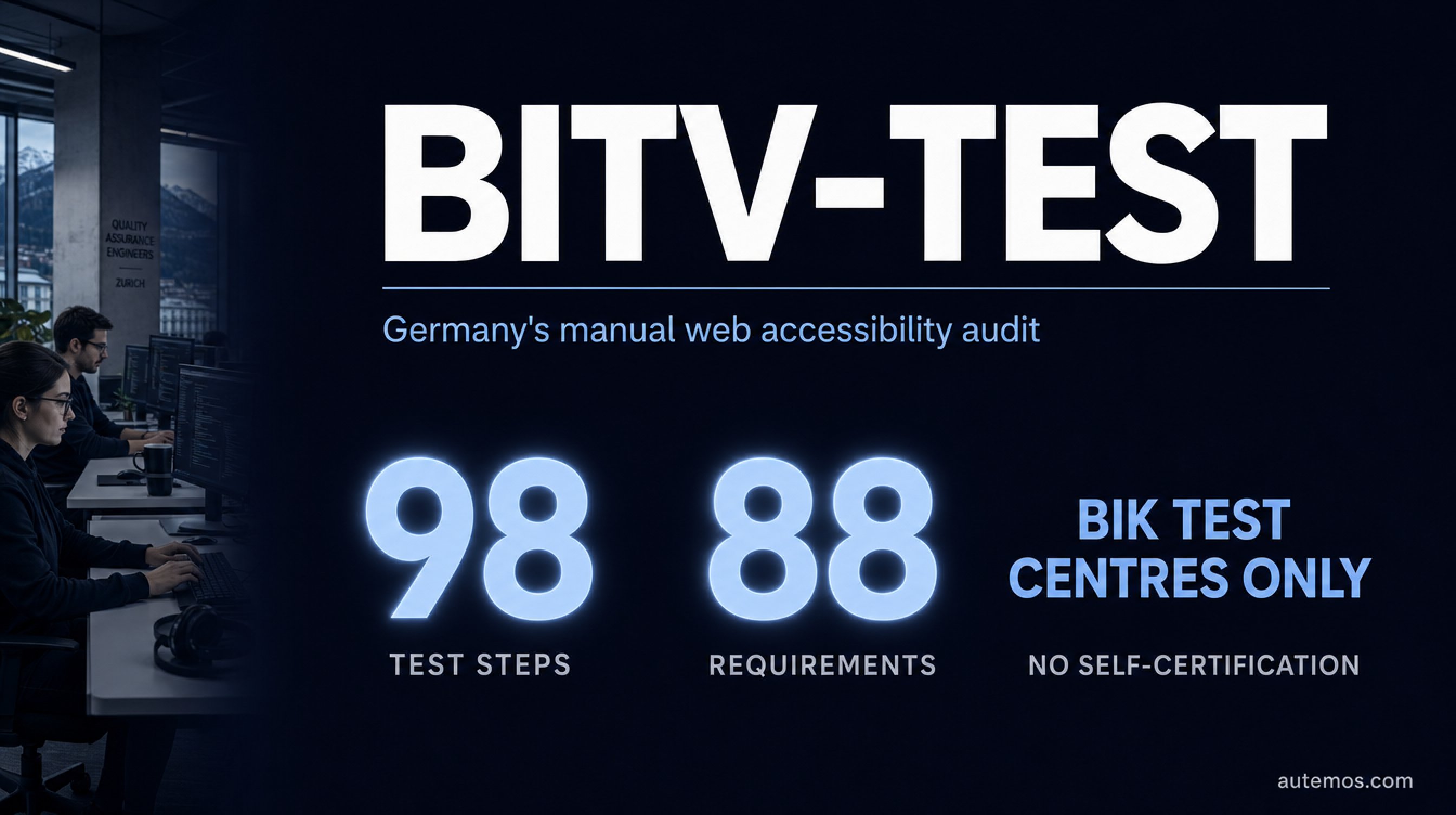
Figure 1: The BITV-Test in numbers.
What is the BITV-Test?
The BITV-Test is a manual audit procedure for web accessibility, covering 98 test steps across 88 requirements, performed by test centres in the German BIK network (BIK BITV-Test, 2026). It is run by DIAS GmbH, Hamburg.
Testing is done by hand, supported by bookmarklets and browser add-ons. The output is a report with one rating per test step, which acts as evidence of conformity. For a passed and published test, the test centre issues the BITV-Prüfzeichen, a public accessibility mark.
Access to the procedure is restricted. BIK states it plainly: "Ein BITV-Test (Web) nach dem BIK Prüfverfahren kann nur von BIK Prüfstellen durch qualifizierte BIK Prüfende durchgeführt werden." Only BIK test centres, through qualified BIK testers, may run it. Working through the same test steps internally is possible, and that result stays an internal opinion with no mark attached.
The procedure is the formal check at the end of a chain. What your team does around accessibility testing during development decides how many findings the test centre still records.
What does BITV 2.0 require?
BITV 2.0 is the German ordinance that obliges federal public bodies to make their websites, mobile applications, electronically supported administrative processes and embedded graphical program interfaces accessible (§ 2(1) BITV 2.0). It dates from 12 September 2011; the version in force is from 24 October 2023 (gesetze-im-internet.de, 2023).
§ 3 puts the four WCAG principles verbatim into German ordinance law:
"Die in § 2 genannten Angebote, Anwendungen und Dienste der Informationstechnik sind barrierefrei zu gestalten. Dies erfordert, dass sie wahrnehmbar, bedienbar, verständlich und robust sind." (§ 3 BITV 2.0)
Translated: those offerings must be designed accessibly, which requires them to be "perceivable, operable, understandable and robust". The same section creates a presumption of conformity for anyone meeting the harmonised European standards published in the EU Official Journal, in practice EN 301 549. For central navigation, entry pages and interactive elements, § 3 asks for the highest possible level of accessibility.
§ 4 adds a requirement with no counterpart in WCAG or EN 301 549. The start page must carry explanations in German Sign Language and in Leichte Sprache (Easy Language) on four items:
the key content of the offering
guidance on navigating the site
the accessibility statement
further content available in sign language and Easy Language
A German federal site can meet WCAG 2.1 AA in full and still fail § 4 BITV 2.0. International teams tend to find this out late.
How does a BITV-Test work?
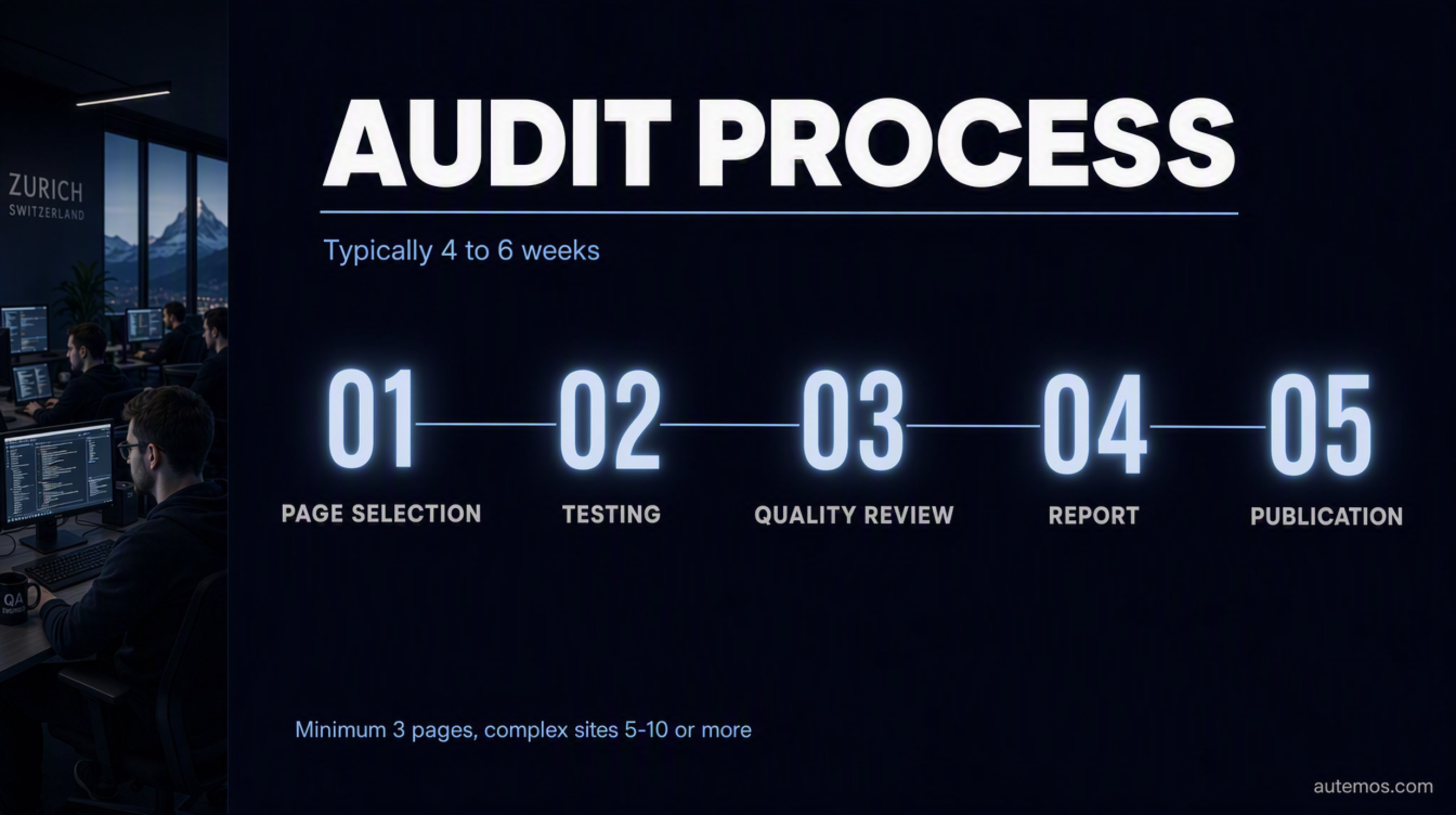
Figure 2: Sequence and duration of a BITV-Test.
A BITV-Test runs through six stages, from selecting representative pages to publishing the result, and takes 4 to 6 weeks including quality review (BIK BITV-Test, 2026).
Agree scope and variant. Client and test centre define which offering is audited and which variant applies.
Select representative pages. A sample is audited, never the whole site, covering the typical page types, templates and functions.
Test. Each selected page goes through all 98 test steps, rated manually with support from bookmarklets.
Quality review. The result passes a quality review before the report is finalised.
Report. The report records a rating per test step with the reasoning and the defects found.
Publication. For a passed and published test, the test centre issues the Prüfzeichen.
One number in secondary sources is wrong. Many articles claim a fixed sample of 7 to 9 pages. BIK writes: "Die Minimalanzahl bei einfachen, kleinen und einheitlich gestalteten Webangeboten sind drei Seiten, bei komplexen Angeboten können es 5-10 oder auch mehr Seiten sein." Three pages is the floor for simple, uniformly designed sites; complex ones take 5-10 pages or more.
How is the result rated?
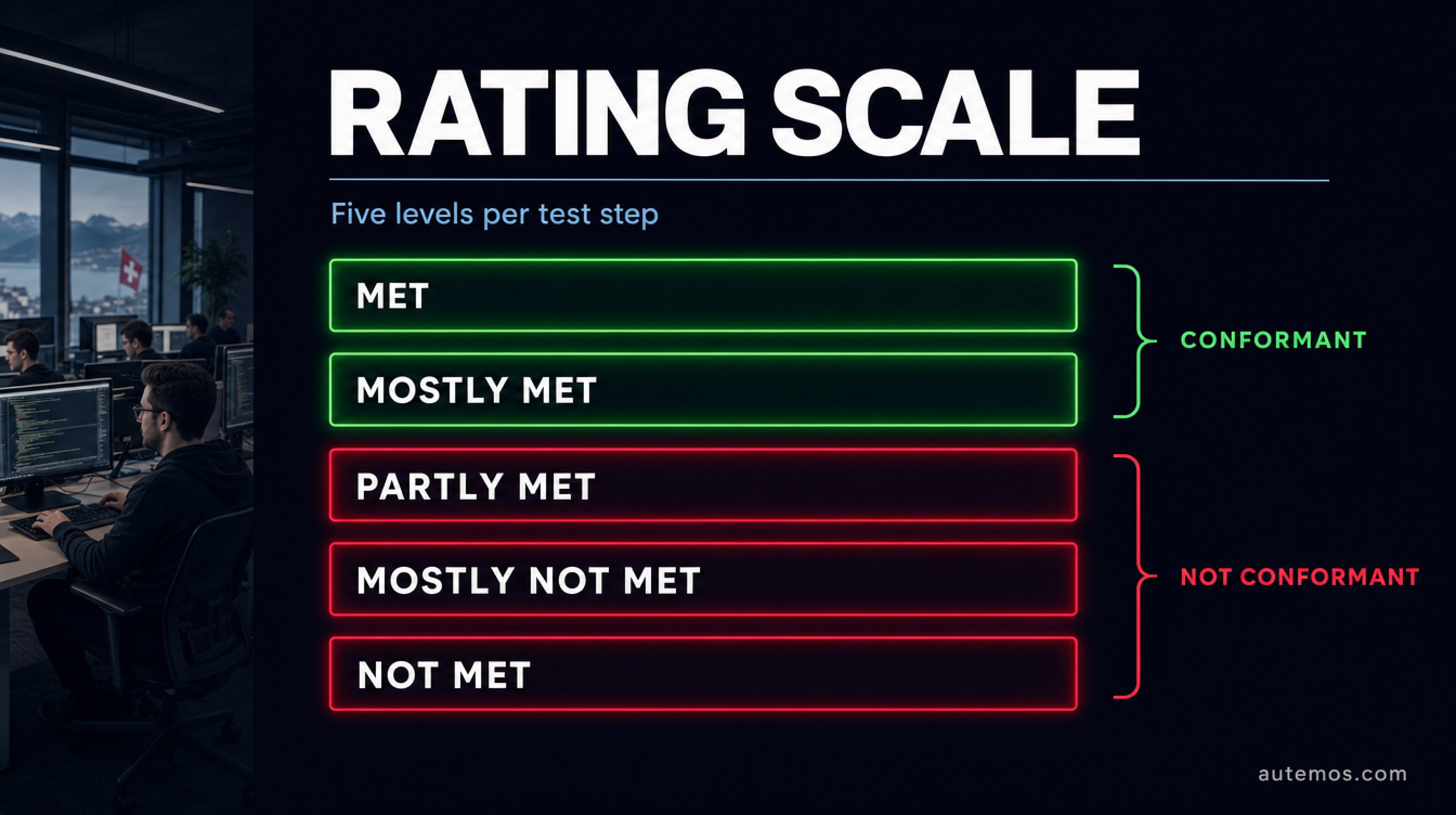
Figure 3: The five-level rating per test step.
The BITV-Test rates every test step on a five-level scale, and a site counts as conformant only if every step ends at "erfüllt" or "eher erfüllt" (BIK BITV-Test, 2026).
BIK describes the scheme like this: "Die Prüfschritte im aktuellen BIK BITV-Test werden nach dem fünfstufigen Bewertungsschema (erfüllt / eher erfüllt / teilweise erfüllt / eher nicht erfüllt / nicht erfüllt) bewertet."
The five levels translate as met / mostly met / partly met / mostly not met / not met. Any step rated "teilweise erfüllt" or lower makes the parent requirement "nicht erfüllt", and no partial credit exists.
The 100-point score has been gone since 2019
Most German-language material on the subject still describes a 0 to 100 point score, with 90 points labelled "gut zugänglich". That scoring was abandoned on 15 March 2019. BIK explains: "Die Punktbewertung, die in der Vergangenheit die Ergebnisse verschiedener geprüfter Seiten zu einem Punkte-Gesamtergebnis für das Angebot mittelte, ist unter diesen Umständen zurzeit nicht angemessen." Averaging page results into one overall figure is no longer treated as appropriate.
For anyone writing a tender or an internal target, the consequence is direct: no score exists to put in a KPI field. The result is a pass or fail on conformity.
Which test variants exist?
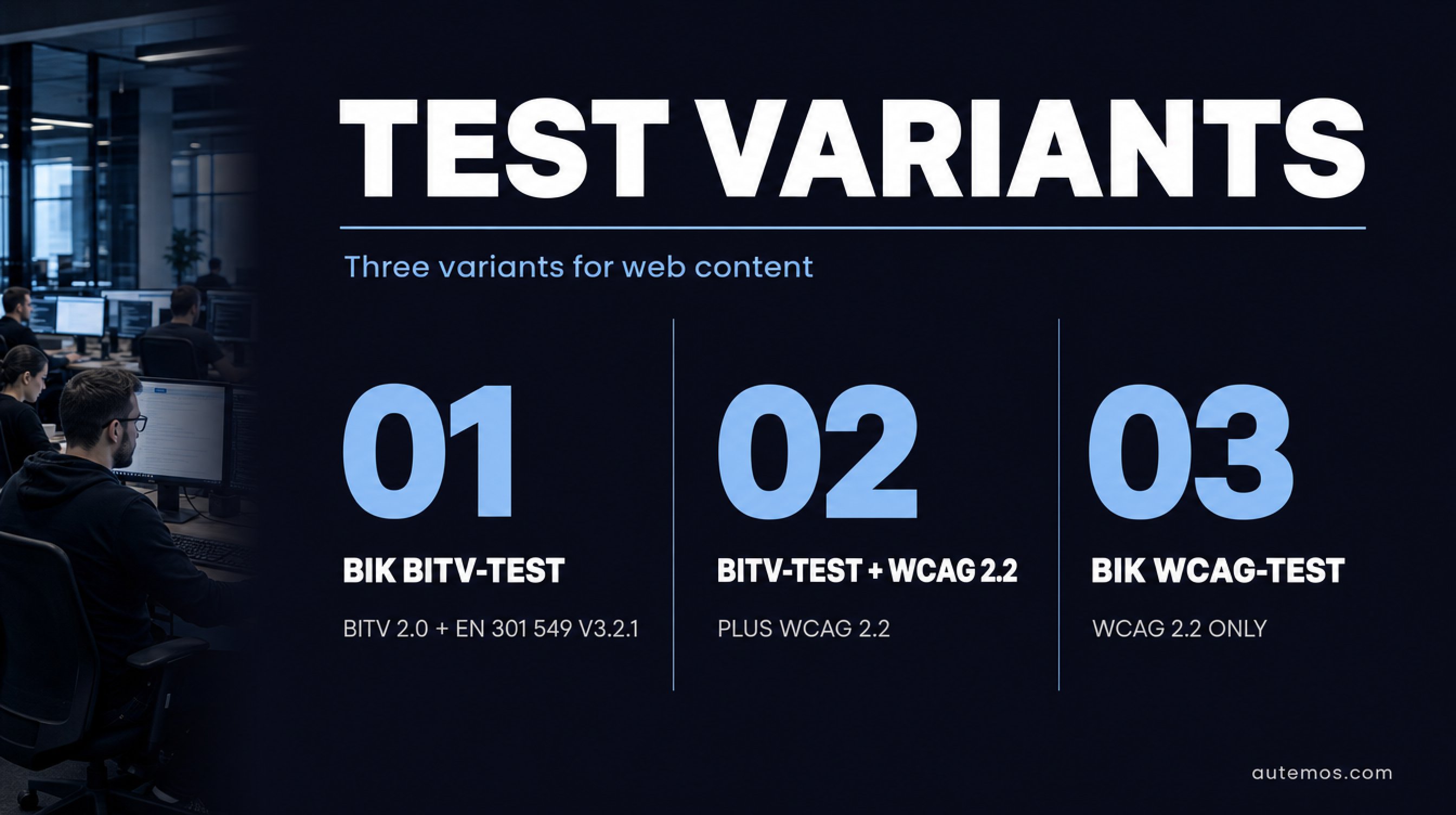
Figure 4: The three test variants for web content.
Three variants of the procedure exist for web content, differing in the standard they test against (BIK BITV-Test, 2026).
Variant | Standard tested | Suited to |
|---|---|---|
BIK BITV-Test | BITV 2.0 and EN 301 549 V3.2.1, meaning the WCAG 2.1 criteria | German federal public bodies and anyone documenting the harmonised standard |
BIK BITV-Test + WCAG 2.2 | as above, plus the WCAG 2.2 criteria | Sites tested beyond the harmonised standard |
BIK WCAG-Test | WCAG 2.2 only | Sites with no BITV obligation, typically private sector |
EN 301 549 V3.2.1 from 2021 is the only version currently referenced as a harmonised standard in the EU Official Journal (Commission Implementing Decision (EU) 2021/1339). It builds on WCAG 2.1 AA. An updated version incorporating WCAG 2.2 is in progress.
BITV-Test or your own WCAG assessment?
A BITV-Test produces an audit report from an independent test centre; an in-house WCAG assessment produces an internal opinion. The difference is what the result proves to a third party.
For German federal public bodies the question is settled. BITV 2.0 applies, and the audit is the established way to document compliance with it.
Companies fall outside BITV 2.0; their obligations come from the BFSG, Germany's transposition of the European Accessibility Act. They can still commission a BIK test centre, usually as a BIK WCAG-Test against WCAG 2.2. That report is no statutory proof, and it carries far more weight than a self-produced scan output.
An in-house assessment earns its keep as preparation and for everything outside the audit sample. It does not replace external testing.
What you can check yourself before a BITV-Test
Automated checks before a BITV-Test reduce the number of findings and prove nothing about conformance. W3C states the limit directly:
"Tools cannot check all accessibility aspects automatically. Human judgement is required." (W3C WAI, 2024)
A pre-check still pays off, since it saves the test centre from recording the same standard defects over and over. The WebAIM Million 2026 shows how concentrated those defects are: six error types account for 96 percent of all detected errors, led by low-contrast text on 83.9 percent of home pages (WebAIM, 2026).
Worth a pass before the audit date:
text contrast in all states of interactive controls
alternative text for every informative image
labels on every form field
language declaration for the document and foreign-language passages
full keyboard operability with a visible focus indicator
How to set these checks up, and which tools hold up in practice, is covered in the guide to testing a website for accessibility.
At Autemos these checks run as a step inside existing test workflows: an axe-core check sits in the same automated run as the functional regression tests, with results going to Allure and Jira like any other result. It says nothing about conformance, and it replaces no part of the formal audit.
Frequently asked questions
Who may carry out a BITV-Test?
Only BIK test centres with qualified BIK testers may carry out the audit under the BIK procedure (BIK, 2026). No self-certification route exists. Internal testing against the same 98 test steps produces neither a BITV report nor the Prüfzeichen.
How long does a BITV-Test take?
Typically 4 to 6 weeks including quality review (BIK, 2026). Duration depends on the number of pages audited and on the complexity of the site.
How many pages does a BITV-Test cover?
BIK names three pages as the floor: "Die Minimalanzahl bei einfachen, kleinen und einheitlich gestalteten Webangeboten sind drei Seiten, bei komplexen Angeboten können es 5-10 oder auch mehr Seiten sein." The widely repeated figure of 7 to 9 pages appears nowhere in the published methodology.
Is the 90-point threshold for "gut zugänglich" still valid?
No. The point score has not been used since 15 March 2019 (BIK, 2026). A five-level rating per test step applies today, and a site is conformant only if all steps were rated "erfüllt" or "eher erfüllt".
Does the BITV-Test apply to companies?
BITV 2.0 covers federal public bodies in Germany (§ 2(1) BITV 2.0). Companies fall under the BFSG. They can commission a BIK test centre anyway, usually as a BIK WCAG-Test against WCAG 2.2.
Conclusion
The BITV-Test is a manual third-party audit with clear rules: 98 test steps across 88 requirements, a sample of at least three pages, a five-level rating per step, conformity only when every step lands at "erfüllt" or "eher erfüllt". The 100-point score that older sources still quote has been gone since 15 March 2019, so a tender built on 90 points rests on a metric that no longer exists.
What you can do before the audit is limited and worth doing: clear out the automatable standard defects before a test centre counts them. The judgement work stays with people.
Want accessibility checks running inside your existing test automation rather than as a side project? Talk to us.