·
7 min
WCAG 2.2 explained: the 9 new success criteria

Roman Kirchmeier - Autemos

WCAG 2.2 is the current version of the W3C Web Content Accessibility Guidelines, published as a Recommendation on 5 October 2023 and updated on 12 December 2024 (W3C, 2024). It adds 9 success criteria to WCAG 2.1 and removes one, 4.1.1 Parsing. Two facts matter most for a test team. Six of the nine new criteria sit at Level A or AA, so they land inside the legally relevant scope. And the European standard that regulators and audit bodies point at still builds on WCAG 2.1 AA. Together those two facts decide what you test before the next release.
TL;DR: WCAG 2.2 (W3C Recommendation of 5 October 2023, updated 12 December 2024) adds 9 success criteria, six of them at Level A or AA, and removes 4.1.1 Parsing. EN 301 549 V3.2.1 with WCAG 2.1 AA remains the harmonised European reference, so many audits still test and report 4.1.1.
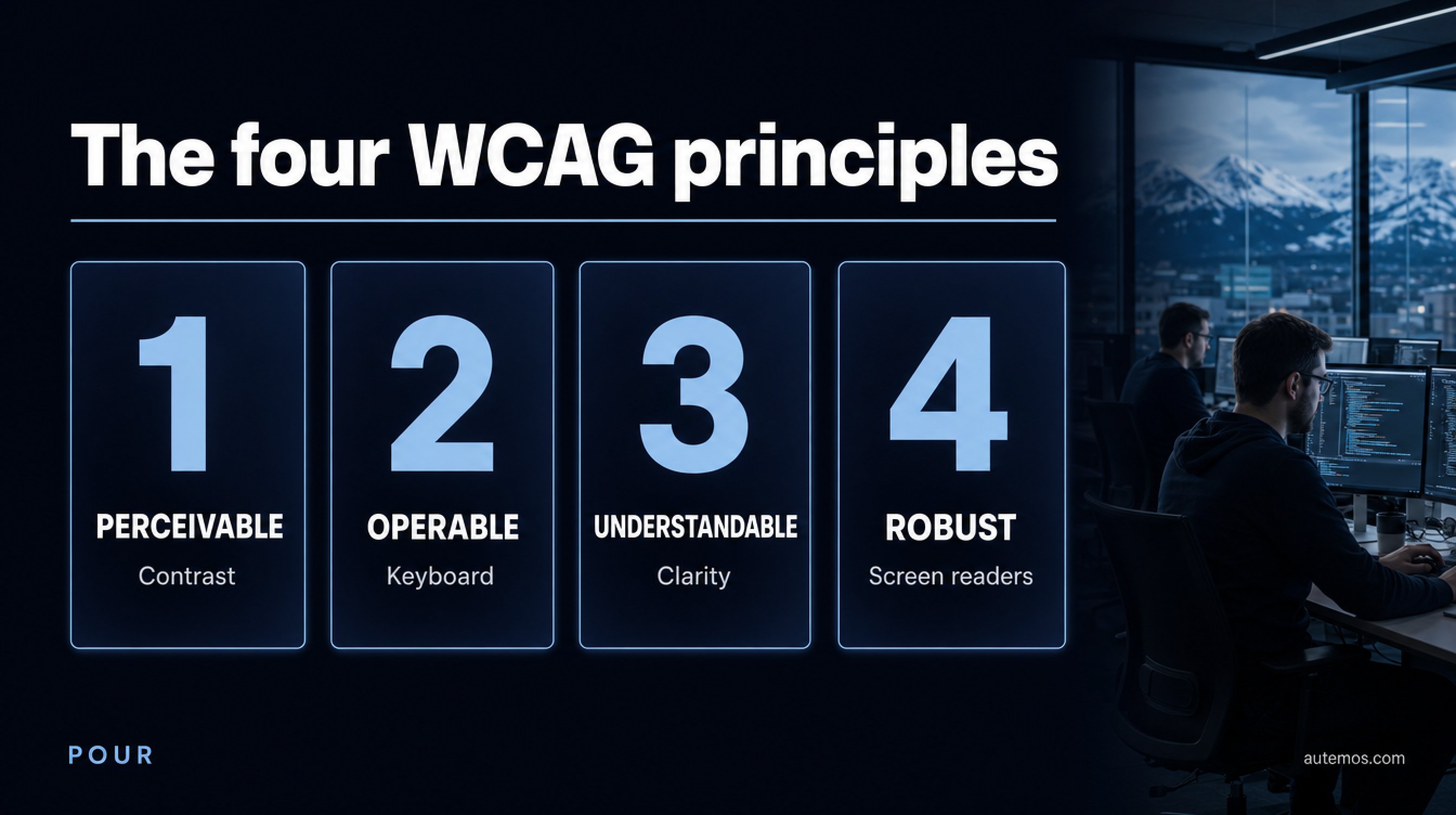
Figure 1: The four WCAG principles (POUR), one cue each
What is WCAG 2.2?
WCAG 2.2 is the World Wide Web Consortium standard for web accessibility, published as a W3C Recommendation on 5 October 2023 with an updated version on 12 December 2024 (W3C, 2024). Both dates count: the document at w3.org/TR/WCAG22/ carries the December 2024 date today.
The standard is a set of success criteria. Each one is written so a trained reviewer can check it against a real page and record it as met or not met. The techniques documents that come with the criteria are informative, not normative.
Older versions stay valid. The W3C puts it plainly:
‘WCAG 2.0, WCAG 2.1, and WCAG 2.2 are all existing standards. WCAG 2.2 does not deprecate or supersede WCAG 2.1’
(W3C, 2024). That coexistence is what makes the European legal position confusing. For the wider process view, see the overview of accessibility testing.
Which four principles does WCAG rest on?
WCAG assigns every success criterion to one of four principles: perceivable, operable, understandable and robust (W3C, 2024). The initials give the common shorthand, POUR.
Perceivable: content reaches more than one sensory channel, through text alternatives, captions and contrast.
Operable: every function works from the keyboard, with enough time and no harmful motion patterns.
Understandable: language, labels and error messages make sense, and the interface behaves predictably.
Robust: the markup can be interpreted reliably by screen readers and other assistive technology.
In Germany those four words appear verbatim in ordinance law. Section 3 of the BITV 2.0 reads:
‘Die in § 2 genannten Angebote, Anwendungen und Dienste der Informationstechnik sind barrierefrei zu gestalten. Dies erfordert, dass sie wahrnehmbar, bedienbar, verständlich und robust sind.’
(BITV 2.0, § 3, version of 24 October 2023). The same wording carries into e-commerce law: § 19 BFSGV requires identification, authentication, security and payment functions to be ‘wahrnehmbar, bedienbar, verständlich und robust gestaltet’ (BFSGV, § 19, 2022). Miss POUR and you miss a written German requirement.
What do conformance levels A, AA and AAA mean?
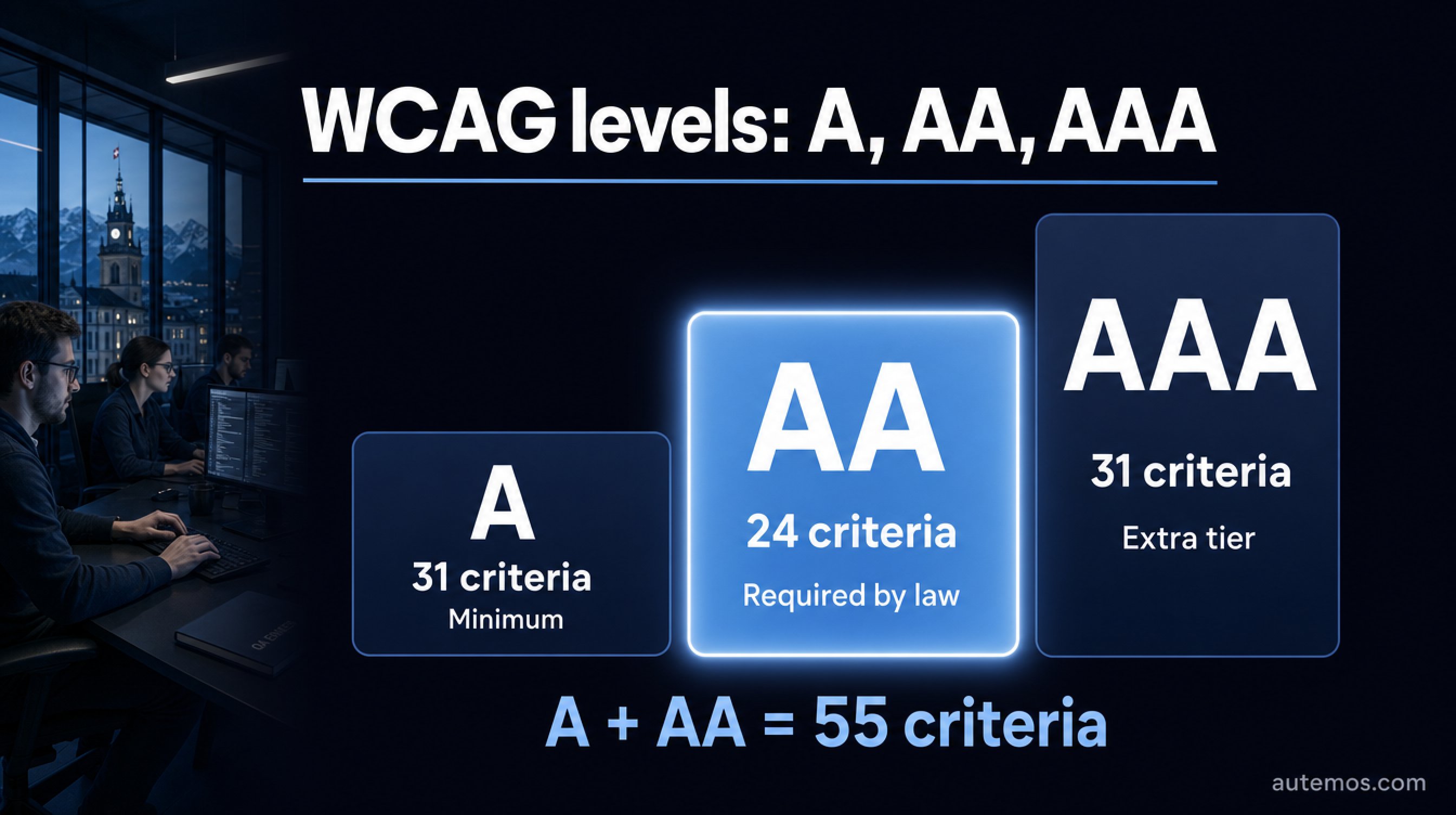
Figure 2: Level AA is the level the law points at
WCAG defines three conformance levels: A, AA and AAA (W3C, 2024). European law and standards point at Level AA, meaning all Level A plus all Level AA criteria.
Level | Criteria in version 2.2 | Role in practice |
|---|---|---|
A | 31 | The floor, without which content stays unusable for entire user groups |
AA | 24 | The reference level in EN 301 549 and in most audit briefs |
AAA | 31 | An extra tier, rarely required in full for a whole site |
A + AA combined | 55 | The scope behind a Level AA conformance claim |
These totals come from counting the W3C Quick Reference (as of 2026). The W3C publishes no official total, which is why blog posts circulate different numbers. The arithmetic is easy to redo: WCAG 2.1 had 78 criteria, version 2.2 adds 9 and removes 1, giving 86.
German federal bodies face a stricter rule on top: § 3 BITV 2.0 asks for the highest possible accessibility on central navigation, entry pages and interactive elements.
What is new in WCAG 2.2?

Figure 3: Six of the nine new criteria sit at Level A or AA
WCAG 2.2 adds 9 success criteria to WCAG 2.1, six of them at Level A or AA (W3C, 2023). They target focus visibility, motor operability, and the cognitive load of forms and logins.
Criterion | Name | Level | What it requires in practice |
|---|---|---|---|
2.4.11 | Focus Not Obscured (Minimum) | AA | Sticky headers, cookie banners and chat widgets must not fully hide the focused element |
2.4.12 | Focus Not Obscured (Enhanced) | AAA | No part of the focused element may be hidden |
2.4.13 | Focus Appearance | AAA | The focus indicator needs a minimum area and enough contrast |
2.5.7 | Dragging Movements | AA | Sliders, drag-and-drop lists and maps need a single-pointer alternative |
2.5.8 | Target Size (Minimum) | AA | Click and touch targets of at least 24 by 24 CSS pixels, with defined exceptions |
3.2.6 | Consistent Help | A | Help such as chat or a contact form sits in the same place on every page |
3.3.7 | Redundant Entry | A | Data already entered in the same process is prefilled instead of asked for again |
3.3.8 | Accessible Authentication (Minimum) | AA | Login without a cognitive function test, with paste from a password manager allowed |
3.3.9 | Accessible Authentication (Enhanced) | AAA | As 3.3.8, without the exceptions for object recognition and personal content |
Numbers, names and levels from W3C, What’s New, 2023.
One criterion left the standard. The W3C states:
‘The 2.0 and 2.1 success criteria are essentially the same in 2.2, with one exception: 4.1.1 Parsing is obsolete and removed from WCAG 2.2.’
(W3C, 2023). Criterion 4.1.1 asked for valid markup in areas that current browsers and assistive technologies handle consistently anyway. Criterion 2.4.7 Focus Visible keeps its Level AA status.
WCAG 2.1 or 2.2: which version does the law point at?
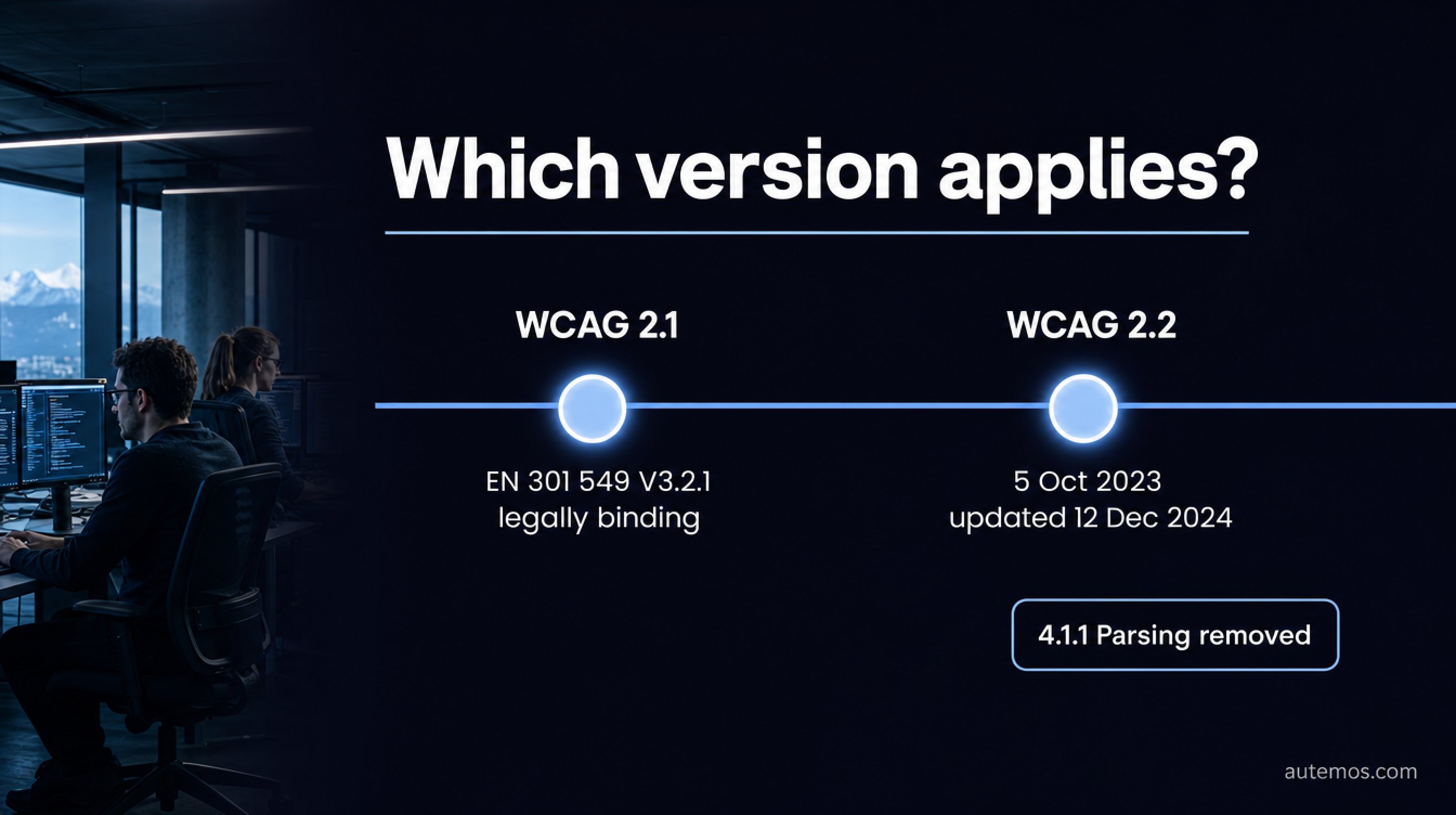
Figure 4: Version 2.2 is current, but the standard still points at 2.1
In the EU the binding reference is still WCAG 2.1 at Level AA, since EN 301 549 V3.2.1 (2021-03) is the only harmonised version of the European standard. It was harmonised by Commission Implementing Decision (EU) 2021/1339 of 11 August 2021 (EUR-Lex, 2021). Two versions have ever been harmonised: V2.1.2 from 2018 and V3.2.1.
That produces a detail most summary articles get wrong. If you build to the newer version under a policy that references WCAG 2.0 or 2.1, criterion 4.1.1 stays on your report. The W3C says so inside the Recommendation:
‘WCAG 2.2 has removed one success criterion, 4.1.1 Parsing. Authors that are required by policy to conform with WCAG 2.0 or 2.1 will be able to update content to WCAG 2.2, but may need to continue to test and report 4.1.1.’
(W3C, 2024). German audit practice shows it directly: the standard BITV-Test variant checks against EN 301 549 V3.2.1 with the WCAG 2.1 criteria, and the 2.2 criteria come as a separate variant.
For the European Accessibility Act no harmonised standard exists yet. AccessibleEU, a European Commission initiative, writes about EN 301 549:
‘The standard is currently being updated to also support the European Directive 2019/882 on the accessibility requirements for products and services.’
(AccessibleEU, 2026). Draft version V4.1.0 (2025-11) is in the formal vote of the European standards organisations until August 2026 and is expected to adopt the 2.2 criteria at Level AA (ETSI Labs, 2026). A presumption of conformity starts only once a version is cited in the EU Official Journal, and no date is fixed.
US rules point even further back. The Revised Section 508 Standards incorporate WCAG 2.0 Level A and AA (US Access Board, 2017), and the DOJ rule for ADA Title II entities requires WCAG 2.1 Level AA, with compliance dates pushed to 26 April 2027 and 26 April 2028 by the Interim Final Rule effective 20 April 2026 (Federal Register, 2026).
The workable strategy: test against version 2.2 at Level AA and keep 4.1.1 as a reporting line for as long as your client or regulator references EN 301 549 V3.2.1.
Is WCAG 3.0 coming?
WCAG 3.0 is an incomplete Working Draft dated 3 March 2026 and cannot carry a conformance claim. The W3C is unusually direct about the timeline: ‘WCAG 3 is not expected to be a completed W3C standard for a few more years’ and ‘WCAG 3 will not supersede WCAG 2 and WCAG 2 will not be deprecated for at least several years after WCAG 3 is finalized’ (W3C, 2026). Keep planning audits on WCAG 2.x.
How do you test the new criteria?
Only a small share of the 9 new criteria can be checked automatically; the rest needs human judgement. axe-core 4.12 ships exactly one rule for version 2.2, and it is off by default (axe-core rule descriptions, 2026). The W3C draws the line: ‘Tools cannot check all accessibility aspects automatically. Human judgement is required.’ (W3C, 2024).
A workable sequence for the nine criteria:
Run the automated scan and treat the output as a prefilter, never as a conformance statement.
Tab through each page with the sticky header, cookie banner and chat widget visible (2.4.11, 2.4.13).
Measure the smallest interactive targets, above all icon buttons inside tables and toolbars (2.5.8).
Operate every drag interaction without dragging, using click, tap or keyboard only (2.5.7).
Walk through forms and checkout twice, recording which values you enter a second time (3.3.7).
Test login with a password manager, with paste from the clipboard, and without a puzzle step (3.3.8).
Compare the position and order of help mechanisms across at least five page types (3.2.6).
Steps 2 to 7 are manual work, though parts of them can be captured as repeatable test cases. In Autemos test workflows, teams add custom code blocks and existing Playwright tests, so an axe-core check runs in the same execution as the functional regression suite and the findings reach Allure and Jira. Flows captured with the AI Recorder give you a starting point. None of it produces a conformance statement: the three-layer method sits in the guide to testing a website for accessibility.
Frequently asked questions
Is WCAG 2.2 mandatory?
It is a W3C Recommendation that becomes binding through the standards and regulations referencing it. In the EU the harmonised standard EN 301 549 V3.2.1 still references WCAG 2.1 AA (EUR-Lex, 2021). Draft version V4.1.0 with the 2.2 criteria at Level AA is in formal vote until August 2026.
How many success criteria does WCAG 2.2 have?
The standard has 86 success criteria: 31 at Level A, 24 at AA and 31 at AAA. A Level AA conformance claim covers 55 of them. These totals were counted from the W3C Quick Reference, since the W3C publishes no official total.
Do I still have to test 4.1.1 Parsing?
Yes, if your policy references WCAG 2.0 or 2.1. The W3C records that authors under such policies ‘may need to continue to test and report 4.1.1’ (W3C, 2024). For a pure 2.2 claim the criterion drops out of scope.
Is an automated scan enough for WCAG 2.2 compliance?
No. A scan reaches only part of the criteria, and most new 2.2 criteria fall outside it. The W3C states: ‘Tools cannot check all accessibility aspects automatically. Human judgement is required.’ (W3C, 2024). A defensible claim needs an expert manual audit, in Germany usually the BITV-Test.
Which WCAG version applies in the United States?
Section 508 incorporates WCAG 2.0 Level A and AA (US Access Board, 2017), and the DOJ web rule for state and local government requires WCAG 2.1 Level AA (ADA.gov, 2024). Neither points at version 2.2, so a 2.2 audit exceeds the written requirement.
Conclusion
The standard has been a W3C Recommendation since 5 October 2023, updated on 12 December 2024, and it adds 9 success criteria. Six sit at Level A or AA and belong in any serious test scope: focus visibility, target size, drag alternatives, consistent help, no redundant entry, accessible authentication. The only harmonised version of EN 301 549 still builds on WCAG 2.1 AA, which is why 4.1.1 Parsing keeps appearing in audit briefs. Cover both and you are correct today and ready for the next revision. The full process view sits in the overview of accessibility testing. If you want accessibility checks running inside your existing automated test suite, talk to our team.