·
8 min
Selenium vs. Playwright: A 2026 Comparison

Roman Kirchmeier - Autemos

Selenium and Playwright solve the same job in two very different ways. Selenium is an open-source browser-automation framework that drives browsers over the W3C WebDriver protocol from a separate process, an open standard since 2018. Playwright is an automation framework introduced by Microsoft in January 2020 that uses a persistent, CDP-derived connection with built-in auto-wait. For QA teams in banks and regulated firms, raw speed matters less than the questions of standards, maintenance, and portability. This comparison places both tools against verifiable facts and says when each one fits.
TL;DR: Playwright wins on stability and developer comfort thanks to auto-wait and a bundled test runner. Selenium counters with the vendor-neutral W3C WebDriver standard (official recommendation since 5 June 2018) and five language bindings including Ruby. New web projects usually start with Playwright; for portability and legacy estates, Selenium stays relevant.
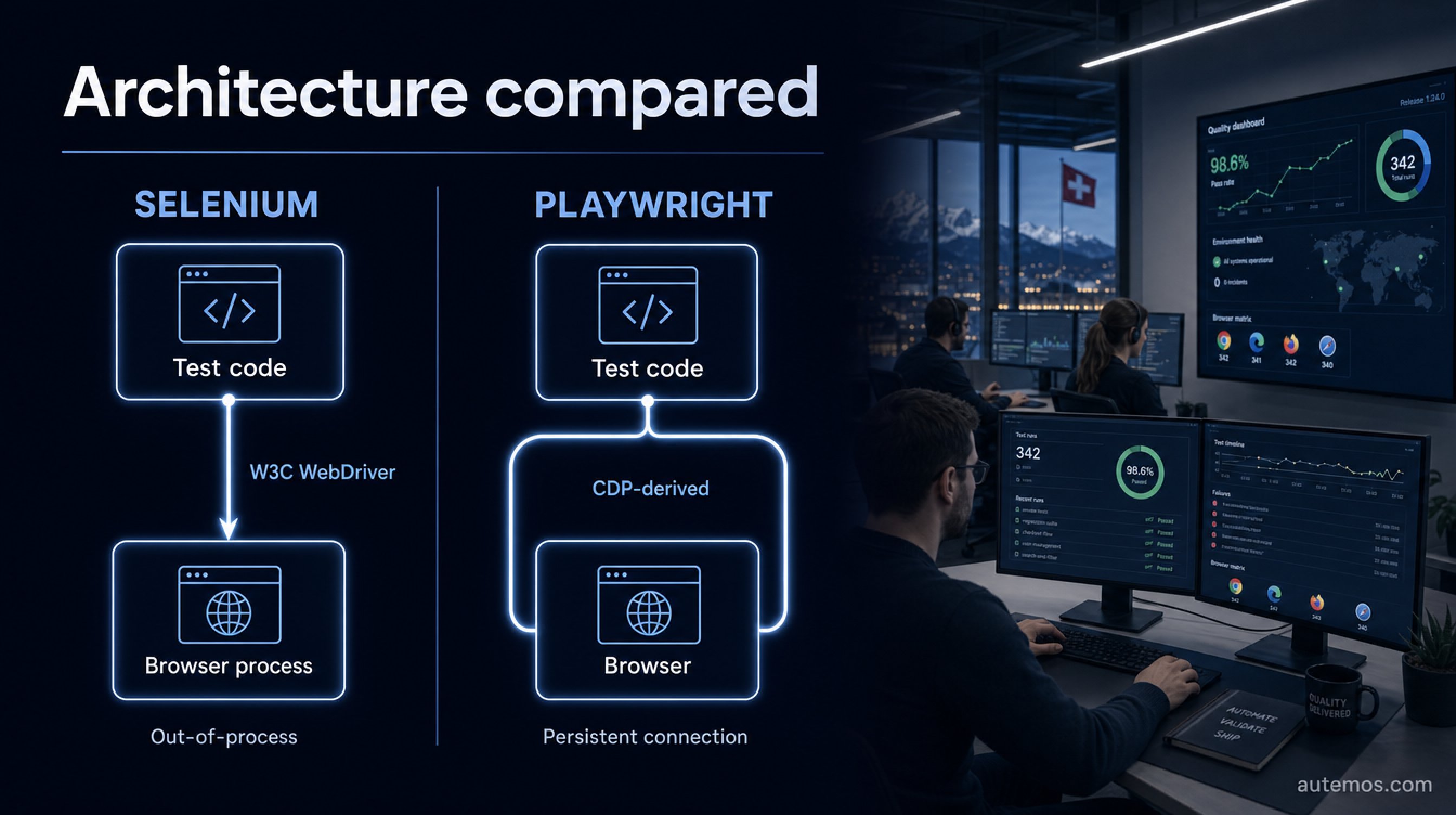
Figure 1: Selenium out-of-process (W3C WebDriver) vs. Playwright with a persistent CDP-derived connection.
Quick verdict
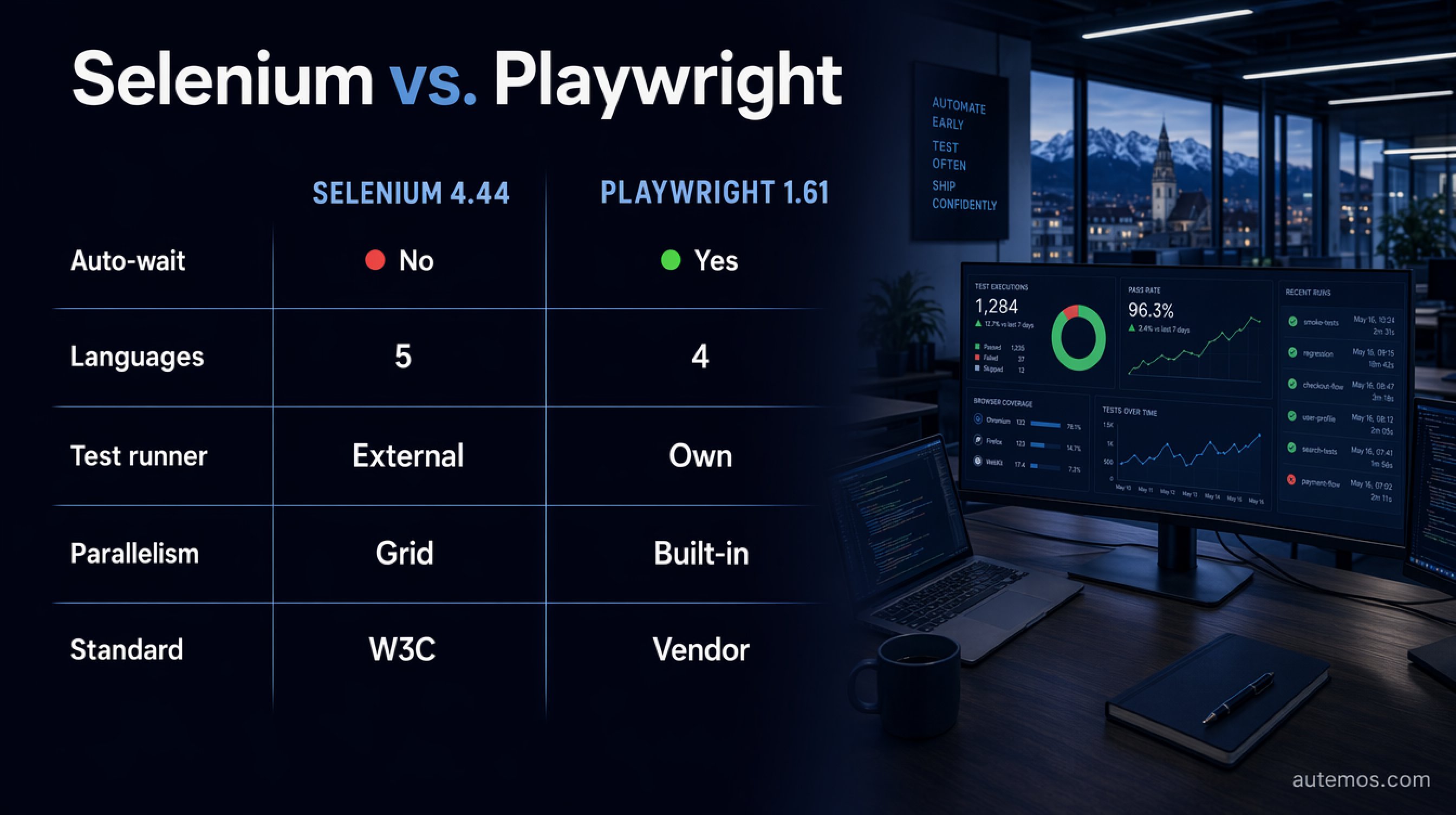
Figure 2: Selenium vs. Playwright compared head-to-head across five core criteria.
Selenium and Playwright differ on nearly every technical core point. Selenium 4.44.0 (released 12 May 2026) builds on the W3C WebDriver standard; Playwright 1.61 ships auto-wait, its own runner, and native network interception (Selenium Downloads, 2026; Playwright release notes, 2026). The table below sums up the differences.
Criterion | Selenium 4.44.0 | Playwright 1.61 |
|---|---|---|
Architecture | Out-of-process, W3C WebDriver | Persistent CDP-derived connection |
Auto-wait | No, explicit waits required | Yes, built in |
Browsers | Chromium, Firefox, WebKit (installed) | Chromium, Firefox, WebKit (bundled) |
Languages | Java, Python, C#, Ruby, JS (5) | JS/TS, Python, Java, .NET (4) |
Test runner | External (JUnit, TestNG, pytest) | Own runner bundled |
Parallelism | Selenium Grid | Built-in parallel workers |
Standard vs. vendor | W3C standard, community-led | Single-vendor (Microsoft) |
How does the architecture differ?
Selenium and Playwright differ fundamentally in architecture. Selenium drives browsers from a separate process over the W3C WebDriver wire protocol, an official W3C Recommendation since 5 June 2018 (W3C WebDriver, 2018). The specification defines WebDriver as "a remote control interface that enables introspection and control of user agents". Playwright instead holds a persistent connection derived from the Chrome DevTools Protocol and handles network traffic natively (Playwright release notes, 2026).
Selenium 4 replaced the old JSON Wire Protocol with the standardized W3C WebDriver protocol. Tests now talk directly to the browser without extra encode and decode steps (Selenium docs, 2026).
Playwright's model gives native network interception and request mocking out of the box. Selenium closes this gap with WebDriver BiDi, which brings bidirectional features like network interception and console capture. The BiDi work is still in transition: the project is migrating its implementation from WebDriver Classic to BiDi, with high-level APIs planned for Selenium 5 (Selenium BiDi docs, 2026).
Why is Playwright more stable on auto-wait?
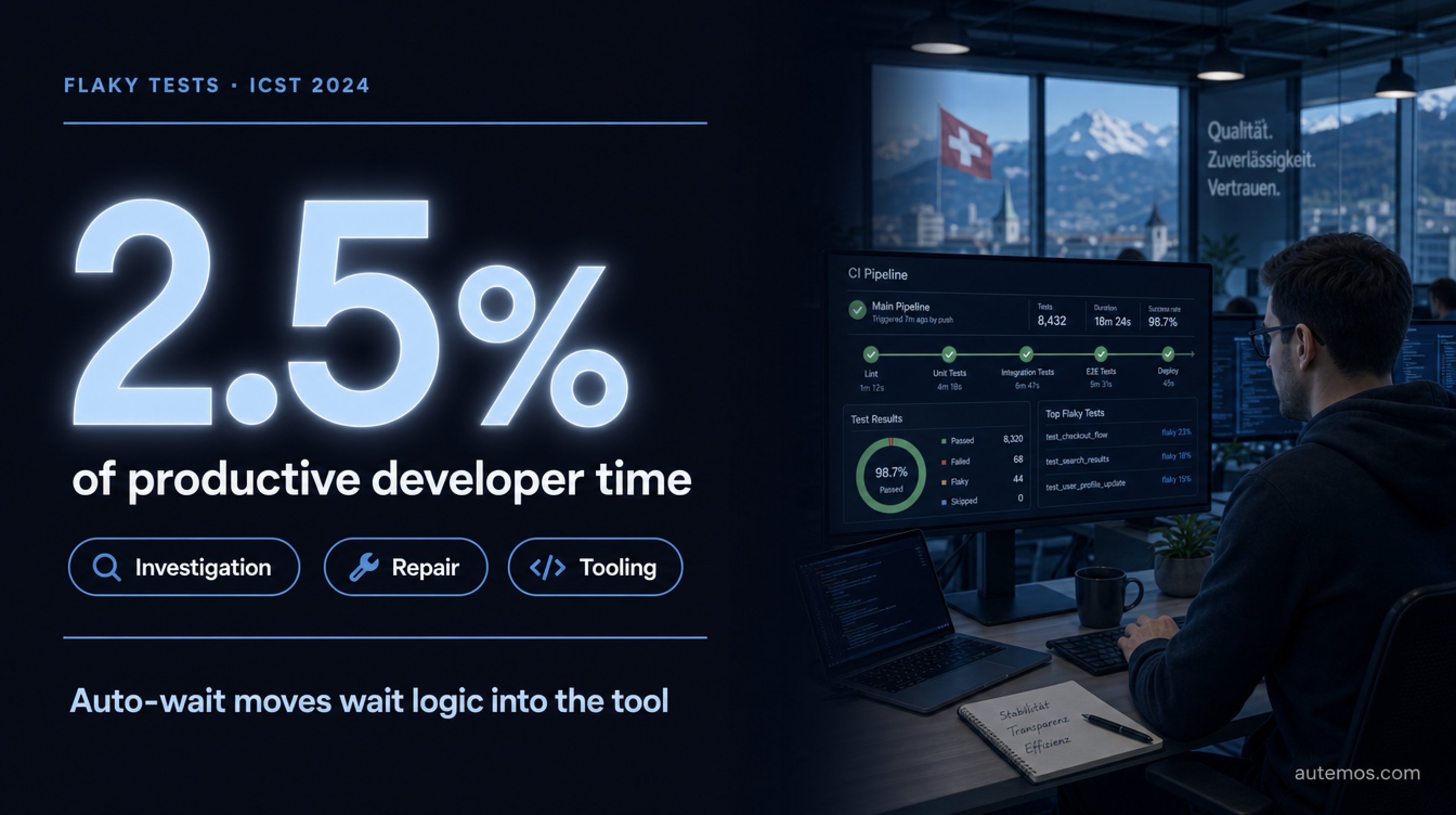
Figure 3: Flaky tests cost around 2.5% of productive developer time, per the ICST 2024 case study.
Playwright is more stable on auto-wait because it waits by default for elements and their actionability before it clicks or types. Selenium has no built-in auto-wait: teams code explicit or implicit waits themselves, one of the main sources of flakiness (Playwright release notes, 2026; Selenium docs, 2026).
Flaky tests cost measurable time. An industrial case study at ICST 2024 found that dealing with flaky tests ties up at least around 2.5% of productive developer time, split across investigation, repair, and tooling (ICST 2024, 2024). Teams that want to cut this time move wait logic out of their own code and into the tool.
In practice this means Selenium suites need discipline with waits, or they break under timing variance. For how to cut this brittleness without a full rebuild, see our post on self-healing locators and test maintenance.
Which tool covers more browsers and languages?
Selenium covers more languages with five official bindings than Playwright with four, while both support the same three browser engines. Selenium offers Java, Python, C#, Ruby, and JavaScript, all at version 4.44.0. Playwright offers four bindings: JavaScript/TypeScript, Python, Java, and .NET (Selenium Downloads, 2026; Playwright release notes, 2026).
The Ruby difference is concrete. Anyone maintaining an existing Ruby test base finds an official binding only in Selenium. Playwright's four bindings all come from one source, maintained by Microsoft, which raises consistency across languages.
On browsers, both test Chromium, Firefox, and WebKit. Playwright bundles matched browser builds with each version (currently Chromium 149, Firefox 151, WebKit 26.5). Selenium relies on installed browsers plus matching drivers (Playwright release notes, 2026). To position Playwright against another popular candidate, see the Playwright vs. Cypress comparison.
What makes Playwright faster in CI?
Playwright is faster in CI because its persistent, CDP-derived connection and built-in parallel workers allow fast in-context operations without the overhead of separate wire-protocol roundtrips (Playwright release notes, 2026; W3C WebDriver, 2018). We deliberately leave out specific speed percentages.
Circulating "Playwright is X% faster" figures almost always come from vendor blogs or single-repo test runs with undisclosed methodology. Without a reproducible method, we cite no multiplier. The defensible point is structural: out-of-process control plus free parallel workers.
Selenium scales parallelism through Selenium Grid, which distributes tests across machines and browsers and stays actively maintained (Selenium blog: Grid 4.41, 2026). Playwright brings parallel workers with no extra component. In CI pipelines that means less infrastructure setup for Playwright and more control over distributed grids for Selenium.
How do you cut maintenance and flaky tests?
You cut maintenance and flaky tests by moving wait logic out of the test code into the tool and letting locators adapt to UI changes automatically. The sore spot of every large Selenium suite sits in the model: hand-coded waits and locators that break on every UI change. Playwright reduces part of this through auto-wait and steadier selectors, but it does not solve the underlying problem of changing interfaces (Playwright release notes, 2026).
Self-healing locators go a step further: when the tool detects a moved or renamed element, it adapts the reference instead of failing the test. In client projects with the Selenium Toolkit, selementrix saw roughly 80% less maintenance effort, though as consulting experience rather than a product metric.
Autemos is an AI-assisted test automation platform that imports existing Selenium and Playwright tests and adds self-healing locators with its own stability logic first, an LLM only as a fallback. Every heal is documented, reviewable, and reversible, not a black-box mechanism. The self-healing feature page explains the mechanics. Autemos here is one option among several, not a replacement for the choice of framework.
Standard vs. vendor: what matters for regulated teams?
For regulated teams, what matters most is that Selenium/WebDriver is a vendor-neutral W3C standard while Playwright stays a single-vendor toolchain from Microsoft. Selenium/WebDriver was developed in a community project under the Software Freedom Conservancy. According to the Software Freedom Conservancy, "Selenium's WebDriver has become a World Wide Web Consortium recommendation" (W3C WebDriver, 2018).
The standard status has practical consequences. WebDriver tests run portably across different grids and cloud providers without being tied to a single vendor. For DACH banks that prefer vendor-neutral standards over lock-in, that is a defensible argument.
Playwright's single-vendor model gives consistency and fast feature development but couples the roadmap to one provider. Teams that must test regulated systems in an auditable way, for example under DORA from 17 January 2025, weigh this portability deliberately. Autemos exports real Playwright and Appium code, so tests run outside the platform and no lock-in arises. For more on framework choice, see the overview of test automation tools compared for 2026.
When Selenium, when Playwright?
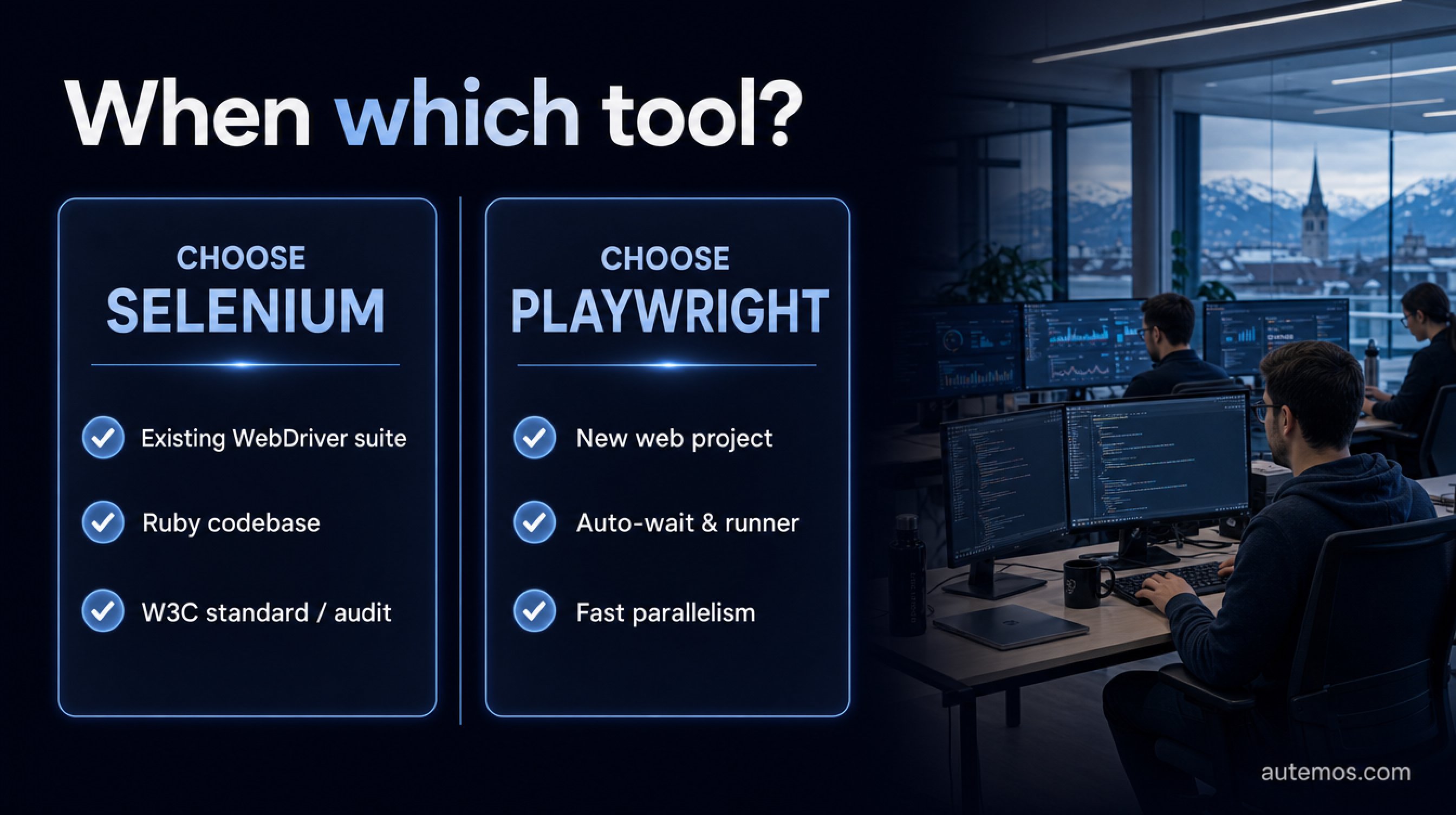
Figure 4: When Selenium, when Playwright? A decision guide by estate and requirements.
The choice depends on the existing estate, the team, and governance requirements. Selenium stays the sensible pick for existing WebDriver suites, Ruby codebases, and where the W3C standard is mandatory for compliance. Playwright fits new web projects that prioritize stability and a fast start.
Choose Selenium when a large WebDriver test base exists and a rebuild would cost more than maintenance.
Choose Selenium when you use Ruby or need the vendor-neutral W3C standard for audit reasons.
Choose Selenium when portability across grids and cloud providers takes priority.
Choose Playwright for new web test projects that want auto-wait and a bundled runner.
Choose Playwright when native network interception and fast parallelism in CI count.
Choose Playwright when the team starts with no heavy legacy binding.
Teams that want to leave Selenium without discarding tests find migration paths in the post on Selenium alternatives. For test-type basics, see the overview of test types in software testing.
FAQ
Is Playwright better than Selenium?
Playwright is usually ahead on stability and developer comfort, thanks to built-in auto-wait and its own test runner. Selenium offers the vendor-neutral W3C WebDriver standard (recommendation since 2018), five languages including Ruby, and stronger portability. "Better" depends on the project, not the tool alone.
Does Selenium support auto-wait like Playwright?
No. Selenium has no built-in auto-wait; teams code explicit or implicit waits themselves, which is a main source of flakiness (Selenium docs, 2026). Playwright waits by default for element actionability and cuts the timing risk.
Which languages do Selenium and Playwright support?
Selenium offers five official bindings: Java, Python, C#, Ruby, and JavaScript. Playwright offers four: JavaScript/TypeScript, Python, Java, and .NET (Selenium Downloads, 2026; Playwright release notes, 2026). Ruby exists only in Selenium.
Is Playwright faster than Selenium?
Playwright is faster in many scenarios, thanks to a persistent connection and built-in parallel workers. Specific percentage figures circulate but mostly come from test runs without verifiable methodology. So we cite no fixed multiplier, only the architectural reason.
Can I use Selenium and Playwright tests together?
Yes. Platforms like Autemos import existing Selenium and Playwright tests and export real Playwright code, so both estates run side by side with no lock-in. That lets you migrate step by step instead of rewriting a suite from scratch.
Conclusion
Selenium and Playwright are both solid but strike different trade-offs. Playwright delivers auto-wait, its own runner, and native network interception, which raises stability and startup speed. Selenium holds the vendor-neutral W3C WebDriver standard (official recommendation since 2018), five language bindings, and grid scaling proven over years. For new web projects Playwright is usually the pragmatic start; for portability, Ruby estates, and audit needs Selenium stays relevant. Regulated DACH teams weight the standard-vs-vendor question especially. Teams that want to keep both estates and cut maintenance can assess AI-assisted options with real code export and transparent self-healing. See these in a 30-minute Autemos demo and clarify which path fits your test landscape.