·
12 min
API Testing: The Complete Guide for Regulated Teams

Roman Kirchmeier - Autemos

API testing is a testing method that exercises an application's logic directly at the interface layer instead of through the screen. 74 % of organizations now follow an API-first approach, up from 66 % the year before (Postman, 2024). When interfaces carry the business, their quality decides stability, time-to-market and compliance. This guide explains what API testing is, why it is the highest-leverage layer in your test pyramid, and how regulated teams at DACH banks and enterprises run it in an audit-ready way. Four deeper articles connect along the path.
In short: API testing exercises interfaces directly at the HTTP layer — faster and more stable than UI tests, broader than unit tests. It sits in the middle of the test pyramid and is the best place to automate. The urgency is real: 95 % of organizations reported a security problem in production APIs (Salt Security, 2024).

Figure 1: API tests sit in the middle of the test pyramid.
What is API testing and where does it sit in the test pyramid?
API testing is a testing method that exercises an interface directly at the HTTP or message layer rather than through the user interface (Postman, 2024). You send requests with payloads, headers and parameters, then validate status codes, response structure, data types, business rules, performance and security against the API's contract. No browser, no rendering — just the logic itself.
In the test pyramid, API or service tests sit in the middle layer: above unit tests, below UI and end-to-end tests. That position is no accident. API tests run faster and more stably than UI tests because they need no brittle interface selectors. At the same time they cover more than isolated unit tests, because they exercise integrated endpoints and whole data flows.
Layer | Scope | Speed | Stability | Maintenance |
|---|---|---|---|---|
Unit | Single function | Fastest | High | Low |
API/Service | Integrated endpoints & contracts | Fast | High | Low–Medium |
UI/E2E | Full journey via browser | Slow | Lower (flaky) | High |
A quick framing: API testing is one of several disciplines. How it relates to unit, integration and end-to-end testing is covered in our overview of software testing types.
Why is API testing the highest-leverage layer?
API testing is the highest-leverage layer for three reasons: speed, stability and shift-left. The economic weight is substantial — the cost of poor software quality in the US is estimated at around $2.41 trillion per year (CISQ, 2022). Finding defects early and cheaply is risk management.
Speed. At the API layer, hundreds of checks run in seconds rather than minutes. That fits natively into CI/CD pipelines where every commit gets verified.
Stability. Without a browser and rendering, the most common causes of flaky tests disappear. Selectors do not break, waits vanish, results stay reproducible.
Shift-left. The earlier a defect surfaces, the cheaper it is to fix. The often-quoted range of 15x to 100x higher fix cost from design to production comes from older Boehm/IBM research and should be read as directional, not as an exact measurement. The direction itself — defects get costlier downstream — is well established.
In client projects we rarely find the biggest lever in more UI tests. It usually lies in replacing unstable end-to-end suites with fast, deterministic API checks. That cuts pipeline runtime and the false-positive rate at the same time.
The market underlines the urgency: estimates see the API testing market growing from roughly $4.15B (2024) to about $8.24B (2030), some 12 % CAGR (ResearchAndMarkets, 2024) — figures vary widely between analysts, so treat this as an order of magnitude.
What types of API tests are there?
API tests fall into five practical categories, from functional checks to security. The choice determines when you test and how well the test automates. Functional and contract tests suit every commit; load and security tests run before releases or continuously in the background.
Test type | Purpose | When | Automation fit |
|---|---|---|---|
Functional | Correct responses per contract | Every commit/PR | High |
Integration | Components work together | Per build / pre-merge | High |
Contract | No breaking schema changes | On change, in CI | High |
Load/Performance | Behaviour under volume | Pre-release / scheduled | Medium |
Security | Resistance to OWASP API Top 10 | Pre-release + continuous | Medium–High |
We go deep on each type in this cluster's spoke articles. Functional and integration testing are covered hands-on in REST API testing, and contracts between services in contract testing.
How do you test a REST API properly?
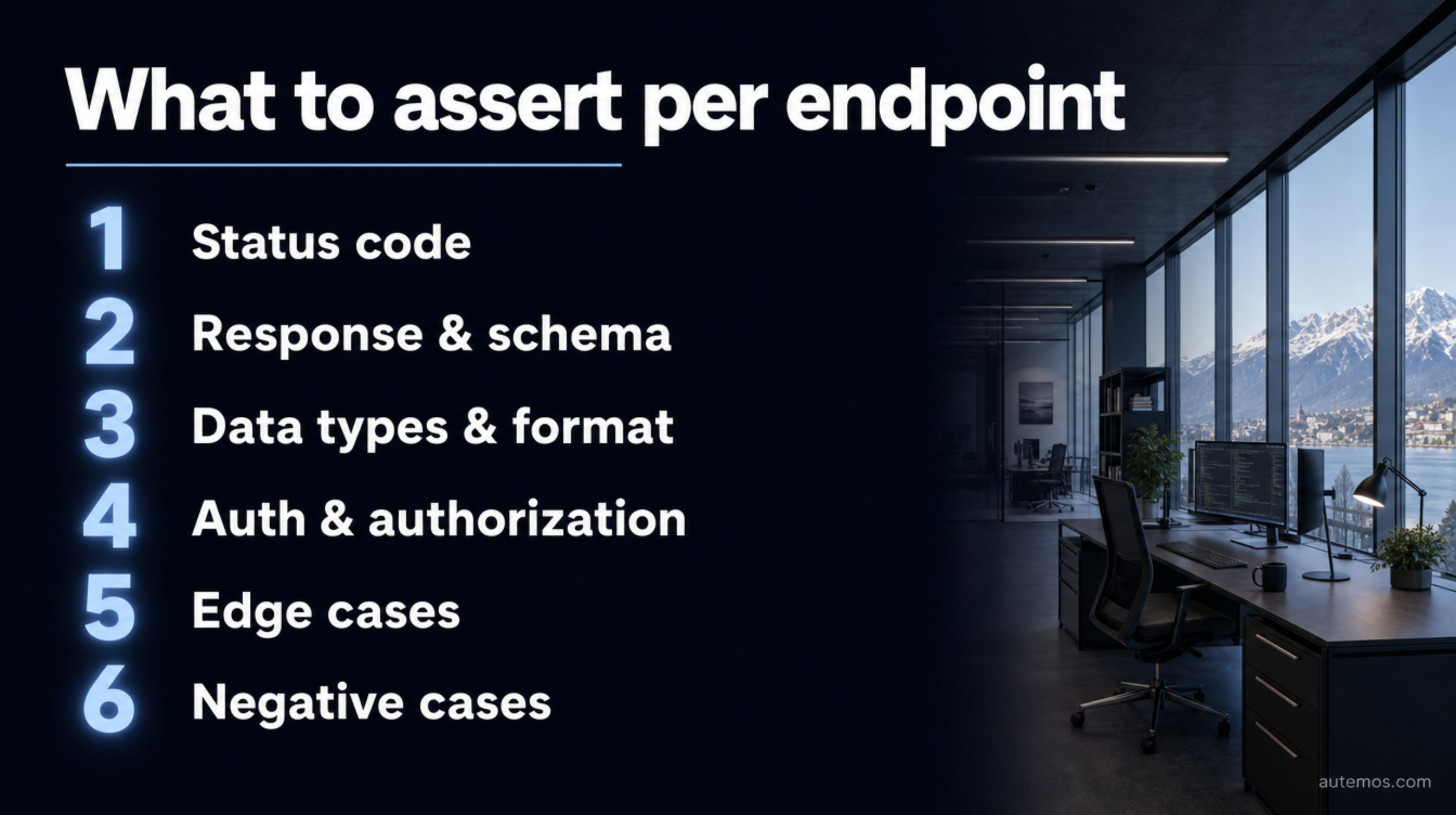
Figure 2: Six assertion layers per endpoint.
When testing a REST API you check each endpoint against its contract: correct status codes, response structure, data types and business rules — including negative and edge cases. Surveys show 63 % of developers can build an API in a week or less, up from 47 % the year before (Postman, 2024). Speed in building demands discipline in testing.
A robust REST test strategy covers more than the happy path. It also checks what happens when a required field is missing, a token has expired, or a value falls outside the allowed range. These negative cases expose the most expensive production bugs.
What should you assert per endpoint?
A complete check covers six layers. Verifying only the status code misses most real defects. This checklist has held up well in regulated projects:
Status code. The expected code per case — 200 on success, 400 on invalid input, 401/403 on missing permission, 404 on an unknown resource.
Response body and schema. Structure matches the contract (JSON/XML), required fields present, no unexpected fields leaking sensitive data.
Data types and format. Numbers are numbers, dates follow the agreed format, IDs match the right pattern.
Authentication and authorization. A valid token grants access, an invalid or expired one is rejected, and another user's object IDs stay locked.
Edge cases. Empty lists, maximum lengths, null values, special characters and very large payloads.
Negative cases. Missing required fields, wrong types, duplicate requests — the interface must fail cleanly and predictably.
Each item belongs in the test as its own assertion, not as one lumped check. When one fails, you see immediately which layer broke — a benefit that pays off in every audit.
How often do API tests run in the pipeline?
Not every test runs on every commit. A two-tier cadence works well: a fast smoke test per commit or pull request that covers critical endpoints in under a minute, and a full regression run nightly or before every release. That keeps developer feedback fast without sacrificing coverage.
Load and security tests belong in a scheduled run — nightly or pre-release — because they take longer and need more stable environments. Contract tests, by contrast, run exactly when a provider or consumer changes. In client projects we see this split remove the most common source of pipeline frustration: nobody waits ten minutes for a commit check, and nothing security-relevant slips through.
Concrete methods, examples and tools — from endpoint validation to data-driven checks — are in the full guide REST API testing: methods, tools and best practices.
How do you automate API tests in CI/CD?
API test automation means running functional, contract and smoke tests continuously in the pipeline instead of triggering them by hand. The speed advantage is large: automated suites complete hundreds of checks in seconds to minutes, while manual testing stays at human pace. For regression, contract and smoke, automation is the default.
Dimension | Manual | Automated |
|---|---|---|
Speed | Slow, human-paced | Hundreds of checks in seconds–minutes |
CI/CD fit | Poor | Native |
Repeatability | Low | High |
Best for | Exploratory, one-off | Regression, contract, load, smoke |
Cost over time | Rises with scope | Front-loaded, low marginal |
Manual testing keeps its place — for exploratory and one-off checks. But anything recurring belongs in the pipeline. How to build suites that grow with the code instead of breaking is shown in API test automation. Related: stable checks across releases are covered in our piece on regression testing.
Which API testing tools matter in 2026?
The tool landscape spans Postman, open-source frameworks and AI-assisted platforms — the right choice depends on your pipeline, team skills and compliance needs. On AI, sobriety is warranted. While 72 % of QA professionals use AI to generate tests or optimize scripts (Katalon, 2025), the gap between planning and deploying is wide.
This is where honest framing helps. According to one industry survey, 5 to 8 times more teams plan to use AI in testing than actually run it in production — the so-called "AI adoption chasm" (Rainforest QA, 2025). Tool selection should track reproducible value, not promises.
Generalists like Postman: broad, low barrier to entry, strong adoption.
Code-near frameworks: maximum control, best CI/CD integration, higher skill demand.
AI-assisted platforms: 68 % of respondents use AI for core QA tasks (Katalon, 2025) — scrutinize maturity and auditability.
A comparative overview including Postman alternatives is in the best API testing tools 2026. How AI features hold up in practice is assessed in our guide to AI test automation.
What is contract testing and why do teams need it?
Contract testing is a testing method that ensures a provider and a consumer of an API agree on a schema, and that releases do not break that contract unnoticed. This matters because the number of APIs per organization rose 167 % in twelve months, and 66 % of organizations now manage more than 100 APIs (Salt Security, 2024).
According to Roey Eliyahu, co-founder and CEO of Salt Security: "The volume of APIs within organizations are showing no sign of decline, and security teams are struggling to keep pace with the sheer breadth and depth of modern API ecosystems."
At that density of interfaces, one breaking schema change quickly becomes a production outage. Contract tests catch this early: they run in CI whenever a provider or consumer changes, and flag incompatibilities before they deploy. An introduction with examples is in contract testing: securing API contracts.
How do regulated teams secure APIs against the OWASP API Top 10?

Figure 3: API security in numbers (Salt Security, 2024).
Regulated teams secure their APIs by checking every endpoint systematically against the OWASP API Security Top 10 (2023) and documenting each result as evidence. The pressure to act is measurable: 95 % of organizations reported a security problem in production APIs, 23 % suffered a breach, and 61 % of attacks were unauthenticated (Salt Security, 2024).
The most common weakness has a name: Broken Object Level Authorization (BOLA, API1) accounts for roughly 40 % of API attacks according to analyses (Salt Security, 2024). Gartner also predicts API abuse will become the most frequent attack vector — read as a forecast, not a measured fact (LevelBlue, 2023).
The OWASP API Security Top 10 (2023) at a glance:
API1 Broken Object Level Authorization (BOLA)
API2 Broken Authentication
API3 Broken Object Property Level Authorization
API4 Unrestricted Resource Consumption
API5 Broken Function Level Authorization
API6 Unrestricted Access to Sensitive Business Flows
API7 Server Side Request Forgery (SSRF)
API8 Security Misconfiguration
API9 Improper Inventory Management
API10 Unsafe Consumption of APIs
Which three risks hit banks hardest?
Three entries in the Top 10 deserve special attention from financial services. This is where the most expensive data leaks hide.
API1 — Broken Object Level Authorization (BOLA). An attacker changes an object ID in the request and receives someone else's records, because the interface never checks ownership. BOLA accounts for roughly 40 % of API attacks according to analyses (Salt Security, 2024). For a bank, the worst case is access to other customers' account data — a direct breach of banking secrecy.
API2 — Broken Authentication. Weak token validation, missing rotation or rate-less login endpoints open the door. According to Salt Security: "Almost two-thirds (61%) of attacks are unauthenticated." Teams that fail to test authentication systematically against expired, tampered and missing tokens risk account takeover.
API8 — Security Misconfiguration. Open debug endpoints, overly permissive CORS rules, or verbose error messages that reveal internal detail — misconfigurations creep in quietly and are hard to explain in audits. They are especially tricky for regulated teams because functional tests rarely catch them; they demand targeted security checks.
How do regulated teams protect their test data?
Regulated teams protect their test data by anonymizing or synthetically generating production customer data before it flows into a pipeline. The FINMA and DORA context requires that production customer data never reaches test environments unprotected. Its processing stays within the permitted region — data residency is not a detail but an object of audit.
DORA also tightens requirements on resilience testing and traceability. Every security run should therefore be documented as evidence: who, when, against which version, with what result. In client projects, teams that automate anonymization and audit logging from the start spend far less effort on proof later. The full source is the OWASP API Security Top 10 (2023).
How do regulated teams get started with API testing?
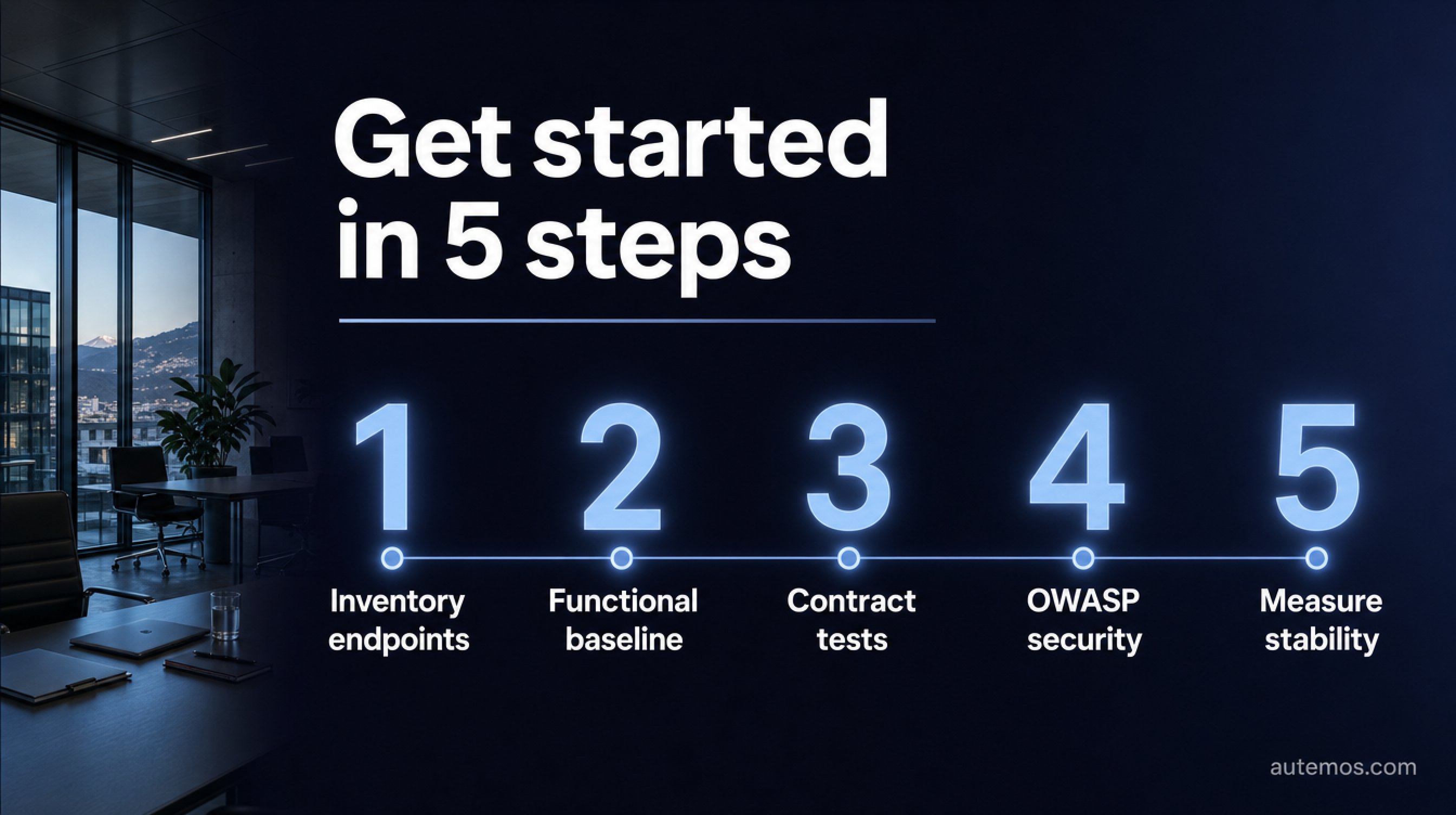
Figure 4: Audit-ready API testing in five steps.
Regulated teams start with API testing at the layer with the highest return per effort — the API layer. With 82 % of organizations API-first in 2025 and 25 % fully so (Postman, 2025), the interface layer is usually already business-critical and therefore the obvious starting point.
A proven sequence for regulated teams:
Inventory critical endpoints — which APIs carry revenue or a regulatory function? 62 % of teams work with revenue-generating APIs (Postman, 2024).
Automate the functional baseline — happy path plus negative cases for top endpoints, anchored in CI.
Add contract tests — before the API count outpaces you.
Test against the OWASP API Top 10 — with documented evidence for audits.
Measure stability and reduce flakiness — self-healing mechanisms cut maintenance, see our take on self-healing locators.
In client projects the order pays off: stabilize a small, deterministic API suite first, then expand. Teams that start with a hundred flaky tests lose developer trust — and with it the acceptance of the whole automation effort.
Frequently asked questions about API testing
What is API testing and how does it work?
API testing exercises interfaces directly at the HTTP layer: you send requests and validate status codes, response structure, data types, business rules, performance and security against the contract (Postman, 2024). It bypasses the screen and checks the logic itself — faster and more stable than UI tests.
How does API testing differ from unit testing?
Unit tests check a single function in isolation; API tests check integrated endpoints and data flows between components. In the test pyramid, API tests sit above — broader than unit, yet faster and more stable than UI tests. More in our overview of testing types.
Manual or automated API testing — when which?
Automate everything recurring: regression, contract, smoke and load. Automated suites run hundreds of checks in seconds and fit natively into CI/CD. Manual testing stays useful for exploratory and one-off checks. Details in API test automation.
What types of API tests are there?
Five practical categories: functional, integration, contract, load/performance and security tests. Functional and contract tests suit every commit; load and security run before releases or continuously. The contract side is covered in contract testing.
Which tools are used for API testing?
From Postman through code-near frameworks to AI-assisted platforms. 72 % of QA professionals already use AI to generate tests (Katalon, 2025), though maturity varies widely. A comparative overview including Postman alternatives is in the best API testing tools 2026.
Conclusion
API testing is the highest-leverage layer in the test pyramid: faster than UI tests, broader than unit tests, and the natural place to automate. The urgency is measurable — 95 % of organizations reported a security problem in production APIs (Salt Security, 2024), and API-first became the standard in 2025 at 82 % (Postman, 2025). For regulated teams in DACH, what counts is not only that tests pass, but that they are documented as auditable evidence. Start small and deterministic, then scale. If you want to bring API testing into your pipeline in an audit-ready way, book a demo — we will show how it works in regulated environments.