·
9 min
The Best API Testing Tools 2026 (Incl. Postman Alternatives)

Roman Kirchmeier - Autemos

There is no universally best API testing tool. The choice depends on protocols, CI/CD integration, data residency and team size, not on the brand name. Some teams need a full ecosystem, others want Git versioning, self-hosting or pure code frameworks.
Demand is climbing fast: according to the vendor's own Postman State of the API 2025, 82% of surveyed teams now work API-first – up from 66% in 2023 (Postman, via Nordic APIs, 2025). In its own words: „82% of organizations surveyed described themselves as API-first to at least some degree."
This comparison ranks ten options fairly, with strengths, limits and pricing (as of 2026). Especially relevant for regulated DACH environments: on-premises and data residency.
TL;DR: There is no single "best" API testing tool. Postman remains a justified default for many teams, but since the March 2026 pricing change, more teams evaluate alternatives: Bruno (Git/offline), Hoppscotch (self-host/GDPR), Insomnia (GraphQL) or code frameworks. What matters is protocols, CI/CD, data residency and team size – not the brand name.
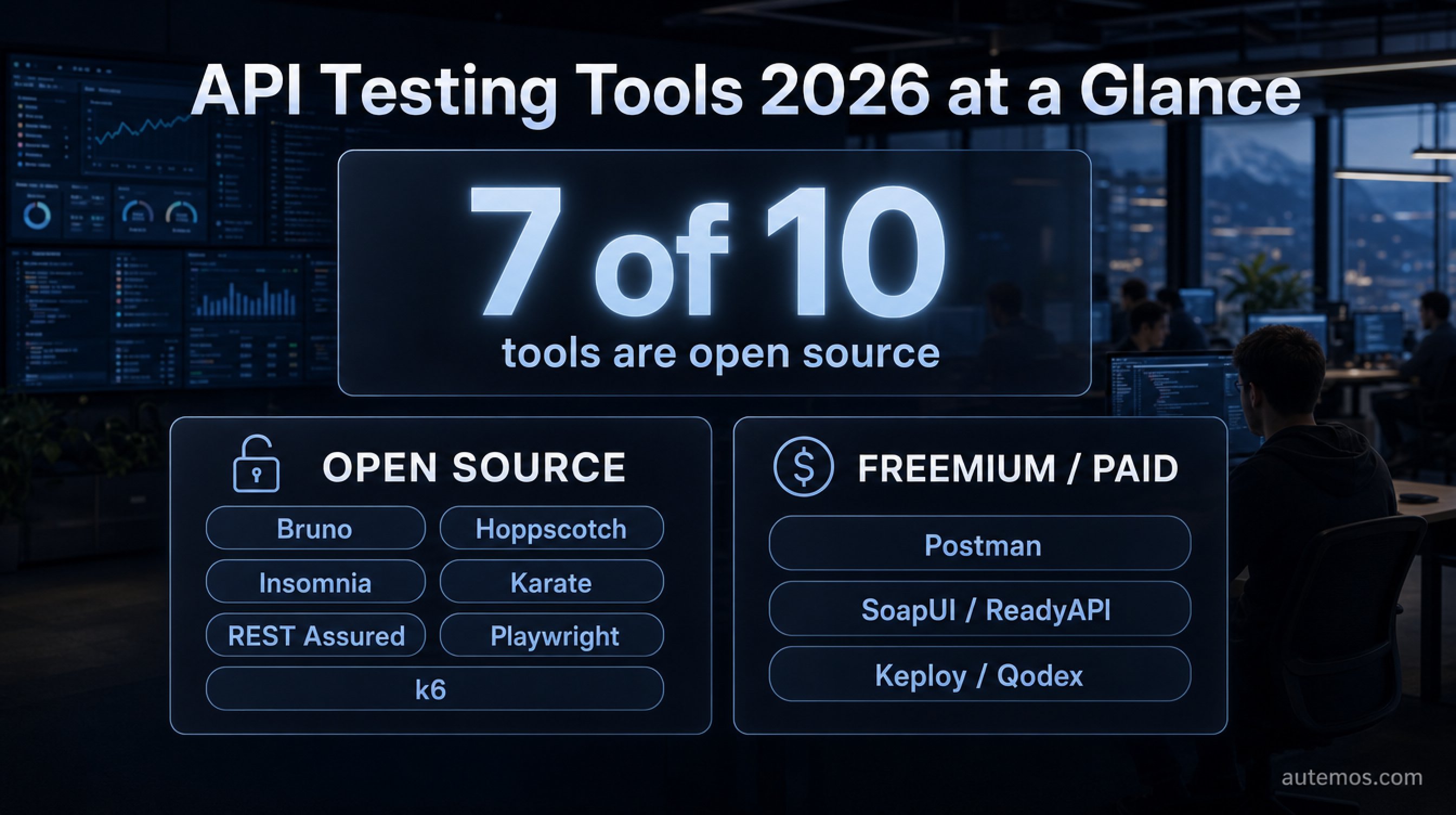
Figure 1: API testing tools 2026 at a glance – seven of the ten leading tools are open source.
Quick comparison: ten API testing tools at a glance
The ten leading tools cover very different needs – from the all-in-one platform to a lean Java library. Seven of the ten are open source, a weighty argument for privacy-sensitive DACH teams. The table below summarizes fit, licensing and pricing (as of 2026).
Tool | What it is | Best for | OSS/Paid | Price (as of 2026) |
|---|---|---|---|---|
Postman | API platform (client, docs, mock, monitor, AI) | Teams wanting a full ecosystem | Freemium | Free $0/1 user; Solo $9; Team $19; Enterprise $49 (user/mo, annual) |
Bruno | Offline-first, Git-native client (.bru plain text) | Version control, privacy-sensitive | OSS (MIT) | Core free |
Insomnia | Client for REST/GraphQL/gRPC/WS/SSE | GraphQL-heavy projects, lean UI | OSS (Apache 2.0) + Paid | Desktop OSS free; cloud tiers paid |
Hoppscotch | Browser-native, lightweight, self-hostable | On-prem / regulated environments | OSS | Free; Self-Hosted Enterprise with SSO |
SoapUI / ReadyAPI | SoapUI OSS + ReadyAPI (SmartBear) | SOAP, enterprise, legacy | SoapUI free; ReadyAPI paid | ReadyAPI from ~$749/user/year (opaque) |
Karate | BDD DSL for API, UI and performance | mixed Dev/QA teams | OSS | Free |
REST Assured | Java library (given/when/then) | Java-first, code CI | OSS | Free |
Playwright (API) | E2E framework with APIRequestContext | UI + API in one JS/TS framework | OSS | Free |
k6 (Grafana) | dev-centric load/perf testing (JS) | Performance, Grafana stack | OSS + Cloud | OSS free; Grafana Cloud k6 paid |
Keploy / Qodex | AI/codeless: tests/mocks from real traffic | Auto-generation without code | Keploy OSS; Qodex SaaS | Keploy free; Qodex SaaS |
Postman pricing per postman.com/pricing (as of 2026). Data on ReadyAPI and the AI tools rests on vendor sources and is less well documented – please verify before deciding.
How should you choose an API testing tool?
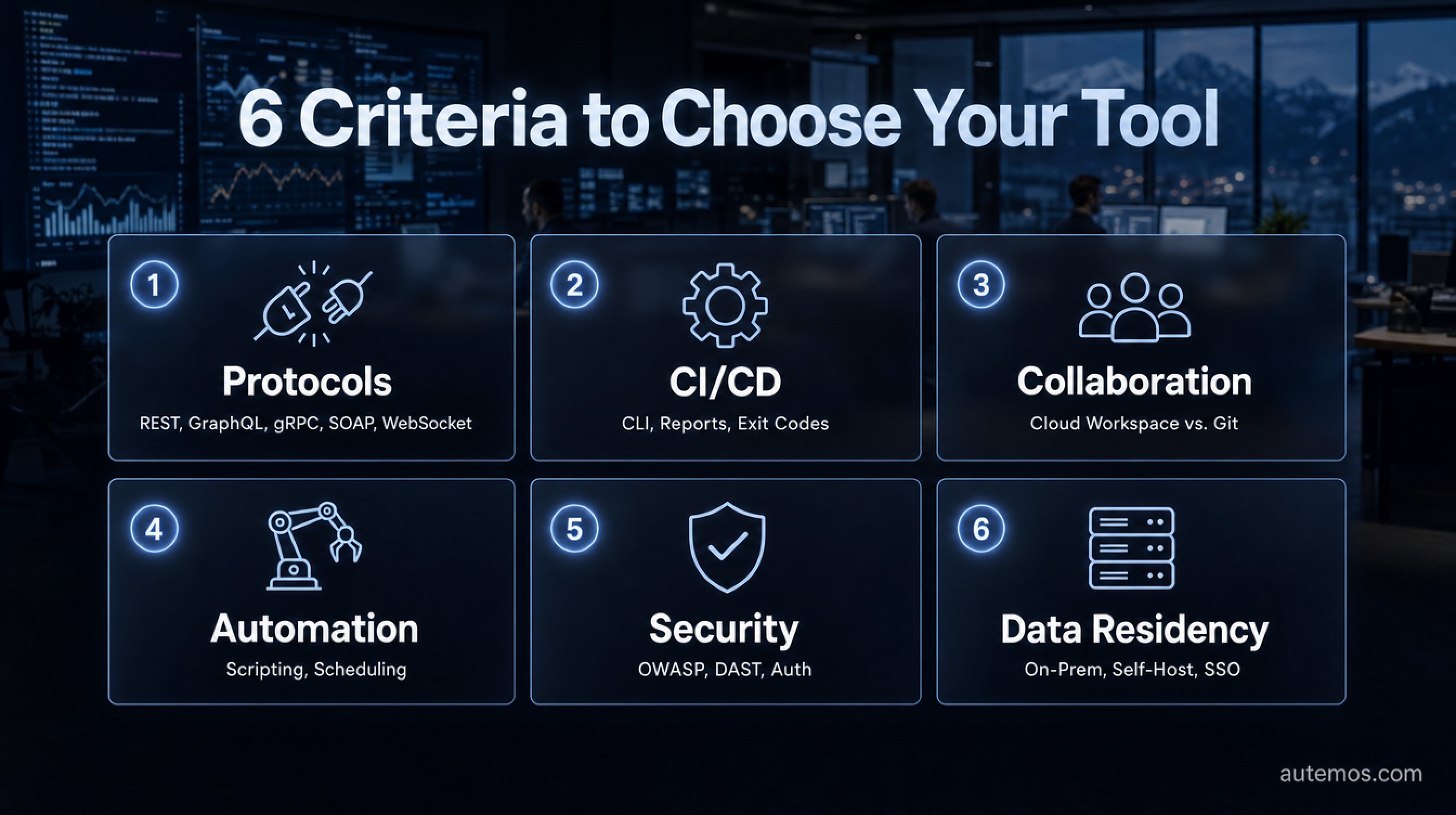
Figure 3: Six criteria to choose your tool – from protocols to data residency.
The choice hinges on six criteria – not on brand recognition. In the Stack Overflow Developer Survey 2025 of roughly 49,000 respondents, GitHub led collaboration tools at 81% (Stack Overflow, 2025). Git proximity is no niche concern. Assess your tool along these points:
Protocols: REST, GraphQL, gRPC, SOAP, WebSocket – does the tool cover what you actually test?
CI/CD integration: CLI (such as Newman), Maven plugin, machine-readable reports, correct exit codes.
Collaboration: shared cloud workspaces versus Git-based versioning in the repository.
Automation: scripting, data-driven tests, scheduling and reusability.
Security testing: OWASP checks, DAST features, authentication flows.
On-prem / data residency: For regulated DACH sectors and banks, what counts is whether you can self-host, whether cloud is optional, and whether SSO is supported.
That last point often decides everything in banking. If tokens, credentials or test data sit in a third-party cloud, the GDPR assessment quickly grows complex. Self-hostable or offline-capable tools sidestep that. More in our guide to API testing.
Postman: the established all-in-one platform
Postman is an API platform that bundles client, documentation, mock servers, monitoring and AI features in one interface. By its own account it drives the API-first movement – 89% of Postman's respondents already use GenAI in their API workflow (Postman, via Nordic APIs, 2025). That figure comes from a self-selected vendor survey and reflects the Postman community more than the overall market.
Best for: teams that want to bundle client, documentation, mock servers, monitoring and AI features in one interface.
Strengths: enormous reach and community, the Newman CLI for CI pipelines, mature docs and mock features, and built-in AI. If you want a full ecosystem, it works well for you.
Limits: the platform leans heavily on cloud and account binding. Since March 2026, team collaboration is gone from the Free plan (1 user only). Some find the feature set heavy if they only need a lean client.
Bruno: Git-native and offline-first
Bruno is a Git-native, offline-first API client that stores requests as .bru plain text in the repository. It has emerged in 2025/2026 as the best-known Postman alternative for version-conscious teams – fitting, since Git is the most-used collaboration tool at 81% per Stack Overflow (2025). Bruno is open source under the MIT license and free at its core.
Best for: teams that prioritize version control and privacy and want to work without cloud.
Strengths: no account, no cloud requirement, clean Git diffs per request, and a CLI for CI/CD. Test data stays in your own repository.
Limits: the ecosystem is younger than Postman's, and some convenience features are still missing.
Insomnia: strong at GraphQL and lean UI
Insomnia is a lean client for REST, GraphQL, gRPC, WebSocket and SSE, popular especially for GraphQL-heavy projects. The desktop client is open source (Apache 2.0); cloud tiers are paid. GraphQL ranks high for many teams as APIs are increasingly built for frontends and AI agents (Postman, via Nordic APIs, 2025: 24% design for AI agents).
Best for: GraphQL projects and teams that value a tidy interface.
Strengths: mature GraphQL introspection, broad protocol support, clear UI.
Limits: the account push since version 8.0 was contentious; purely local work runs through Scratch Pad mode.
Hoppscotch: self-hostable for regulated environments
Hoppscotch is a browser-native, lightweight and self-hostable tool – the obvious choice when data must not leave your network. For regulated DACH sectors this is central: 65% of Postman's respondents generate revenue through APIs, which makes protecting these interfaces critical (Postman, via Nordic APIs, 2025).
Best for: on-prem setups and regulated environments with strict data residency requirements.
Strengths: supports REST, GraphQL, WebSocket and SSE; self-hosted, tokens and test data stay in your own network (GDPR-friendly); Enterprise variant with SSO.
Limits: the feature set is leaner than the big platforms'.
SoapUI / ReadyAPI: the SOAP and legacy specialists
SoapUI is the reference tool for SOAP and legacy testing; the commercial extension ReadyAPI by SmartBear adds enterprise features. SOAP may sound dated, but it remains ubiquitous in banking and insurance. SoapUI is free; ReadyAPI is paid.
Best for: SOAP, enterprise and legacy scenarios with complex legacy systems.
Strengths: deep SOAP support, mature features for complex contracts and data sources.
Limits: ReadyAPI pricing is considered opaque (reported from ~$749/user/year) – this figure is weakly documented and should be confirmed directly with the vendor.
Code frameworks: Karate, REST Assured and Playwright
Code frameworks are the right choice when tests should live in the same repository as the code. They are open source, free and run natively in CI – fitting, since Docker is among the most-used tools at 71% per Stack Overflow (2025). As the survey puts it: „Docker has moved from a popular tool to a near-universal one."
Karate
Karate uses a BDD DSL for API, UI and performance tests in one readable language. Best for: mixed Dev/QA teams. Strengths: one DSL for several test types, readable, CI-ready. Limits: its own DSL learning curve, Java environment.
REST Assured
REST Assured is a Java library in given/when/then style. Best for: Java-first teams with code CI. Strengths: deep JSON and XML assertions. Limits: Java only, no GUI.
Playwright (API)
Playwright brings API tests into a JS/TS E2E framework via APIRequestContext. Best for: teams covering UI and API together. Strengths: shared fixtures and strong parallelism. Limits: no dedicated API GUI. How to keep such tests low-maintenance is covered in our piece on API test automation.
k6 and AI tools: performance and auto-generation
k6 (Grafana) is the dev-centric JavaScript tool for load and performance testing; the OSS variant is free, Grafana Cloud k6 is paid. Best for: performance load in the Grafana stack. Strengths: excellent developer experience in load testing. Limits: functional API tests are not its core purpose.
Alongside, a young AI/codeless category is forming. Keploy generates tests and mocks from real traffic (OSS); Qodex offers no-code plus security (SaaS). The appeal: less manual work, since 89% of Postman's respondents already use GenAI in their API workflow (Postman, via Nordic APIs, 2025). That said, the evidence on these tools is thin and rests on vendor sources – check maturity and fit in a pilot. In client projects we see that AI generation takes over routine work, but critical edge cases still need human review. How AI becomes dependable in testing is framed in our guide to AI test automation.
Postman alternatives 2026: why teams switch and which tool fits
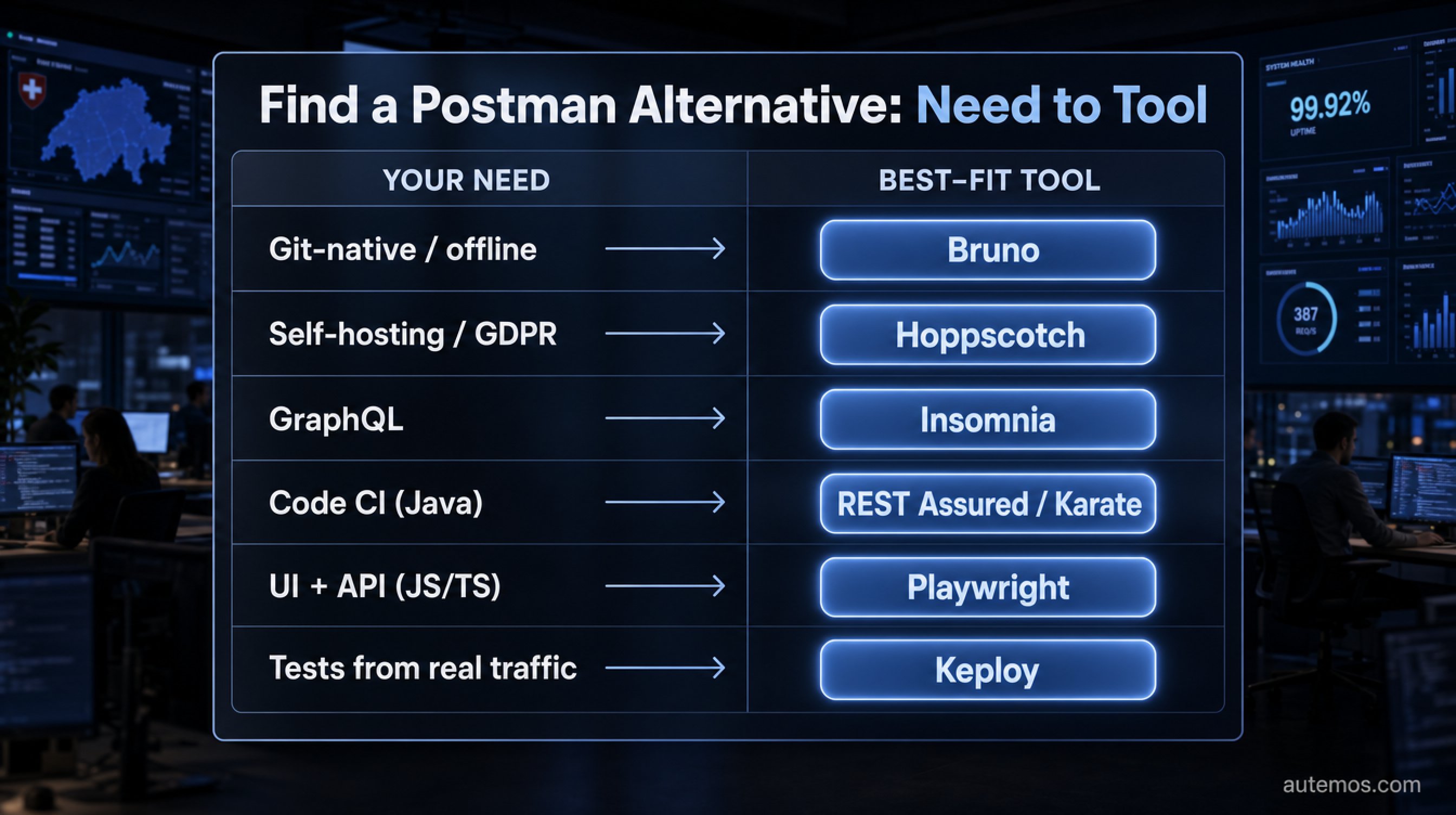
Figure 4: Find a Postman alternative – the best-fit tool for each concrete need.
The main reason for seeking alternatives is a concrete pricing change: since March 2026 the Free plan covers only 1 user, and team collaboration requires the Team tier at $19/user/month (annual). For a team of three, that adds up to $684/year for features that were previously free (postman.com/pricing, as of 2026). Add to that cloud and account requirements plus perceived "bloat."
A note on fairness: Postman remains a strong, well-considered platform. Switching only pays off when a concrete need argues for it. This mapping helps:
Git-native / offline: Bruno
Self-hosting / GDPR: Hoppscotch
GraphQL: Insomnia
Code CI in Java environments: REST Assured or Karate
UI + API in JS/TS: Playwright
Tests from real traffic: Keploy
If you want a free alternative, you will find it in Bruno, Hoppscotch or the Insomnia desktop client. Practical methods to get started appear in our post on testing REST APIs.
How do you pick the right tool?

Figure 2: 82% of Postman's surveyed teams work API-first – up from 66% in 2023. Source: Postman State of the API 2025, via Nordic APIs.
The best decision follows the need, not the trend. With 82% of Postman's respondents working API-first, the number of interfaces to test grows faster than many teams adapt their tooling strategy (Postman, via Nordic APIs, 2025). So answer three questions first.
Must data stay on-prem? Then Hoppscotch (self-host) or Bruno (offline) top the list.
Should tests live in the code repository? Then Karate, REST Assured or Playwright fit.
Do you need a full ecosystem of docs, mock and monitoring? Then Postman remains a justified choice despite the pricing change.
Feel free to mix: many DACH teams combine a code framework for CI with a lean client for manual exploration. Self-healing mechanisms keep such suites stable – more in self-healing locators.
Frequently asked questions
What is the best API testing tool in 2026?
There is no universally best tool. Seven of the ten leading tools are open source and cover different needs. Postman suits full ecosystems, Bruno suits Git workflows, Hoppscotch suits self-hosting. What matters is protocols, CI/CD and data residency – not the brand name.
Which free Postman alternative exists?
Three free options stand out: Bruno (Git-native, MIT license), Hoppscotch (self-hostable, GDPR-friendly) and the Insomnia desktop client (Apache 2.0). All are open source. For pure CI scenarios, the code frameworks Karate, REST Assured and Playwright are also free.
Why are teams moving away from Postman in 2026?
The main trigger is the March 2026 pricing change: the Free plan now covers only 1 user, and team collaboration costs $19/user/month – $684/year for a team of three (postman.com/pricing, as of 2026). Add cloud and account requirements. Many teams therefore seek offline or Git-based alternatives.
Which tool suits on-prem or GDPR-compliant testing?
Hoppscotch (self-hosted) and Bruno (offline-first) are the most obvious options, because tokens and test data never leave your own network. Code frameworks like REST Assured or Karate also run entirely in your infrastructure. For regulated DACH banks, that is often the decisive criterion.
Which tool do I use for SOAP or legacy systems?
For SOAP and legacy scenarios, SoapUI remains the reference tool, with the commercial extension ReadyAPI by SmartBear for enterprise features. SOAP is still widespread in banking and insurance. ReadyAPI pricing is considered opaque – verify it directly with the vendor.
Conclusion
The key takeaway: there is no single best API testing tool, only the one that fits. Postman remains a strong platform, but the March 2026 pricing change makes an honest comparison with alternatives worthwhile. Bruno is strong for Git and offline work, Hoppscotch for self-hosting, Insomnia for GraphQL, and the frameworks Karate, REST Assured and Playwright for code CI. Assess protocols, CI/CD integration and above all data residency – the latter often decides everything in regulated DACH environments. If you want to sharpen your API testing strategy and tool choice with automation in mind, book a demo with Autemos.