·
8 min
The European Accessibility Act in practice: scope, evidence and deadlines

Roman Kirchmeier - Autemos

The European Accessibility Act has applied since 28 June 2025. Directive (EU) 2019/882 had to become national law by 28 June 2022, and EUR-Lex states the application date plainly: 'EU countries must apply the measures from 28 June 2025' (EUR-Lex, 2019). Germany transposed it as the Barrierefreiheitsstärkungsgesetz (BFSG), which carries fines of up to EUR 100,000. Scope comes down to two lists plus one condition: listed products, listed services, and an offering aimed at consumers. Purely internal enterprise tools stay outside.
TL;DR: The European Accessibility Act has applied since 28 June 2025 and covers listed products and consumer services, among them consumer banking and e-commerce. Germany's transposition, the BFSG, sets fines of up to EUR 100,000 (§ 37(2) BFSG). Microenterprises are exempt for services only, and services have a transitional period running to 27 June 2030.
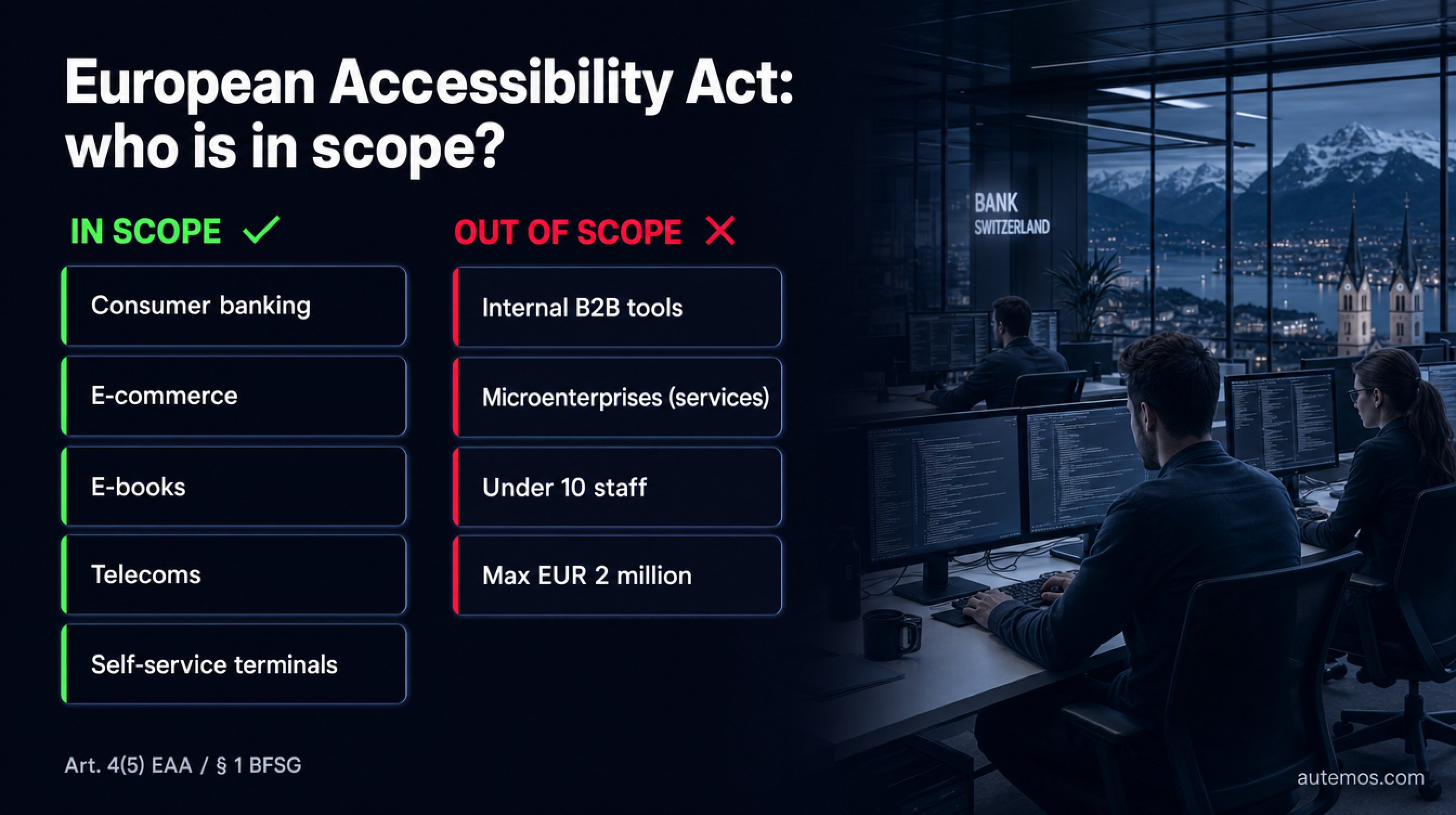
Figure 1: Who the European Accessibility Act covers and who it does not.
What does the European Accessibility Act require?
The Act requires listed products and consumer services to be findable, reachable and usable by people with disabilities without outside assistance. The European Commission states its purpose in one sentence:
'The European Accessibility Act is a directive that aims to improve the functioning of the internal market for accessible products and services, by removing barriers created by different rules in Member States.'
>
The directive sets the requirements; the enforceable text sits in national law. Germany's transposition carries the sharpest legal definition of accessibility, in § 3(1) BFSG:
„Produkte und Dienstleistungen sind barrierefrei, wenn sie für Menschen mit Behinderungen in der allgemein üblichen Weise, ohne besondere Erschwernis und grundsätzlich ohne fremde Hilfe auffindbar, zugänglich und nutzbar sind."
>
§ 3(1) BFSG, gesetze-im-internet.de
Our translation: products and services are accessible when people with disabilities can find, reach and use them in the customary manner, without particular difficulty and in principle without outside help. The wording is outcome-based and names no technology, no tool and no score. That is what makes evidence the hard part for engineering teams.
Who is in scope, and who is not?
The Act binds economic operators placing listed products on the EU market and providers of listed services to consumers. Purely internal enterprise applications are out of scope.
The consumer condition is the point most summaries blur. An internal test management tool, an ERP back office or a staff portal with no consumer offering falls outside the Act (§ 1 BFSG). Teams that skip this check spend audit budget on systems no regulator will ask about.
Area | In scope | Out of scope |
|---|---|---|
Products | Consumer general-purpose computer hardware including operating systems, self-service terminals (payment, ATM, ticketing, check-in, information), consumer terminal equipment for electronic communications and audiovisual media, e-readers | Products placed on the market before 28 June 2025 (§ 1(2) BFSG) |
Services | Electronic communications, elements of passenger transport, consumer banking services, e-books and dedicated software, e-commerce services | Purely internal B2B applications and B2B services with no consumer offering |
Company size | all companies, for products | Microenterprises providing services (Art. 4(5) EAA, § 3(3) BFSG) |
Public sector | no consumer offering under § 1 BFSG | German federal bodies: BITV 2.0 applies instead (§ 2 BITV 2.0) |
The microenterprise exemption covers services only. Article 4(5) of the directive reads: 'Microenterprises providing services shall be exempt from complying with the accessibility requirements referred to in paragraph 3 of this Article and any obligations relating to the compliance with those requirements.' A microenterprise employs fewer than 10 people and has annual turnover or a balance sheet total of at most EUR 2 million (Art. 3 EAA, § 2 BFSG). Anyone placing products on the market is bound at any size.
What are the penalties?
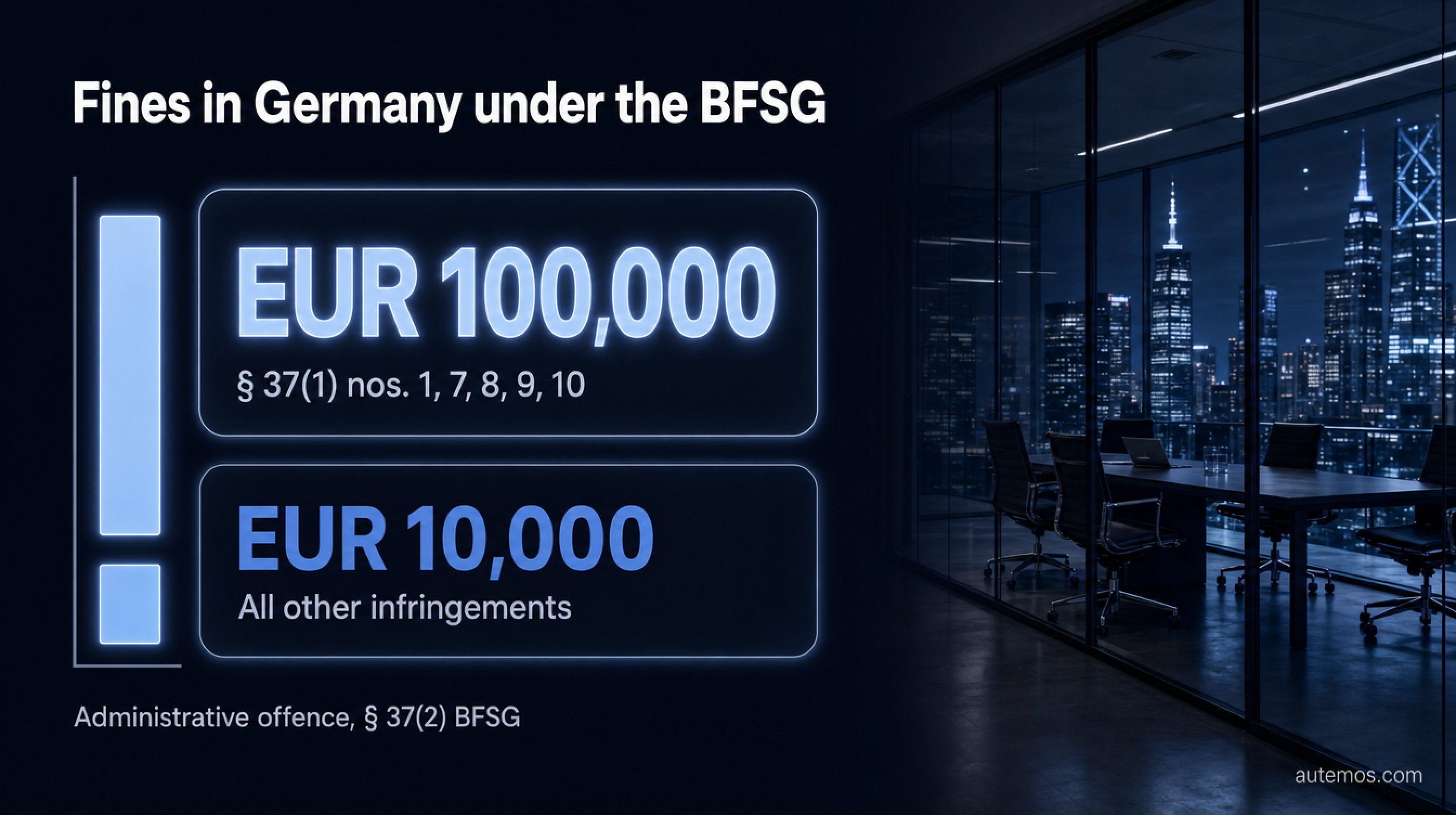
Figure 2: The German fine ceilings under § 37(2) BFSG.
The directive leaves penalty levels to member states, and Germany set them at up to EUR 100,000. Article 30 of Directive (EU) 2019/882 names no figures. § 37(2) BFSG does:
„Die Ordnungswidrigkeit kann in den Fällen des Absatzes 1 Nummer 1, 7, 8, 9 und 10 mit einer Geldbuße bis zu hunderttausend Euro und in den übrigen Fällen mit einer Geldbuße bis zu zehntausend Euro geahndet werden."
>
§ 37(2) BFSG, gesetze-im-internet.de
The EUR 100,000 ceiling applies in the cases of § 37(1) nos. 1, 7, 8, 9 and 10; every other infringement is capped at EUR 10,000. Anyone selling into several member states needs to read each local transposition, since the amounts differ by country.
German market surveillance runs through the MLBF, the joint authority of all 16 federal states, seated in Magdeburg. It started nationwide operations in September 2025 and adopted its market surveillance strategies on 29 January 2026 (MLBF, 2026). On year one, the Ministry for Labour, Social Affairs, Health and Equality of Saxony-Anhalt wrote on 1 June 2026: „Aktuell liegt der Schwerpunkt auf dem abschließenden Aufbau der organisatorischen und fachlichen Grundlagen sowie auf der Bearbeitung von fast 700 eingegangenen Meldungen." Almost 700 reports in the first year, with the authority still completing its own setup.
No individual fines under § 37 BFSG have been publicly documented so far. Claims about a 2026 warning-letter wave, MLBF headcount or national compliance rates circulate widely and come from PR and vendor material with no published method. We leave them out.
Which standard counts as evidence?
Neither the BFSG nor its ordinance names a binding standard, and § 3 BFSGV creates no presumption of conformity. It points to the state of the art and to the Bundesfachstelle für Barrierefreiheit, which publishes a list of the most relevant standards (§ 3 BFSGV). Auditors and engineering teams work with EN 301 549 anyway. Where that stands:
EN 301 549 V3.2.1 (2021-03) is the only harmonised version, referenced by Commission Implementing Decision (EU) 2021/1339 of 11 August 2021.
No EAA-harmonised version exists yet. AccessibleEU, run by the European Commission, states: 'The standard is currently being updated to also support the European Directive 2019/882 on the accessibility requirements for products and services.'
V4.1.0 has been a draft since November 2025 and sits in the formal vote of the European standards organisations until August 2026. Publication in the Official Journal is expected in 2026, with no confirmed date.
Content-wise the trail leads to WCAG: EN 301 549 V3.2.1 builds on WCAG 2.1 Level AA (what changed in WCAG 2.2). German ordinance law gets concrete for online shops. § 19 BFSGV requires identification, authentication, security and payment functions to be designed „wahrnehmbar, bedienbar, verständlich und robust", putting the four WCAG principles into a national ordinance.
What evidence do you have to keep?
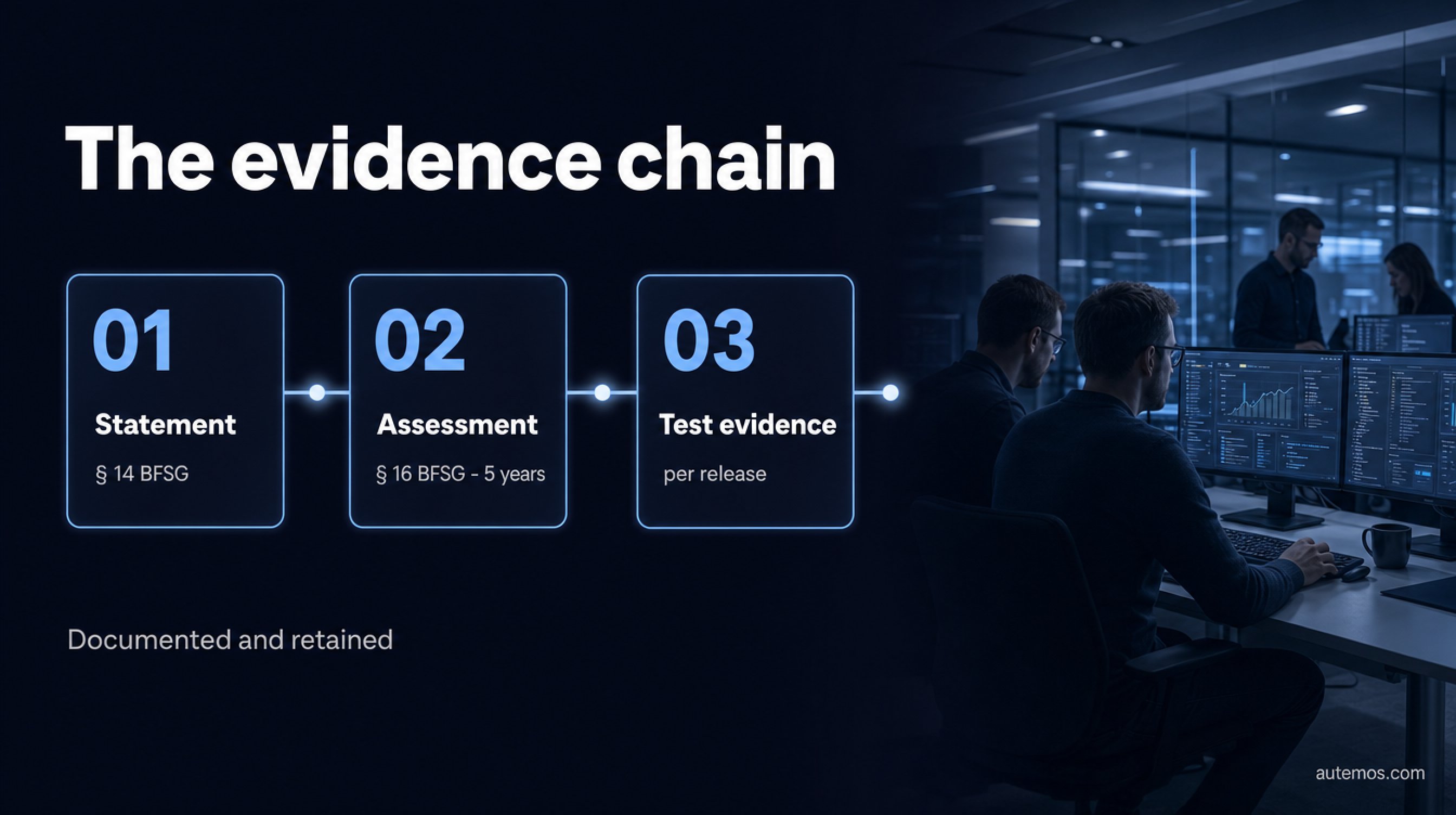
Figure 3: The evidence chain under § 14 and § 16 BFSG.
An accessibility statement under § 14 BFSG is mandatory, and the assessment under § 16 BFSG must be documented and kept for five years. The evidence chain in practice:
Publish the accessibility statement. § 14(1) no. 2 BFSG requires the information under Annex 3 no. 1 to be produced and made publicly available in accessible form, for as long as the service is offered (§ 14(2)).
Document the § 16 assessment. Anyone relying on the fundamental-alteration exception must document that assessment, keep it for five years and inform the market surveillance authority.
Define the test scope per release. Which interfaces, which user flows, which version of WCAG and EN 301 549.
Store test results under version control. Date, build, check performed, outcome, owner.
Track open findings. Severity, planned fix, deadline.
Steps 1 and 2 are law. Steps 3 to 5 are practice: they are what a regulator or auditor wants to see the moment the § 14 statement is questioned. Teams already running a defensible test trail for other regimes reuse the same mechanics (audit trails in testing, testing in regulated industries).
Which transitional periods apply?
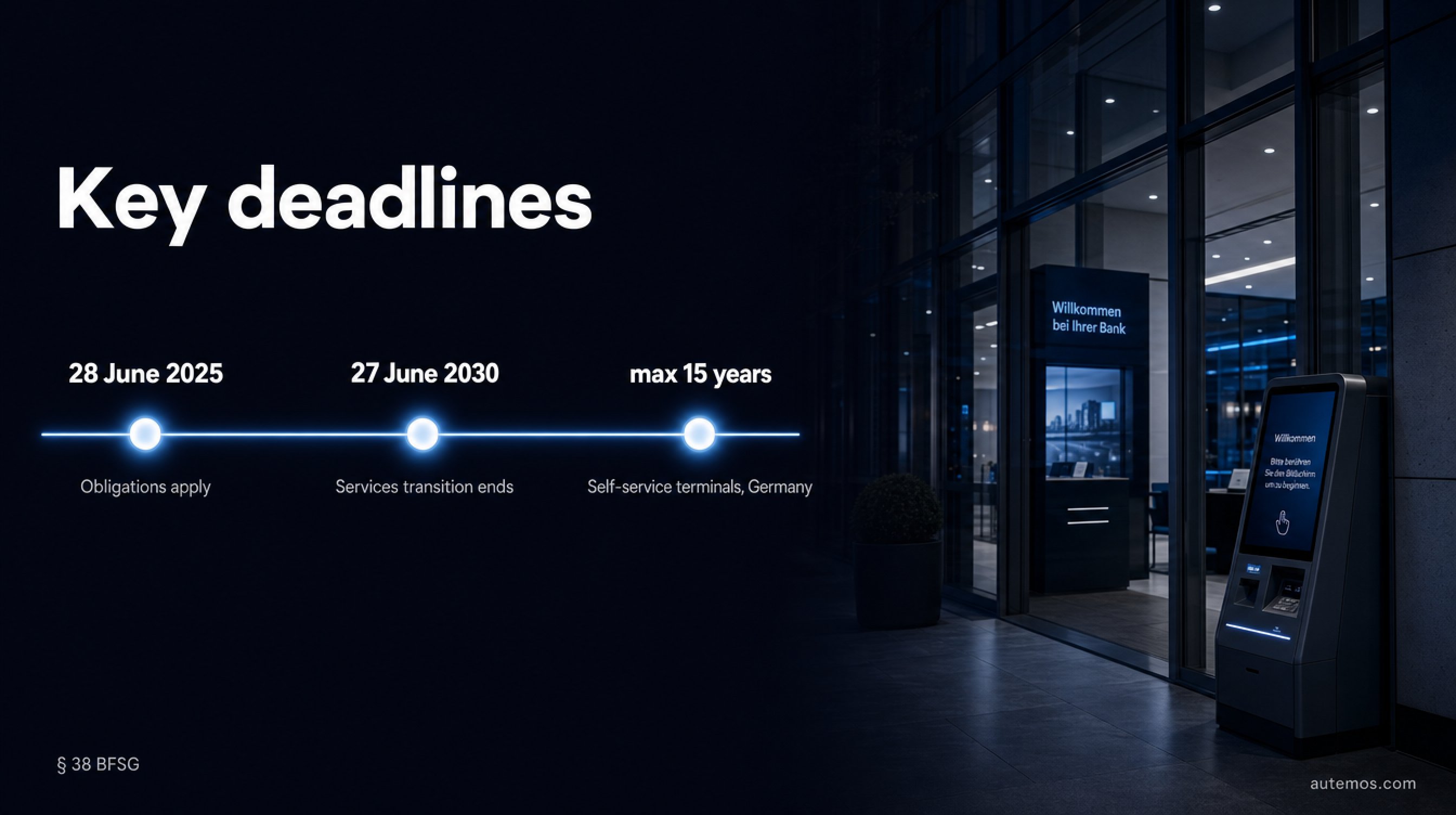
Figure 4: The deadlines under § 38 BFSG at a glance.
Service providers may keep using products lawfully in use before 28 June 2025 until 27 June 2030. § 38(1) BFSG:
„Unbeschadet von Absatz 2 können Dienstleistungserbringer bis zum 27. Juni 2030 ihre Dienstleistungen weiterhin unter Einsatz von Produkten erbringen, die von ihnen bereits vor dem 28. Juni 2025 zur Erbringung dieser oder ähnlicher Dienstleistungen rechtmäßig eingesetzt wurden."
>
§ 38(1) BFSG, gesetze-im-internet.de
Self-service terminals have their own limit, and Germany went stricter than the EU framework. § 38(2) BFSG allows continued use for no longer than fifteen years after commissioning; the EU framework permits up to 20. Operators of ATMs and ticketing machines plan against the 15-year figure (EUR-Lex, 2019).
What does the Act mean for Swiss companies?
Switzerland is not an EU member, so the European Accessibility Act does not apply directly. It reaches Swiss companies through market access: anyone placing products on the EU market or serving consumers in the EU falls under the relevant member state's law, in Germany the Barrierefreiheitsstärkungsgesetz with its EUR 100,000 ceiling.
The Alliance for Digital Inclusion Switzerland states it directly: „Schweizer Unternehmen, die Produkte und Dienstleistungen in der EU anbieten, müssen die Anforderungen des EAA erfüllen." The cases it names are online shops delivering into the EU and companies offering digital services to EU customers.
Domestically, the Behindertengleichstellungsgesetz (BehiG, SR 151.3) from 2004 remains the reference. The Federal Bureau for the Equality of People with Disabilities writes: „20 Jahre nach seinem Inkrafttreten wird das BehiG zurzeit im Parlament überarbeitet." The Federal Council submitted its dispatch on 20 December 2024 (business 25.020); we make no statement here about the state of that process. For Swiss banks and insurers with EU customers the practical answer is two rulebooks, one test process (test automation in regulated banks).
How do you evidence accessibility tests per release?
Audit-ready evidence appears when accessibility checks run inside the same automated workflow as functional regression tests and every result is stored under version control. A separately maintained test protocol goes stale between two releases.
Autemos is AI-assisted test automation for Web, Mobile, API and Desktop. Test workflows accept custom code blocks and existing Playwright tests, so an axe-core check runs as a step next to the functional suite. Results go to Allure and Jira like any other test result.
That gives you a dated trail per release: which build, which check, which outcome, which deviation. For consumer banking and e-commerce, test data handling comes on top, since consumer flows get exercised with realistic data patterns (test data handling).
None of this creates legal conformance. Automated checks cover only part of the WCAG success criteria, and the assessment under § 3(1) BFSG stays a human judgement (accessibility testing: methods and limits).
FAQ
Does the European Accessibility Act cover internal business software?
No. The Act and its national transpositions cover products and services offered to consumers. An internal portal or an ERP back office with no consumer offering stays out of scope. Once the same application handles a consumer-facing flow, that part is in scope.
When did the European Accessibility Act start to apply?
The substantive obligations apply from 28 June 2025. Member states had to transpose the directive by 28 June 2022; Germany enacted the BFSG on 16 July 2021, with a few enabling provisions in force from 23 July 2021. The date 25 June 2025 circulates widely and is wrong.
How high are the fines?
Penalty levels are national. Germany sets up to EUR 100,000 in the cases of § 37(1) nos. 1, 7, 8, 9 and 10 and up to EUR 10,000 for all other infringements (§ 37(2) BFSG). No individual fines have been publicly documented so far.
Are microenterprises exempt?
For services only. Article 4(5) of the directive exempts microenterprises providing services: fewer than 10 employees and at most EUR 2 million annual turnover or balance sheet total. Companies placing products on the market are bound at any size.
Is an automated scan enough as proof of accessibility?
No. W3C states: 'Tools cannot check all accessibility aspects automatically. Human judgement is required.' Automated checks give reproducible evidence for part of the criteria; the assessment under § 3(1) BFSG needs manual testing on top.
Conclusion
Three questions decide the workload under the European Accessibility Act. Scope first: listed products and consumer services, with internal B2B tools outside. Evidence second: the accessibility statement under § 14 BFSG, the documented § 16 assessment kept for five years, and defensible test results per release. Deadlines third: 27 June 2030 for services, fifteen years for self-service terminals in Germany against the EU maximum of 20. The law names no binding standard, EN 301 549 V3.2.1 stays the practical reference, and no EAA-harmonised version exists yet.
If you want accessibility checks running inside your existing test automation, with audit-ready documentation per release, talk to our team.