·
8 min
Test Management Tools: 10 Options Compared for Regulated Teams

Roman Kirchmeier - Autemos

A test management tool is the software where your test cases live, test runs get planned, and results are reported to the business and to audit. Execution belongs to a separate category: Selenium, Playwright and Cypress appear in our comparison of test automation tools. This article compares ten management tools against the four criteria a Swiss bank screens on first: deployment model, data residency, Jira integration and price. We print a figure only where we read it on the vendor's own page on 30 August 2026. That was not possible for Xray, Zephyr, qTest and Polarion, so no estimate appears for them.
TL;DR: Ten test management tools, checked on 30 August 2026. Only five vendors publish a list price: TestRail ($37 per seat per month), Azure Test Plans ($52 per user per month), PractiTest ($47 per user per month), Testmo (from $59 per month) and Kiwi TCMS (from $0). Xray, Zephyr, qTest and Polarion sell by quote only.
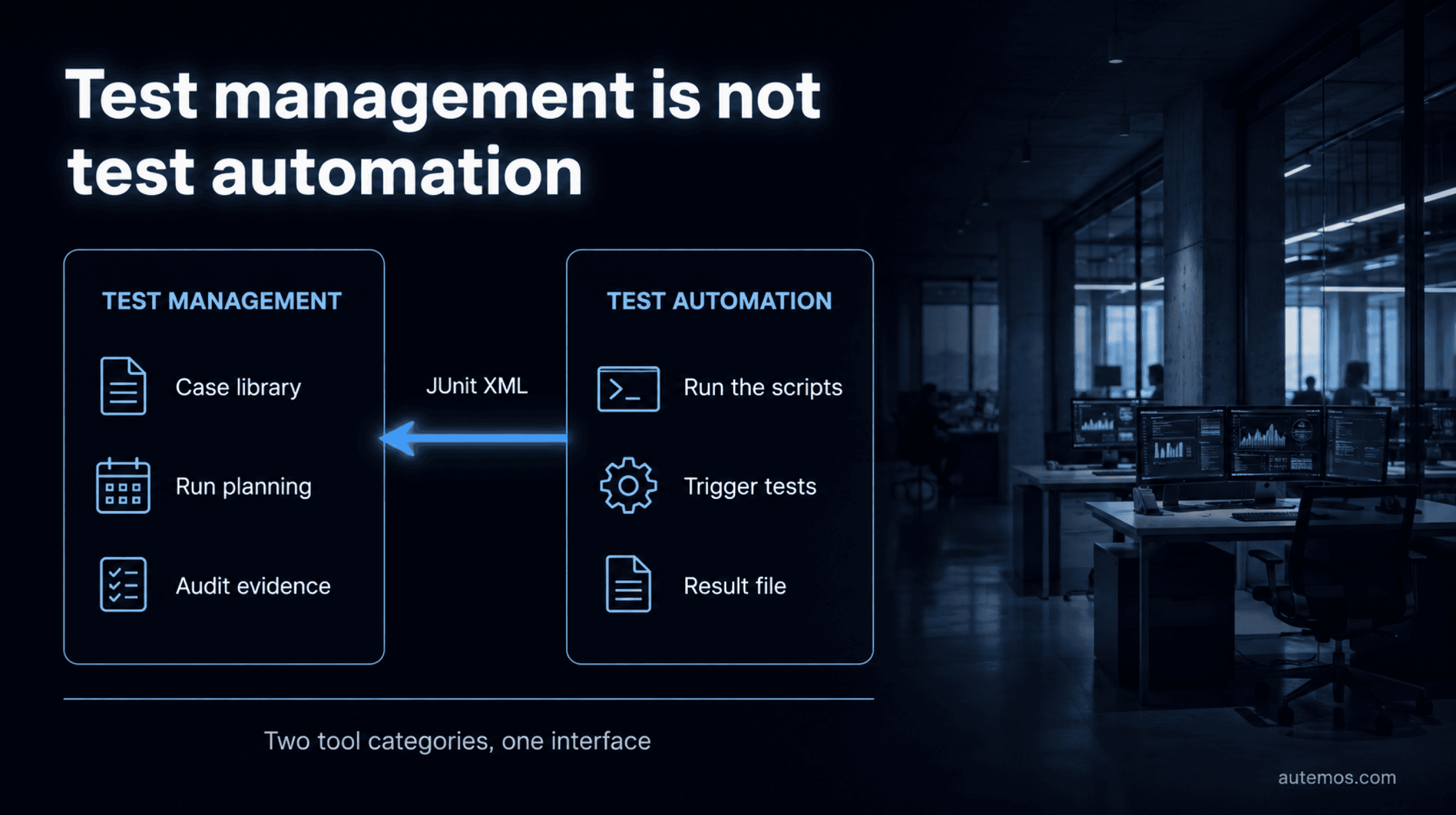
Figure 1: Test management and test automation are two tool categories, joined by one JUnit XML result hand-off.
What is a test management tool, and where does it stop?
Test case management software stores test cases under version control, groups them into test plans and runs, and reports the outcome. It answers three questions: what gets tested, who ran it and when, and what came out.
Test automation tools answer a technical question, namely how a test executes. They produce result files. The management layer takes those files, maps each one to a requirement, and turns the pair into evidence an auditor can read. Mixing the two categories in one tender means comparing products built for different jobs.
Our guide to test management covers the wider layer, and Xray in Jira covers the Jira-native variant.
Test management tools compared: the overview table
Of the ten tools compared here, five publish a list price, one is open source and free, and four sell by quote only. Every entry was checked on 30 August 2026.
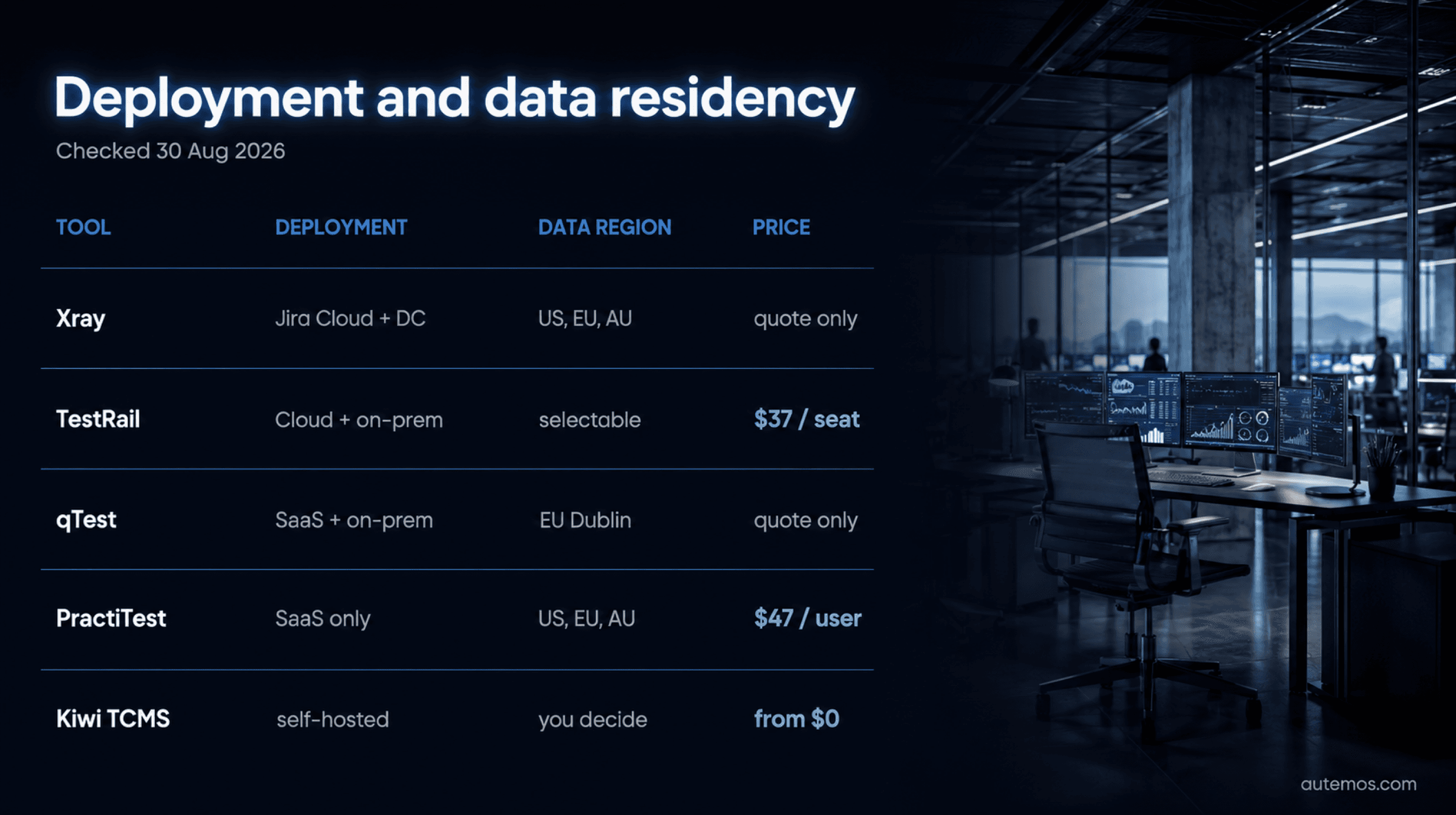
Figure 2: Deployment, data region and published price for five tools, checked on 30 August 2026.
Tool | Deployment | Jira | Verified price (30 Aug 2026) | Data residency |
|---|---|---|---|---|
Xray | Jira Cloud, Jira Data Center | native | not published, tiered on the Marketplace | US default, EU (Frankfurt) and Sydney selectable per vendor docs |
Zephyr Scale | Jira Cloud | native, own backend | not published | region choice unconfirmed |
Zephyr Squad (now listed on the Marketplace as Zephyr Essential) | Jira Cloud | native, tests are Jira issues | not published | region choice unconfirmed |
TestRail | Cloud, on-premises (10+ seats, 12 months) | standalone, integration not verified | $37/seat/month (Professional), $74 (Enterprise); annually $420 / $852 per user | region selection for new customers, migration announced |
qTest | SaaS (OnDemand), on-premises | integrates with Jira and Jenkins | quote-based | US-East, US-West, EU-Dublin, Sydney |
Azure Test Plans | Azure DevOps Services (cloud), Server | standalone, integration not verified | $52/user/month (“Basic + Test Plans”) | not verified |
Polarion ALM | on-premises or SaaS | standalone, integration not verified | quote-based | not verified |
PractiTest | SaaS only | standalone, integration not verified | $47/user/month (annual); Corporate by quote | US, EU or AU selectable |
Testmo | cloud only | standalone, integration not verified | $59 / $249 / $599 per month | no on-premises edition |
TestLink | self-hosted only | standalone, integration not verified | free (GPL) | you pick the location |
Kiwi TCMS | self-hosted, SaaS, dedicated instance | standalone, integration not verified | $0 / $25 / $75 / $600 / $2,000 per month | self-hosted; region choice is a paid extra |
“Not verified” means no primary vendor source existed for that cell, so nothing goes in it. A number lifted from a competitor's comparison page will not survive your procurement review.
Why does data residency decide the first round?
Data residency eliminates candidates at a bank or insurer earlier than any feature list, since a tool with no EU or Swiss option never reaches the functional evaluation. Test cases carry business logic, and test data often carries personal-data patterns. Here is what was verifiable on 30 August 2026:
PractiTest: SaaS with three selectable regions (US, EU, AU) and no option to install in your own data centre.
qTest OnDemand: data centres in US-East, US-West, EU-Dublin and Sydney (Tricentis documentation, 2026).
TestRail: region selection for new customers, with migration of existing instances promised for a future release (TestRail Security, 2026).
Xray Cloud: default storage in North Carolina, with EU (Frankfurt) or Sydney available per the Xray data residency docs. We could reach that page only indirectly, so get the commitment in writing.
Zephyr: third-party sites report US-only storage with no region option. No SmartBear page confirmed it for us, so treat it as an open question.
Testmo settles the deployment question on its own pricing page with a clarity you rarely get: “We do not offer an on-premise server edition at this time.” (Testmo pricing page, checked 30 August 2026). For an institution under a self-hosting mandate, the evaluation ends in one line.
One due-diligence detail, stated without accusation: TestRail's public security page still cites “Amazon's Safe Harbor compliance” as the basis for EU-US data transfer. The CJEU invalidated Safe Harbor in 2015 (Schrems I). Privacy Shield replaced it and fell in 2020, and the EU-US Data Privacy Framework followed in 2023. Ask for the current transfer mechanism during procurement. Which data may enter a cloud tool at all is a test-data question, covered in our article on GDPR-compliant test data.
What does the Atlassian Data Center sunset mean for Xray and Zephyr?
Atlassian is retiring Data Center, which puts a fixed expiry date on any on-premises recommendation for Xray or Zephyr. The timeline per Atlassian's own policy (Atlassian, as of 30 August 2026):
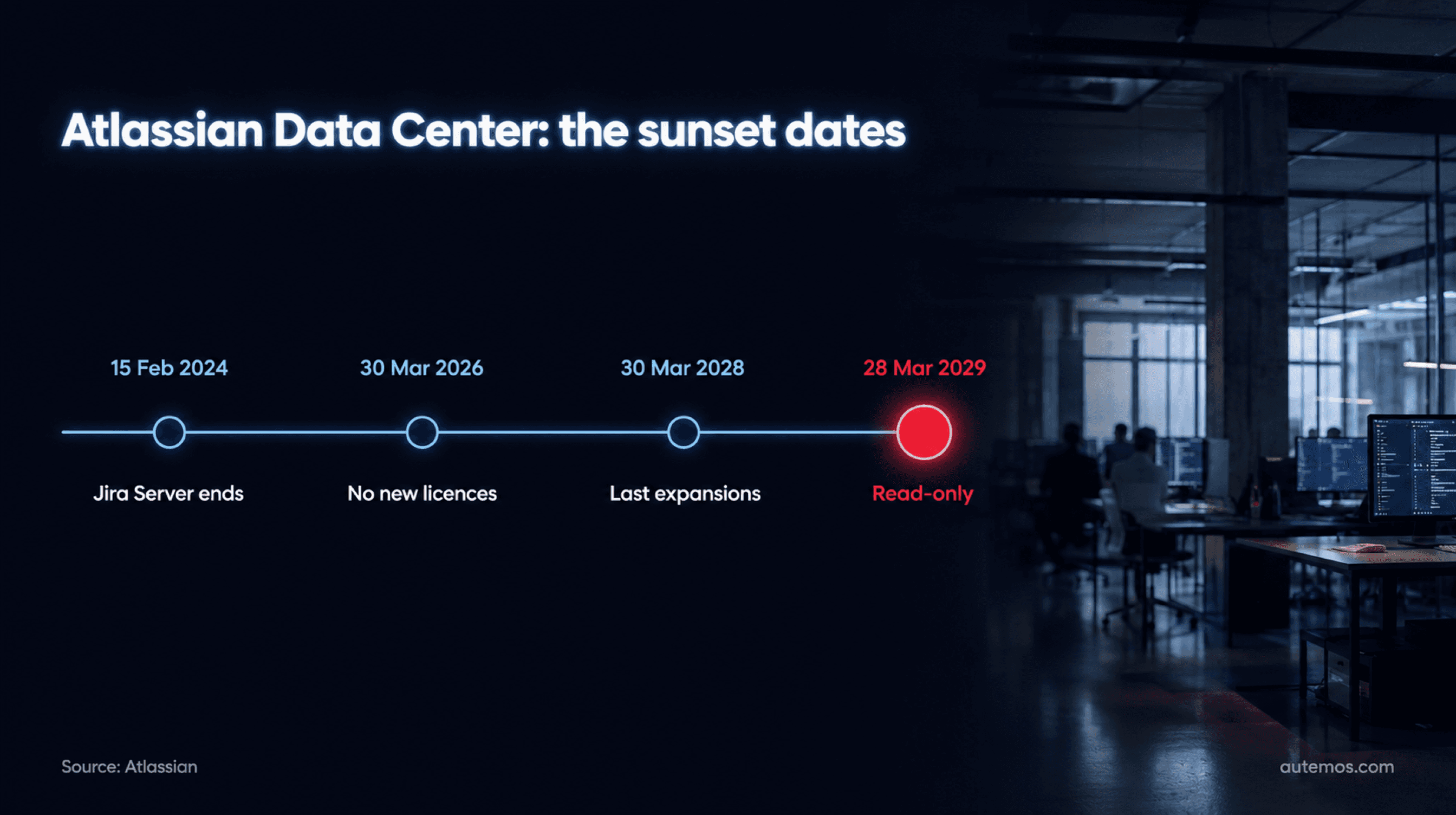
Figure 3: Atlassian's own schedule gives every Jira-native on-premises decision a fixed end date.
15 February 2024: Jira Server reached end of life.
30 March 2026 (23:59 PST): no new Data Center licences and no new Data Center apps on the Marketplace.
30 March 2028: existing customers can still buy expansions up to this date.
28 March 2029: Data Center subscriptions and the associated Marketplace apps expire, and the products go read-only.
What that means for you: choosing a Jira-native tool for your own data centre today is a decision with a known end date. The route afterwards runs into the cloud, where the residency question from the previous section returns. None of the usual tool comparisons mentions this timeline. Put the migration into your total cost figure.
What do test management tools really cost?
Five of the ten tools publish a list price, and four give you a number only in a quote. The verified figures from 30 August 2026:
TestRail costs $37 per seat per month (Professional) or $74 (Enterprise); billed annually that is $420 or $852 per user for twelve months (TestRail, 2026). The on-premises edition requires at least 10 seats and a 12-month minimum term.
Azure Test Plans exists only inside the “Basic + Test Plans” access level at $52 per user per month, and there is no Test-Plans-only SKU. The first five Basic users are free (Microsoft, 2026). PractiTest lists $47 per user per month on annual billing, with Corporate quoted individually from a ten-licence minimum. Testmo charges $59, $249 or $599 per month for Team, Business and Enterprise. Kiwi TCMS runs from a free Community Edition through Self Support ($25) and Private Tenant ($75) to Enterprise ($600) and Managed Hosting ($2,000 per month).
The qTest price ranges circulating online come from a competitor's comparison page and from a crowd-answer site. Neither is usable for budget planning, and the Tricentis pricing page carries no figure. The same holds for Xray, Zephyr and Polarion. On market size, five research firms publish forecasts for this category that differ by a factor of three to eight, which is why we quote none of them. For a broader read on the Tricentis suite, see our take on the Tricentis alternative.
Zephyr Scale or Zephyr Squad: what is the difference?
The difference is architectural: Zephyr Squad stores test cases as ordinary Jira issues and groups them into cycles. Zephyr Scale ships its own backend with a data model that sits outside the Jira issue store.
Scale supports cross-project test libraries, folder hierarchies, versioning and parameters (SmartBear Community, 2026). With Squad, the Jira issue count grows with every test cycle, which becomes noticeable in large instances. Zephyr Enterprise is a third platform, sold separately from the Marketplace at a quoted price.
Are TestLink and Kiwi TCMS still maintained?
TestLink has two honest answers depending on where you look. On GitHub the project carries the tag 1.9.20-20251208 from 8 December 2025, and a commit dated 20 October 2024 fixed an LDAP connection failure under PHP 8.1+ (GitHub, 2025). The SourceForge download that most evaluators find first still shows v1.9.20, dated 19 January 2020 (SourceForge, 2020).
Anyone checking only SourceForge writes TestLink off as a dead project. That is the most common scoring error we see. Check both places before you retire an open-source candidate.
Kiwi TCMS ships far more visibly: version 16.2 landed on 23 July 2026, after 16.1 on 24 June and 16.0 on 5 June 2026 (Kiwi TCMS, 2026). The Community Edition is free and unsupported, and commercial support starts at $25 per month.
How should you choose a test management tool?
Screen in this order and ten candidates usually drop to two before the first demo:
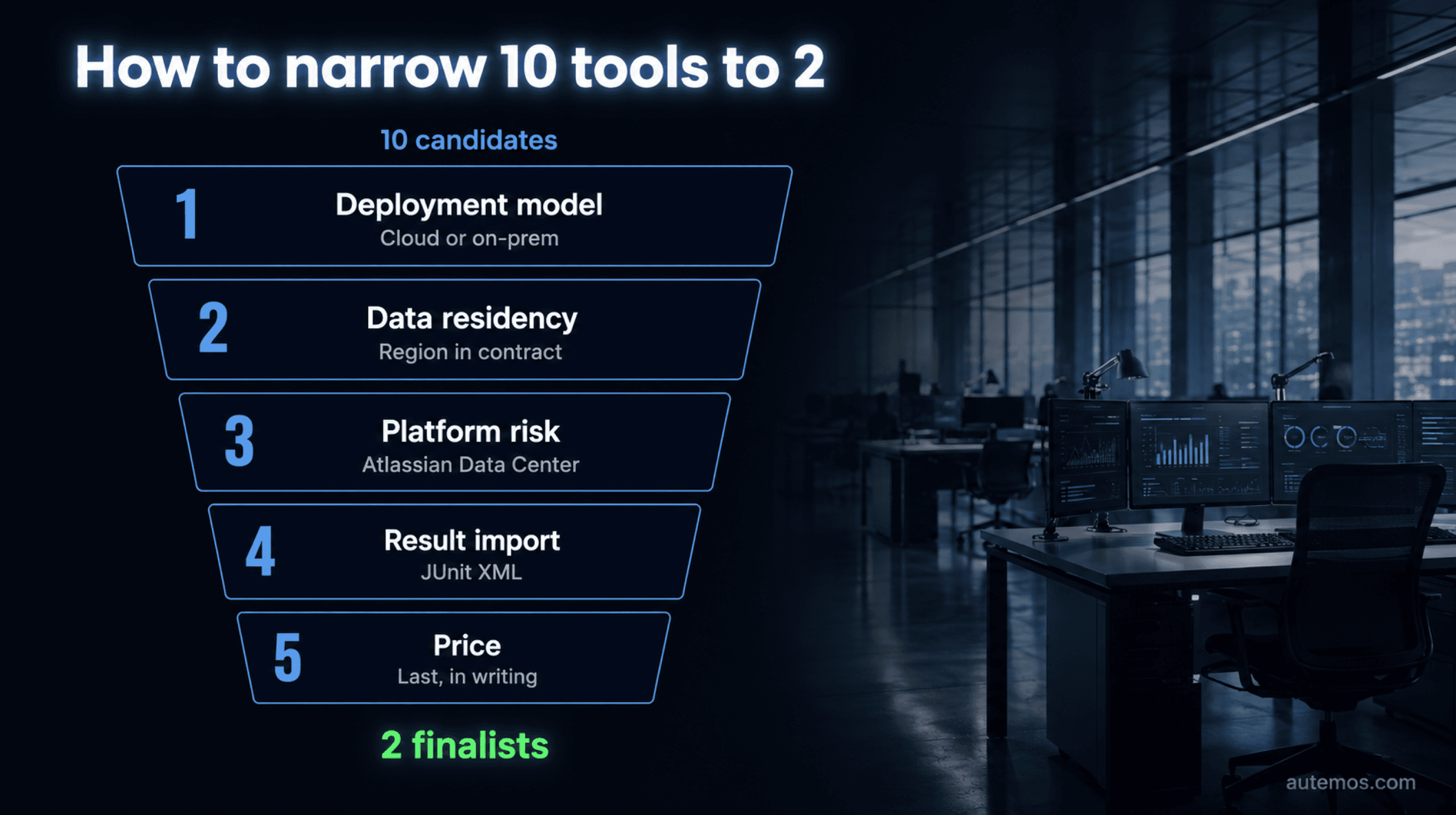
Figure 4: The selection order that usually turns ten candidates into two before the first demo runs.
Deployment model: is cloud permitted, or is self-hosting mandatory? That removes Testmo, PractiTest and Kiwi Private Tenant for strict on-premises shops.
Data residency: which region does the vendor guarantee in the contract? A dropdown in the product is not a commitment.
Platform risk: does the tool depend on Atlassian Data Center? Then the timeline above applies.
Link to execution: in which format do automated results arrive? JUnit XML is the common denominator, and both Xray and TestRail read it.
Price: only now, and only against a written quote with term length and minimum commitment.
Autemos is not a test management tool, and we say that plainly. Autemos runs the tests (web, mobile, API, desktop) and reports results as an Allure report into whichever management layer you already own, such as Jira/Xray. In customer projects we see that this join between execution and evidence is the piece most often missing, and our test workflows and the article on test reporting show how it works.
Frequently asked questions
What is the difference between test management tools and test automation tools?
A management tool administers test cases, runs and results; an automation tool executes tests technically. Xray, TestRail and qTest belong to the first category, Selenium, Playwright and Cypress to the second. The two work together, usually by importing JUnit XML results into the management layer.
Which tool works best with Jira?
Xray, Zephyr Scale and Zephyr Squad are Jira-native and live as apps inside Jira itself. Xray runs on Jira Cloud and Jira Data Center, and Data Center expires on 28 March 2029 per Atlassian's policy. Our article on Xray in Jira covers the Jira specifics.
How much does TestRail cost?
TestRail costs $37 per seat per month for Professional and $74 for Enterprise; billed annually that is $420 or $852 per user for twelve months (TestRail, 2026). The on-premises edition needs at least 10 seats and a 12-month minimum term.
Which tools offer EU data residency?
Yes. PractiTest offers three selectable regions including the EU, qTest OnDemand runs a data centre in Dublin, Xray Cloud lists Frankfurt as an option, and TestRail lets new customers pick a region. With self-hosted tools such as TestLink and Kiwi TCMS you choose the location yourself.
Is open-source test management realistic for a bank?
Yes, if you carry operations, support and evidence duties yourself. Kiwi TCMS ships releases regularly (16.2 on 23 July 2026) and sells commercial support from $25 per month. Count internal operations effort, access control and audit-proof storage as part of total cost.
Conclusion
Choose your tool in this order: deployment model, data residency, platform risk, result integration, then price. Five of the ten tools checked publish a list price, four sell by quote only, and for qTest, Xray, Zephyr and Polarion no third-party figure deserves your trust. The date almost no comparison mentions is the end of Atlassian Data Center on 28 March 2029, which touches every Jira-native on-premises decision. Re-check every price and region claim before you award the contract; vendor pages change faster than comparison articles. If you want to work out how automated test results reach the management layer you already run, talk to us.